Overview
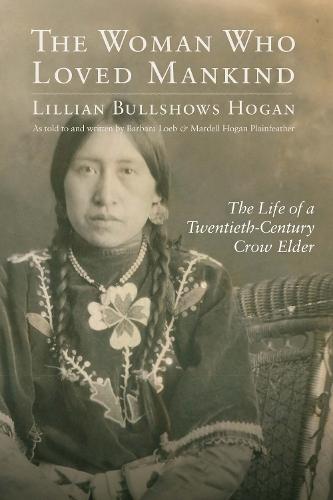
The oldest living Crow at the dawn of the twenty-first century, Lillian Bullshows Hogan, grew up on the Crow reservation in rural Montana. In The Woman Who Loved Mankind she enthralls readers with stories from her long and remarkable life and the stories of her parents, part of the last generation of Crow born to nomadic ways. As a child Hogan had a miniature tepee, a fast horse, and a medicine necklace of green beads; she learned traditional arts and food gathering from her mother and experienced the bitterness of Indian boarding school. As an adult she drove a car, maintained a bank account, and read the local English paper, but she spoke Crow as her first language, practiced beadwork, tanned hides, and often visited the last of the old chiefs and berdaches with her family. Though she married in the traditional Crow way and was a proud member of the Tobacco and Sacred Pipe societies, she also helped establish a Christian church on her reservation. Hogan’s stories are warm, funny, heartbreaking, and brimming with information about Crow life. Hogan told her stories to her daughter, Mardell Hogan Plainfeather, and to Barbara Loeb, a scholar and longtime friend of the family whose record of her words stays true to Hogan’s expressive speaking rhythms with its echoes of traditional Crow storytelling.
Full Product Details
Author: Lillian Bullshows Hogan ,
Barbara Loeb ,
Mardell Hogan Plainfeather
Publisher: University of Nebraska Press
Imprint: University of Nebraska Press
ISBN: 9781496243379
ISBN 10: 1496243374
Pages: 496
Publication Date: 01 July 2025
Audience:
Professional and scholarly
,
Professional & Vocational
Format: Paperback
Publisher's Status: Active
Availability: Out of stock

The supplier is temporarily out of stock of this item. It will be ordered for you on backorder and shipped when it becomes available.
Reviews
"""This fascinating book is part autobiography, part history, part memoir, part cultural guide, and part poetry. . . . Loeb and Plainfeather made the wise decision to adopt an ethnopoetic approach to the reminiscences, thus preserving not only Lillian's words but also the rhythm and structure of her speaking. This choice elevates the book. The stories themselves are interesting, but the preservation of oral performance lends an intimate and important cultural feel to the work.""—J. B. Edwards, Choice ""Essential reading for new and seasoned students and scholars of American Indian cultures.""—Kelly M. Branam, Great Plains Quarterly ""A must read for anyone interested in native, feminist, or humanistic studies.""—Timothy P. McCleary, Montana, The Magazine of Western History ""Hogan's stories read like an epic poem.""—Cal Cumin, Billings Gazette"
""This fascinating book is part autobiography, part history, part memoir, part cultural guide, and part poetry. . . . Loeb and Plainfeather made the wise decision to adopt an ethnopoetic approach to the reminiscences, thus preserving not only Lillian's words but also the rhythm and structure of her speaking. This choice elevates the book. The stories themselves are interesting, but the preservation of oral performance lends an intimate and important cultural feel to the work.""—J. B. Edwards, Choice ""Essential reading for new and seasoned students and scholars of American Indian cultures.""—Kelly M. Branam, Great Plains Quarterly ""A must read for anyone interested in native, feminist, or humanistic studies.""—Timothy P. McCleary, Montana, The Magazine of Western History ""Hogan's stories read like an epic poem.""—Cal Cumin, Billings Gazette
“The Woman Who Loved Mankind is the best of Plains Indian women’s stories ever put into print. Its innovative, conversational format allows readers to almost hear Lillian Bullshows Hogan whispering her personal life and Crow Indian traditions into their ears. It is a stunning achievement and pioneering contribution to American Indian studies, women’s studies, and American literature in general.”-Peter Nabokov, author Two Leggings: The Making of a Crow Warrior “The vignettes are golden, unpolished nuggets. A few biographies of Native women have been released recently, but this is the only one that allows the speaker’s words to resonate so that the reader may ‘hear’ them. . . . It is an ideal entry into understanding ApsÁalooke reservation life. The sensitive presentation of Hogan’s words and memories, coupled with the authors’ introductory statements, provide insights into the development of the Crow reservation through descriptions of changing lifestyles, struggles of family relations, religious and political commitments, and the resilience of Native beliefs and practices. The Woman Who Loved Mankind is a must-read for anyone interested in Native, feminist, or humanistic studies.”-Timothy P. McCleary, Montana: The Magazine of Western History ""This fascinating book is part autobiography, part history, part memoir, part cultural guide, and part poetry. . . . Loeb and Plainfeather made the wise decision to adopt an ethnopoetic approach to the reminiscences, thus preserving not only Lillian's words but also the rhythm and structure of her speaking. This choice elevates the book. The stories themselves are interesting, but the preservation of oral performance lends an intimate and important cultural feel to the work.""—J. B. Edwards, Choice ""Hogan's stories read like an epic poem.""-Cal Cumin, Billings Gazette ""Essential reading for new and seasoned students and scholars of American Indian cultures.""—Kelly M. Branam, Great Plains Quarterly
Author Information
Lillian Bullshows Hogan (1905–2003) was a highly respected Crow elder whose life spanned the twentieth century. Barbara Loeb taught Native art history at Oregon State University. She is the author of Felice Lucero-Giaccardo: A Contemporary Pueblo Painter and numerous writings on Crow and Plateau Indian art and culture. Mardell Hogan Plainfeather is the daughter of Lillian Bullshows Hogan. She is retired as a supervisory park ranger with the National Park Service and as a Crow field director of the American Indian Tribal Histories Project at the Western Heritage Center in Billings, Montana.