Overview
Socialisation may well be the single most important aspect of education today. With high and rising rates of divorce, drug abuse, youth violence, alcoholism, teen promiscuity, and so forth, we cannot afford to let this issue go unexamined. To cling to the idea that what we, as a culture, are doing now is the right and best way for all children simply because it is what we are used to is to shut our eyes and minds to other possibilities-possibilities that may well afford greater happiness, success, peace, and safety to our own children. At a time when people feel more disconnected than ever before, we cannot afford to overlook or allow ourselves to be blinded to an option which offers great benefits, including a rich, fulfilling, and healthy social life, that our children may well need for the future. Homeschooling offers great social benefits to kids and parents. And when we understand them, our children are the ones who will win.
Full Product Details
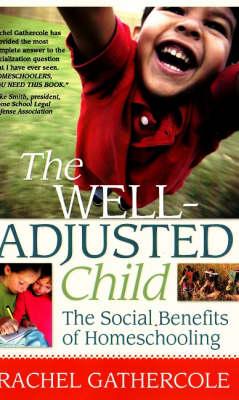
Author: Rachel Gathercole
Publisher: Mapletree Publishing Co
Imprint: Mapletree Publishing Co
Dimensions:
Width: 21.50cm
, Height: 1.70cm
, Length: 14.00cm
Weight: 0.414kg
ISBN: 9781600651076
ISBN 10: 1600651070
Pages: 240
Publication Date: 01 June 2007
Audience:
Professional and scholarly
,
Professional & Vocational
Format: Paperback
Publisher's Status: Active
Availability: Awaiting stock

The supplier is currently out of stock of this item. It will be ordered for you and placed on backorder. Once it does come back in stock, we will ship it out for you.
Reviews
Gathercole, who has spent 10 years homeschooling her three children, says what most people wonder about is whether homeschooled children can work and play with others, in other words, their socialization skills. She begins by noting that once upon a time, all children were homeschooled before more formal schooling and the development of school culture. She notes that conventional schools offer socialization through peer pressure, the stress of choosing between popularity and academic performance, and excessive attention to appearance. Drawing on her own experiences as a homeschooler, she details the networks of other homeschoolers who provide opportunities for their children--and themselves--to socialize. Gathercole also points to research showing that homeschooled children have stronger self-concepts than children attending conventional schools. . . . She explores concepts of socialization, the importance of friendships with other children, strong relationships with parents, and how homeschoolers eventually integrate into the real world. . . . ---Vanessa Bush, Booklist, Sep 2007
Gathercole, who has spent 10 years homeschooling her three children, says what most people wonder about is whether homeschooled children can work and play with others, in other words, their socialization skills. She begins by noting that once upon a time, all children were homeschooled before more formal schooling and the development of school culture. She notes that conventional schools offer socialization through peer pressure, the stress of choosing between popularity and academic performance, and excessive attention to appearance. Drawing on her own experiences as a homeschooler, she details the networks of other homeschoolers who provide opportunities for their children--and themselves--to socialize. Gathercole also points to research showing that homeschooled children have stronger self-concepts than children attending conventional schools. . . . She explores concepts of socialization, the importance of friendships with other children, strong relationships with parents, an