Overview
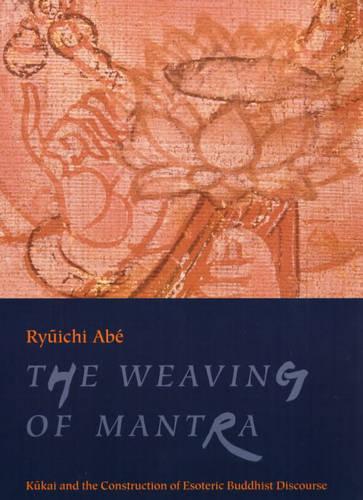
The great Buddhist priest Kûkai (774-835) is credited with the introduction and establishment of tantric -or esoteric -Buddhism in early ninth-century Japan. In Ryûichi Abé examines this important religious figure -neglected in modern academic literature -and his profound influence on Japanese culture. Offering a radically new approach to the study of early religious history -combining historical research, discourse analysis, literary criticism, and semiology -Abé contends that the importance of Kûkai?s transmission of esoteric Buddhism to Japan lay not in the foundation of a new sect but in his creation of a general theory of language grounded in the ritual speech of mantra. embeds Kûkai within the fabric of political and social life in ninth-century Japan and explains how esoteric Buddhism played a crucial role in many societal changes in Japan -from the growth of monasteries into major feudal powers to the formation of the native phonetic alphabet, kana. As Abé illustrates, Kûkai?s writings and the new type of discourse they spawned also marked Japan?s transition from the ancient order to the medieval world, replacing Confucianism as the ideology of the state. Abé begins by placing Kûkai?s life in the historical context of medieval Japan and the Ritsuryo state, then explores his interaction with the Nara Buddhist intelligentsia, which was seminal to the introduction of esoteric Buddhism. The author discusses Kûkai?s magnum opus, () and introduces a number of Japanese and Chinese primary-source texts previously unknown by Western-language scholars. Instead of tracing Kûkai?s thought through literal readings, explores the rhetorical strategies Kûkai employed in his works, shedding valuable light on what his texts meant to his readers and what his goals were in creating a discourse that ultimately transformed Japanese culture. The great Buddhist priest Kûkai (774-835) is credited with the introduction and establishment of tantric-or esoteric-Buddhism in early ninth-century Japan. In The Weaving of Mantra, Ryûichi Abé examines this important religious figure-neglected in modern academic literature-and his profound influence on Japanese culture. Offering a radically new approach to the study of early religious history-combining historical research, discourse analysis, literary criticism, and semiology-Abé contends that the importance of Kûkai's transmission of esoteric Buddhism to Japan lay not in the foundation of a new sect but in his creation of a general theory of language grounded in the ritual speech of mantra. The Weaving of Mantra embeds Kûkai within the fabric of political and social life in ninth-century Japan and explains how esoteric Buddhism played a crucial role in many societal changes in Japan-from the growth of monasteries into major feudal powers to the formation of the native phonetic alphabet, kana. As Abé illustrates, Kûkai's writings and the new type of discourse they spawned also marked Japan's transition from the ancient order to the medieval world, replacing Confucianism as the ideology of the state. Abé begins by placing Kûkai's life in the historical context of medieval Japan and the Ritsuryo state, then explores his interaction with the Nara Buddhist intelligentsia, which was seminal to the introduction of esoteric Buddhism. The author discusses Kûkai's magnum opus, Ten Abiding Stages on the Secret Mandalas (Himitsu mandara jujushinron) and introduces a number of Japanese and Chinese primary-source texts previously unknown by Western-language scholars. Instead of tracing Kûkai's thought through literal readings, The Weaving of Mantra explores the rhetorical strategies Kûkai employed in his works, shedding valuable light on what his texts meant to his readers and what his goals were in creating a discourse that ultimately transformed Japanese culture.
Full Product Details
Author: Ryūichi Abé (Harvard University)
Publisher: Columbia University Press
Imprint: Columbia University Press
Dimensions:
Width: 15.90cm
, Height: 3.30cm
, Length: 25.40cm
Weight: 0.836kg
ISBN: 9780231112871
ISBN 10: 0231112874
Pages: 620
Publication Date: 25 October 2000
Audience:
Professional and scholarly
,
Professional & Vocational
Format: Paperback
Publisher's Status: Active
Availability: Manufactured on demand

We will order this item for you from a manufactured on demand supplier.
Language: English
Reviews
This is a remarkable book about one of the most remarkable figures in the history of Japanese Buddhism...Abe's book will certainly emerge and remain the primary examination of Kukai's life and thought for many years to come. It is thus a crucial read for anyone interested in early Japanese religion and intellectual history... The Weaving of Mantra provides a very lengthy, detailed, and substantial intellectual historical analysis of Kukai...[T]his book is a monumental achievement that will fascinate students of Japanese religion and stimulate much discussion among historians. -- Steven Heine, Journal of Asian Studies Abe has made a major contribution to our understanding of the figure of Kukai, of Esoteric Buddhism, of the political, intellectual and religious situation of the Nara and early Heian periods, and of our view of medieval Japanese Buddhism as a whole. He has command of an impressive range of sources, both classical and modern, and he has a sophisticated grasp of recent theoretical discussions... Both in the new readings of early and medieval Japanese Buddhism that it advances and in the discussions that it will stimulate, this volume stands as a major addition to the field. -- Paul B. Watt, Journal of Asian History
This is a remarkable book about one of the most remarkable figures in the history of Japanese Buddhism...Abe's book will certainly emerge and remain the primary examination of Kukai's life and thought for many years to come. It is thus a crucial read for anyone interested in early Japanese religion and intellectual history... The Weaving of Mantra provides a very lengthy, detailed, and substantial intellectual historical analysis of Kukai...[T]his book is a monumental achievement that will fascinate students of Japanese religion and stimulate much discussion among historians. -- Steven Heine Journal of Asian Studies Abe has made a major contribution to our understanding of the figure of Kukai, of Esoteric Buddhism, of the political, intellectual and religious situation of the Nara and early Heian periods, and of our view of medieval Japanese Buddhism as a whole. He has command of an impressive range of sources, both classical and modern, and he has a sophisticated grasp of recent theoretical discussions... Both in the new readings of early and medieval Japanese Buddhism that it advances and in the discussions that it will stimulate, this volume stands as a major addition to the field. -- Paul B. Watt Journal of Asian History
This is a remarkable book about one of the most remarkable figures in the history of Japanese Buddhism...Abe's book will certainly emerge and remain the primary examination of K kai's life and thought for many years to come. It is thus a crucial read for anyone interested in early Japanese religion and intellectual history... The Weaving of Mantra provides a very lengthy, detailed, and substantial intellectual historical analysis of K kai...[T]his book is a monumental achievement that will fascinate students of Japanese religion and stimulate much discussion among historians. -- Steven Heine Journal of Asian Studies Ab has made a major contribution to our understanding of the figure of Kukai, of Esoteric Buddhism, of the political, intellectual and religious situation of the Nara and early Heian periods, and of our view of medieval Japanese Buddhism as a whole. He has command of an impressive range of sources, both classical and modern, and he has a sophisticated grasp of recent theoretical discussions... Both in the new readings of early and medieval Japanese Buddhism that it advances and in the discussions that it will stimulate, this volume stands as a major addition to the field. -- Paul B. Watt Journal of Asian History
This is a remarkable book about one of the most remarkable figures in the history of Japanese Buddhism...Abe's book will certainly emerge and remain the primary examination of K kai's life and thought for many years to come. It is thus a crucial read for anyone interested in early Japanese religion and intellectual history...The Weaving of Mantra provides a very lengthy, detailed, and substantial intellectual historical analysis of K kai...[T]his book is a monumental achievement that will fascinate students of Japanese religion and stimulate much discussion among historians. -- Steven Heine Journal of Asian Studies Ab has made a major contribution to our understanding of the figure of Kukai, of Esoteric Buddhism, of the political, intellectual and religious situation of the Nara and early Heian periods, and of our view of medieval Japanese Buddhism as a whole. He has command of an impressive range of sources, both classical and modern, and he has a sophisticated grasp of recent theoretical discussions... Both in the new readings of early and medieval Japanese Buddhism that it advances and in the discussions that it will stimulate, this volume stands as a major addition to the field. -- Paul B. Watt Journal of Asian History
Author Information
Ryuichi Abe is Kao Associate Professor of Japanese Religious Studies in the Departments of Religion and East Asian Languages and Cultures at Columbia University. He is the coauthor of Great Fool: Zen Master Ryokan-Poems, Letters, and Other Writings, and has been a recipient of the Philip and Ruth Hettleman Award for distinguished teaching.