Overview
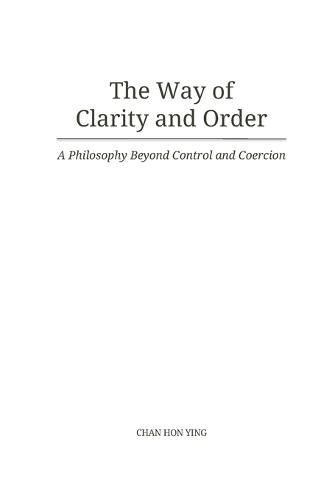
The Way of Clarity and OrderA Philosophical Inquiry into Civilization, Governance, and Human Awareness In a time when institutions grow more complex, technology accelerates change, and public language becomes increasingly instrumental, clarity has become rare. The Way of Clarity and Order is a philosophical reflection on civilization, governance, and human awareness in the modern world. Written during a period of serious illness, the book does not present ideological programs, political advocacy, or policy prescriptions. Instead, it asks a deeper question: What remains real when systems become rigid, language becomes strategic, and belief becomes transactional? Through historical reflection, philosophical inquiry, and structural analysis, the book explores how modern societies organize power, responsibility, and collective meaning. Key Themes ExploredAwakening and GovernanceThe book reconsiders awakening not as belief or ideology, but as attentiveness to reality. Governance, in this view, is not domination but the restoration of order at a scale that minimizes harm. The ""Breathing Space"" of InstitutionsNo institutional system can remain humane if it leaves no room for human breathing. Mature governance does not attempt to control every detail; it understands where openness must remain. Hidden Structures of PowerBeyond visible institutions, modern societies are shaped by less visible systems - technological standards, professional gatekeeping, algorithmic influence, and institutional interfaces. These structures often operate quietly yet profoundly shape public life. Civilization and Historical ReflectionThrough reflections on major historical events - including colonial expansion, global conflict, and ideological movements - the book explores how language, morality, and power interact within the evolution of civilizations. Intellectual Traditions Across CivilizationsThe work reflects on the intellectual legacy of several influential figures across civilizations - including Confucius, Aristotle (in attributed tradition), Karl Marx, Albert Einstein, and others - not to unify doctrines, but to examine how different traditions have confronted the question of awareness in human societies. A Book of DiscernmentThis is not a manifesto. It does not call for domination, revolution, or ideological struggle. Instead, it invites careful attention to the structures that shape collective life and to the responsibility that accompanies awareness. When institutions harden and language loses clarity, attention itself becomes a form of responsibility. Who This Book Is ForReaders interested in: - political philosophy - civilizational studies - ethics and governance theory - institutional analysis - the relationship between awareness and social order may find this work a rigorous and reflective contribution to contemporary discussion. A Final ReflectionThis book does not claim to save the world. It asks a quieter question: Can civilization remain humane if clarity disappears?
Full Product Details
Author: Hon Chan Ying
Publisher: Independently Published
Imprint: Independently Published
Dimensions:
Width: 14.00cm
, Height: 2.50cm
, Length: 21.60cm
Weight: 0.499kg
ISBN: 9798249396831
Pages: 434
Publication Date: 22 February 2026
Audience:
General/trade
,
General
Format: Paperback
Publisher's Status: Active
Availability: Available To Order

We have confirmation that this item is in stock with the supplier. It will be ordered in for you and dispatched immediately.