Overview
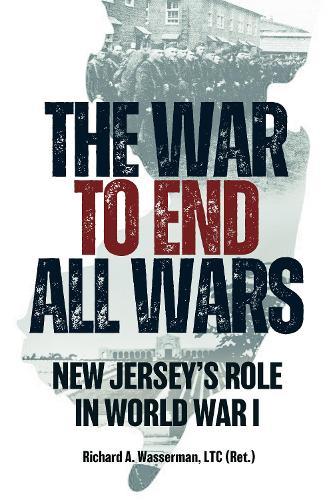
During World War I, New Jersey played a prominent role in the manufacturing of war-related munitions, created the infrastructure necessary to train and mobilize troops, and supplied a portion of the manpower necessary to fight overseas. Without the support of New Jersey’s industrial base, the war effort of the United States may very well have failed. Contributions from New Jersey ranged from artillery rounds from Amatol, fuses from Bloomfield, shells from Lyndhurst, gun carriages (Singer), aircraft engines (Duesenberg), Handley Page Bombers from Elizabeth, and ship building (New York Shipbuilding and ELCO). Over 140,000 New Jerseyans served during the war, and the state was home to 38 military installations by the end of the war, including Camp Dix. Troops from New Jersey included National Guard units activated and assigned to the 29th Division that trained at Camp McClellan, Alabama, and National Army soldiers (draftee) assigned to the 78th Division that trained at Camp Dix. New Jersey-based units from the 29th and 78th Infantry Divisions would fight in the Meuse-Argonne offensive. Women, too, underwent training in New Jersey, in preparation to serve in the Army Signal Corps, while women from the state volunteered to serve with aid organizations including the Red Cross, and raised money for the war effort. In the post-war years, over 160 monuments were constructed across New Jersey to memorialize the war dead and honor the veterans who served in the Great War, including several of the famous “Spirit of the American Doughboy” statues produced by E. M. Viquesney. New Jersey mothers and widows would travel in pilgrimages to the battlefields and cemeteries of France, such as the Meuse-Argonne American Cemetery, as well as to Brookwood cemetery in Great Britain to visit the graves of their loved ones in the 1930s as part of the Gold Star Mothers and Widows Pilgrimage. This book will for the first time reveal the full extent of New Jersey’s pivotal role in America’s war effort during the Great War, and will shed light on prominent figures and their connections to New Jersey, such as Dr. Fred Albee, the father of bone grafting, Cecil Dorrian, the first American female War Reporter in World War I, Amabel Roberts, the first American nurse from New Jersey to die during the war in France, and Lillian Marx, who danced and sang in Newark during war support donation events.
Full Product Details
Author: Dr. Richard A. Wasserman, LTC (R), D. Litt.
Publisher: Casemate Publishers
Imprint: Casemate Publishers
ISBN: 9781955041478
ISBN 10: 1955041474
Pages: 256
Publication Date: 31 March 2026
Audience:
General/trade
,
General
Format: Paperback
Publisher's Status: Forthcoming
Availability: Not yet available

This item is yet to be released. You can pre-order this item and we will dispatch it to you upon its release.
Author Information
Richard A. Wasserman was born in New Jersey and served in the Army Reserve and National Guard for nearly 40 years. His military awards include the Bronze Star Medal, Meritorious Service Medal, Joint Service Commendation Medal, and Combat Action Badge. He graduated from Middlesex County College and has a BA in economics from the University of Washington, as well as a master's degree from The New School. He also earned a doctorate from Drew University. He has researched New Jersey’s role in World War I for 10 years.