Overview
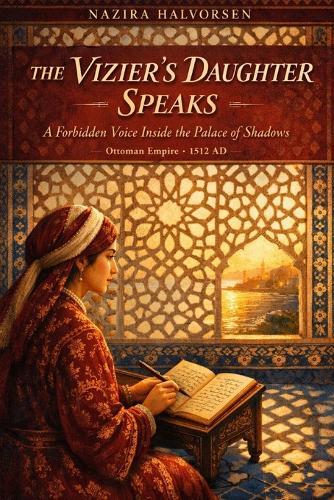
Constantinople, 1512. A new sultan has forced his father from the throne. The palace is reorganizing itself around a changed world. And behind a latticed window in the Topkapi Palace, a vizier's daughter is writing things she is not supposed to write. Her name is Leyla. Her father is Ibrahim Pasha, second vizier of the Ottoman imperial council, a man who has spent thirty years serving the state and who has made one private rebellion: he has educated his daughter in Arabic, Persian, and Ottoman Turkish, and he has let her read everything. Leyla has repaid this gift by becoming Sessiz, meaning silent, a poet whose ghazals circulate in the women's manuscript networks of the palace, whose work reaches a sultan who also writes poetry, and whose voice is dangerous enough that the new administration wants to know where it is coming from. The Vizier's Daughter Speaks is a novel about what it costs to have an interior life in a world that has decided you should not have one. It is set in the specific, historically documented world of the Topkapi Palace in the first years of Selim I's reign: the harem as a complex political institution rather than an Orientalist fantasy, the women's information networks that operated through bathhouses and visiting circles with a sophistication that no official archive preserves, the Ottoman divan poetry tradition in which a handful of women found ways to speak.` Leyla moves through this world with a company of unforgettable companions: Gulbahar, the Circassian survivor who has made herself indispensable to a succession of powerful men and who is, despite herself, genuinely Leyla's friend; Sitti Hanim, seventy years old, present at the conquest of Constantinople as a girl of six, keeper of a ceramic pot that contains things the world has decided to lose; Kemal, a Janissary officer who has forgotten his Greek name but not the language of separation that Hafez wrote; and Ibrahim Pasha himself, the father who gave Leyla everything and whose choices she cannot fully forgive or fully thank. Based on meticulous research into the Ottoman literary, political, and domestic history of the early sixteenth century, and grounded in the real lives of women including the poet Mihri Hatun who found ways to speak within the Ottoman tradition, this novel tells a story that the historical record preserves in fragments and silence. Nazira Halvorsen has listened to those fragments and given the silence a voice. She was assumed to be furniture. She was listening. She wrote it all down. And when they finally came to ask what she had written, she told them the truth: all of it.
Full Product Details
Author: Nazira Halvorsen
Publisher: Independently Published
Imprint: Independently Published
Dimensions:
Width: 15.20cm
, Height: 1.00cm
, Length: 22.90cm
Weight: 0.254kg
ISBN: 9798198020023
Pages: 186
Publication Date: 21 May 2026
Audience:
General/trade
,
General
Format: Paperback
Publisher's Status: Active
Availability: Available To Order

We have confirmation that this item is in stock with the supplier. It will be ordered in for you and dispatched immediately.