Overview
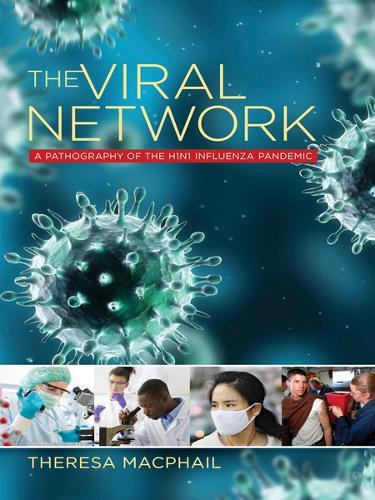
In The Viral Network, Theresa MacPhail examines our collective fascination with and fear of viruses through the lens of the 2009 H1N1 pandemic. In April 2009, a novel strain of H1N1 influenza virus resulting from a combination of bird, swine, and human flu viruses emerged in Veracruz, Mexico. The Director-General of the World Health Organization (WHO) announced an official end to the pandemic in August 2010. Experts agree that the global death toll reached 284,500. The public health response to the pandemic was complicated by the simultaneous economic crisis and by the public scrutiny of official response in an atmosphere of widespread connectivity. MacPhail follows the H1N1 influenza virus's trajectory through time and space in order to construct a three-dimensional picture of what happens when global public health comes down with a case of the flu. The Viral Network affords a rare look inside the U.S. Centers for Disease Control, as well as Hong Kong's virology labs and Centre for Health Protection, during a pandemic. MacPhail looks at the day-to-day practices of virologists and epidemiologists to ask questions about the production of scientific knowledge, the construction of expertise, disease narratives, and the different ""cultures"" of public health in the United States, Europe, Hong Kong, and China. The chapters of the book move from the micro to the macro, from Hong Kong to Atlanta, from the lab to the WHO, from the pandemic past in 1918 to the future. The various historical, scientific, and cultural narratives about flu recounted in this book show how biological genes and cultural memes become interwoven in the stories we tell during a pandemic. Ultimately, MacPhail argues that the institution of global public health is as viral as the viruses it tracks, studies, and helps to contain or eradicate. The ""global"" is itself viral in nature.
Full Product Details
Author: Theresa MacPhail
Publisher: Cornell University Press
Imprint: Cornell University Press
Dimensions:
Width: 15.20cm
, Height: 1.80cm
, Length: 22.90cm
Weight: 0.454kg
ISBN: 9780801479830
ISBN 10: 0801479835
Pages: 248
Publication Date: 13 November 2014
Audience:
College/higher education
,
Undergraduate
,
Postgraduate, Research & Scholarly
Format: Paperback
Publisher's Status: Active
Availability: Manufactured on demand

We will order this item for you from a manufactured on demand supplier.
Reviews
The Viral Network is an insightful ethnography of various social worlds that assemble under the banner of influenza research and global public health. It is an ambitious and innovative work that enacts a number of novel ways of conceiving and doing anthropology: as pathography, as viral ethnography, and as anthropology of information. Theresa MacPhail's observations are sharp, and her data and descriptions are incredibly valuable and offer insight into the inner workings of global public health. -Timothy K. Choy, University of California, Davis, author of Ecologies of Comparison: An Ethnography of Endangerment in Hong Kong
The Viral Network is an insightful ethnography of various social worlds that assemble under the banner of influenza research and global public health. It is an ambitious and innovative work that enacts a number of novel ways of conceiving and doing anthropology: as pathography, as viral ethnography, and as anthropology of information. Theresa MacPhail's observations are sharp, and her data and descriptions are incredibly valuable and offer insight into the inner workings of global public health. -Timothy K. Choy, University of California, Davis, author of Ecologies of Comparison: An Ethnography of Endangerment in Hong Kong In The Viral Network, Theresa MacPhail deftly describes recent influenza outbreaks and their associated pandemic scares and public health responses from a variety of productive angles. MacPhail's research is based in a rich array of ethnographic experience: research in Hong Kong and at the CDC during the H1N1 outbreak, work at the California Department of Public Health, and participation in a well-connected and informed influenza research network in Berkeley and San Francisco. She views public health as part of a superorganism connected by unique perspectives and histories, and by experiences of influenza and expertise itself. -Celia Lowe, University of Washington, author of Wild Profusion: Biodiversity Conservation in an Indonesian Archipelago
Author Information
Theresa MacPhail is Assistant Professor/Faculty Fellow in the John W. Draper Interdisciplinary Master's Program in Humanities and Social Thought at New York University.