Overview
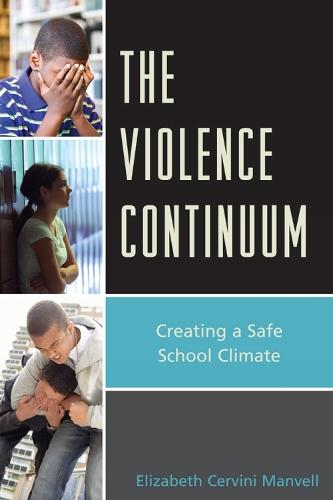
We expect schools to be a safe haven, but after more than a decade of targeted school violence prevention laws and safety plans, students are still marginalized and bullied to the point of despondence, retaliation, and even suicide. This thoughtful exploration of what makes a school a safe place is based on the understanding that violence is a continuum of acts and attitudes–subtle to overt–that have a negative effect on how students feel and learn. A school’s climate–how it feels to be a member of the learning community–depends on how each student is treated. We are challenged to recognize the often overlooked, yet pervasive, forms of emotional and physical violence that students face every day. After conducting an honest assessment of our own school’s climate, we learn how to nurture supportive relationships between students and adults and embed pro-social skills and respect for diversity in everything we do.When done, we are equipped with the understandings, tools, and commitment necessary to create a safe, positive school climate that is systemic and lasting.
Full Product Details
Author: Elizabeth C. Manvell
Publisher: Bloomsbury Publishing Plc
Imprint: Rowman & Littlefield Education
Dimensions:
Width: 16.40cm
, Height: 1.70cm
, Length: 24.10cm
Weight: 0.381kg
ISBN: 9781610485661
ISBN 10: 1610485661
Pages: 170
Publication Date: 19 January 2012
Audience:
General/trade
,
General
Format: Hardback
Publisher's Status: Active
Availability: In Print

This item will be ordered in for you from one of our suppliers. Upon receipt, we will promptly dispatch it out to you. For in store availability, please contact us.
Reviews
I have read 'The Violence Continuum' and it is excellent! I like the way the author does not back off from a humanistic commitment to the deepest issues of school safety, when so many in this field have a very narrow police approach to the issue. Like Manvell, I view these as human rights issues, which makes the school police officer a human rights protection officer. This is a good piece of work, which I am pleased to promote. --Garbarino, Dr. James
In Maslow's famous hierarchy of needs, personal safety comes right after the basic physiological survival requirements. And yet, as much as educators may want to provide a safe school climate, the challenge of creating one in a culture of domination and violence is immense. Schools may not be able to completely fulfill the vast number of unmet needs that lead to violence in our increasingly needy student populations, yet something must be done to help students who are often suffering in silence from the pervasive and sometimes subtle forms of violence that continually simmer and sometimes explode on our campuses. Our children desperately need our help-and Elizabeth Manvell has given us a way to provide it. In The Violence Continuum: Creating a Safe School Climate, Elizabeth Manvell provides a critical roadmap for educators who want to move far beyond our current reliance on the woefully inadequate violence prevention laws, crisis management plans, and school safety policies in place today. She starts with a strong rationale, describes the characteristics of effective programs and the many elements that impact school safety, and then masterfully guides readers through the specific steps needed to design and implement a powerful, comprehensive safe school plan. The amazing depth and breadth of Manvell's scope as well as the impressive level of detail she provides makes this an enlightening as well as an extremely practical guide. Just reading the table of contents is an education in itself! The Violence Continuum: Creating a Safe School Climate is a must-read for every educator who cares about creating a safe haven for students that will maximize their learning. And embuing young minds with the ideals of empathy, respect, tolerance, and compassion in the process is a pretty valuable side-benefit. In fact, if children are indeed our future, what more vital undertaking can there be? -- Allison Ewoldt, MA: educator, ecotherapist, activist I have read 'The Violence Continuum' and it is excellent! I like the way the author does not back off from a humanistic commitment to the deepest issues of school safety, when so many in this field have a very narrow police approach to the issue. Like Manvell, I view these as human rights issues, which makes the school police officer a human rights protection officer . This is a good piece of work, which I am pleased to promote. -- Dr. James Garbarino, Author of Raising Children in a Socially Toxic Environment and Children and the Dark Side of Human Experience: Confronting Global Realities and Rethinking Child Development
Author Information
Elizabeth Manvell has spent her career as a teacher and administrator focusing on the unique role teachers and principals play in setting a positive school climate. She spends her time thinking, researching, and writing about education, and is the author of two other books, Teaching is a Privilege: Twelve Essential Understandings for Beginning Teachers and Story Power! Breathing Life Into History.