Overview
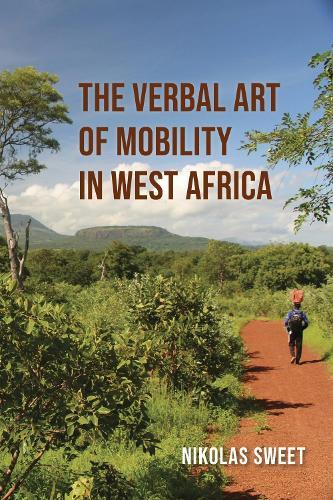
In recent years, migration across urban centers and national borders has radically reshaped West African societies and sparked a global debate on the legal and cultural processes of immigration. Along newly constructed international highways in southeastern Senegal, young men and women travel between regional centers and their hometowns in the wake of a gold-mining boom that has brought new opportunities as well as risks. Previous scholarship on migration has often emphasized the movement of bodies and things. In The Verbal Art of Mobility in West Africa, instead of considering language primarily as a way to describe mobility as it happened, author Nikolas Sweet positions language as an essential infrastructure through which individuals forge material connections and communication channels across space and borders. This reinterpretation of migration emphasizes that language is a form of social action in its own right—one that does not merely reflect experiences in the world but can bring things into being. Mobility emerges not only from an individual's given mobile history, but also through an attention to the linguistic resources deployed in everyday interactions with others. Based on ethnographic research on social interaction, verbal creativity, and mobility in southeastern Senegal, The Verbal Art of Mobility in West Africa reveals how migrants use language to build social networks and mitigate risk amid socioeconomic and environmental precarity.
Full Product Details
Author: Nikolas Sweet
Publisher: Indiana University Press
Imprint: Indiana University Press
Weight: 0.295kg
ISBN: 9780253071477
ISBN 10: 025307147
Pages: 208
Publication Date: 24 January 2025
Audience:
Professional and scholarly
,
Professional & Vocational
Format: Paperback
Publisher's Status: Active
Availability: Out of stock

The supplier is temporarily out of stock of this item. It will be ordered for you on backorder and shipped when it becomes available.
Reviews
""This gorgeous ethnography of borderlands, migration, and belonging in West Africa demonstrates the key role of language as infrastructure for and articulation of mobility. There are valuable lessons in these stories of resilience through 'the pursuit of relations' in times of Ebola, hardship, and a mining boom. Sweet's emphasis on the material force of speaking practices, across ritual, economic exchange, travel, conflict, and ordinary conversation, transforms how we think about humanity in motion.""—Kristina Wirtz, author of Performing Afro-Cuba: Image, Voice, Spectacle in the Making of Race and History ""A compelling study of the arts of talk and how they enable people to move around through meaningful places and relationships. Sweet offers a vivid and engaging picture of southeast Senegal and the social lives of people who live there or pass through it. As this book shows, mobility isn't just about an individual and their intentions; instead, it is saturated with social relations and talk, linguistic practices in which relationships are created and enacted. The linguistic varieties someone uses, the stories they tell, the conversational genres they engage in, and the names of places and people — all these create meaningful trajectories: histories and futures of movement, place, and social connection.""—Judith T. Irvine, author of Signs of Difference: Language and Ideology in Social Life
Author Information
Nikolas Sweet is Assistant Professor of Anthropology at the University of Wyoming.