Overview
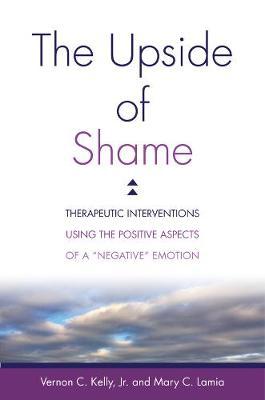
There is much more to shame than its reputation as a negative emotional state. This clinical book delves into the role of shame in many complex issues such as personality disorders, anxiety, depression, and addictions. In each example the authors show how an understanding of the positive side of shame can be translated into practical therapeutic interventions.
Full Product Details
Author: Vernon C. Kelly ,
Mary C. Lamia
Publisher: WW Norton & Co
Imprint: WW Norton & Co
Dimensions:
Width: 16.50cm
, Height: 2.30cm
, Length: 24.40cm
Weight: 0.561kg
ISBN: 9780393711943
ISBN 10: 0393711943
Pages: 240
Publication Date: 06 February 2018
Audience:
Professional and scholarly
,
Professional & Vocational
Format: Hardback
Publisher's Status: Active
Availability: Out of stock

The supplier is temporarily out of stock of this item. It will be ordered for you on backorder and shipped when it becomes available.
Reviews
In an era when shameless behavior seems rife, this exposition of the positive functions of shame--a tour de force on an affect more dreaded than appreciated--is welcome. The authors base their contribution on the work of my former mentor, Silvan Tomkins, who always hoped his thinking would eventually influence psychotherapy. As befalls many people of genius, his theories were often ignored or devalued during his lifetime, but now affective neuroscience has confirmed much of what he deduced. Tomkins's remarkably prescient, clinically relevant ideas are finally accessible in this book, which is written without jargon and illustrated by vivid case material. I recommend it to therapists of all backgrounds, theoretical orientations, and levels of experience, as well as to anyone seeking a deeper understanding of the human condition. I recommend this work for clinicians because the authors draw attention to how to formulate potential as well as expressed emotions along with consideration of how to therapeutically alter a patient's habitual avoidances of these potentials. The approach creates safety and the use of shame potentials in productive motivations.
I recommend this work for clinicians because the authors draw attention to how to formulate potential as well as expressed emotions along with consideration of how to therapeutically alter a patient's habitual avoidances of these potentials. The approach creates safety and the use of shame potentials in productive motivations.--Mardi Horowitz, M.D., Distinguished Professor of Psychiatry UCSF, Author of Adult Personality Growth in Psychotherapy In an era when shameless behavior seems rife, this exposition of the positive functions of shame--a tour de force on an affect more dreaded than appreciated--is welcome. The authors base their contribution on the work of my former mentor, Silvan Tomkins, who always hoped his thinking would eventually influence psychotherapy. As befalls many people of genius, his theories were often ignored or devalued during his lifetime, but now affective neuroscience has confirmed much of what he deduced. Tomkins's remarkably prescient, clinically relevant ideas are finally accessible in this book, which is written without jargon and illustrated by vivid case material. I recommend it to therapists of all backgrounds, theoretical orientations, and levels of experience, as well as to anyone seeking a deeper understanding of the human condition.--Nancy McWilliams, PhD, ABPP, Rutgers University Graduate School of Applied & Professional Psychology
In an era when shameless behavior seems rife, this exposition of the positive functions of shame--a tour de force on an affect more dreaded than appreciated--is welcome. The authors base their contribution on the work of my former mentor, Silvan Tomkins, who always hoped his thinking would eventually influence psychotherapy. As befalls many people of genius, his theories were often ignored or devalued during his lifetime, but now affective neuroscience has confirmed much of what he deduced. Tomkins's remarkably prescient, clinically relevant ideas are finally accessible in this book, which is written without jargon and illustrated by vivid case material. I recommend it to therapists of all backgrounds, theoretical orientations, and levels of experience, as well as to anyone seeking a deeper understanding of the human condition.--Nancy McWilliams, PhD, ABPP, Rutgers University Graduate School of Applied & Professional Psychology I recommend this work for clinicians because the authors draw attention to how to formulate potential as well as expressed emotions along with consideration of how to therapeutically alter a patient's habitual avoidances of these potentials. The approach creates safety and the use of shame potentials in productive motivations.--Mardi Horowitz, M.D., Distinguished Professor of Psychiatry UCSF, Author of Adult Personality Growth in Psychotherapy The Upside of Shame offers not just a paradigm shift in how we think about shame, but a profoundly useful tool in a clinical setting - one that is indispensable in motivating connection, attachment, and the positive emotional states we all desire. It is a book that anyone seeking a better understanding of the human condition should read.
I recommend this work for clinicians because the authors draw attention to how to formulate potential as well as expressed emotions along with consideration of how to therapeutically alter a patient's habitual avoidances of these potentials. The approach creates safety and the use of shame potentials in productive motivations. -- Mardi Horowitz, M.D., Distinguished Professor of Psychiatry UCSF, Author of Adult Personality Growth in Psychotherapy In an era when shameless behavior seems rife, this exposition of the positive functions of shame-a tour de force on an affect more dreaded than appreciated-is welcome. The authors base their contribution on the work of my former mentor, Silvan Tomkins, who always hoped his thinking would eventually influence psychotherapy. As befalls many people of genius, his theories were often ignored or devalued during his lifetime, but now affective neuroscience has confirmed much of what he deduced. Tomkins's remarkably prescient, clinically relevant ideas are finally accessible in this book, which is written without jargon and illustrated by vivid case material. I recommend it to therapists of all backgrounds, theoretical orientations, and levels of experience, as well as to anyone seeking a deeper understanding of the human condition. -- Nancy McWilliams, PhD, ABPP, Rutgers University Graduate School of Applied & Professional Psychology
Author Information
Vernon C. Kelly, Jr. has been in the private practice of psychiatry since 1975. He specializes in the treatment of emotional disorders in adolescents, adults, and relationships. He was the co-founder of the Silvan S. Tomkins Institute with Donald L. Nathanson and subsequently served as Chairman of that organization. Working with Silvan Tomkins, he developed an affect-based definition of emotional intimacy and innovative methods of couples treatment. He has been invited to teach about affect and emotion in Australia, New Zealand, Norway, Canada, and the USA. His written works include The Art of Intimacy and the Hidden Challenge of Shame and a book co-edited with Margaret Thorsborne, The Psychology of Emotion in Restorative Practice. Mary Lamia is a professor in the doctoral program of the Wright Institute in Berkeley and has a private practice in Kentfield, California. Her career-long passion for encouraging emotional awareness in adults, adolescents, and pre-teens is exemplified by her books. She is the author of Emotions! Making Sense of Your Feelings; Understanding Myself: A Kid’s Guide to Intense Emotions and Strong Feelings; and What Motivates Getting Things Done: Procrastination, Emotions, and Success. She co-authored The White Knight Syndrome: Rescuing Yourself from Your Need to Rescue Others. Her blog posts for Psychology Today and Therapy Today websites illustrate her endeavor to convey an understanding of emotion and its significant role in who we become.