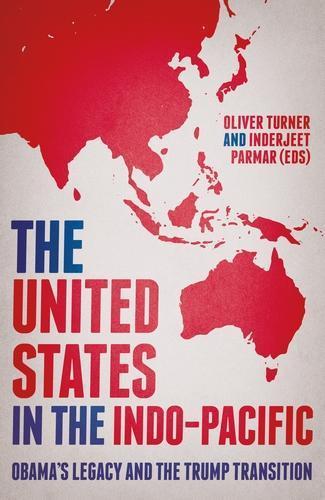
Full Product Details
Author: Oliver Turner ,
Inderjeet Parmar
Publisher: Manchester University Press
Imprint: Manchester University Press
Dimensions:
Width: 15.60cm
, Height: 1.50cm
, Length: 23.40cm
Weight: 0.386kg
ISBN: 9781526135032
ISBN 10: 1526135035
Pages: 272
Publication Date: 06 March 2020
Audience:
College/higher education
,
Professional and scholarly
,
Tertiary & Higher Education
,
Professional & Vocational
Format: Paperback
Publisher's Status: Active
Availability: Manufactured on demand

We will order this item for you from a manufactured on demand supplier.
Reviews
"'This sound, edited volume provides varied and thorough analysis of recent US foreign policies regarding East and South Asia. Its first eight chapters assess Barack Obama’s policies and their consequences in the area. Next come three chapters on the first two years of the Trump administration's policies and finally three surveys of contemporary challenges and opportunities for US policies in the region. Many chapters contrast Obama’s nuanced ""pivot to Asia"" with Trump's more aggressive policies. This contrast spurs concerns among several authors about new uncertainties in the region. For example, Michael Mastanduno explores how Obama’s ""hopeful"" pivot policy has given way to Trump’s ""combative"" strategic competition. Authors’ concerns mount in the chapters concerning Trump’s policy changes. Ketan Patel and Christian Hansmeyer list many potential winners and losers in the policy transition from Obama to Trump, culminating in two equally possible, but alternative, grand outcomes: declining American power or an orderly transition to multilateralism. A concluding chapter by the editors labels the region as one that ""is set to dominate 21st-century global affairs"" and finally asks how future US administrations ""will respond to this rapidly evolving and highly unfamiliar set of global circumstances.'"" S. E. Schier, emeritus, Carleton College -- ."
'This sound, edited volume provides varied and thorough analysis of recent US foreign policies regarding East and South Asia. Its first eight chapters assess Barack Obama's policies and their consequences in the area. Next come three chapters on the first two years of the Trump administration's policies and finally three surveys of contemporary challenges and opportunities for US policies in the region. Many chapters contrast Obama's nuanced pivot to Asia with Trump's more aggressive policies. This contrast spurs concerns among several authors about new uncertainties in the region. For example, Michael Mastanduno explores how Obama's hopeful pivot policy has given way to Trump's combative strategic competition. Authors' concerns mount in the chapters concerning Trump's policy changes. Ketan Patel and Christian Hansmeyer list many potential winners and losers in the policy transition from Obama to Trump, culminating in two equally possible, but alternative, grand outcomes: declining American power or an orderly transition to multilateralism. A concluding chapter by the editors labels the region as one that is set to dominate 21st-century global affairs and finally asks how future US administrations will respond to this rapidly evolving and highly unfamiliar set of global circumstances.' S. E. Schier, emeritus, Carleton College -- .
Author Information
Oliver Turner is a Lecturer in International Relations at the University of Edinburgh Inderjeet Parmar is Professor of International Politics at City, University of London