Overview
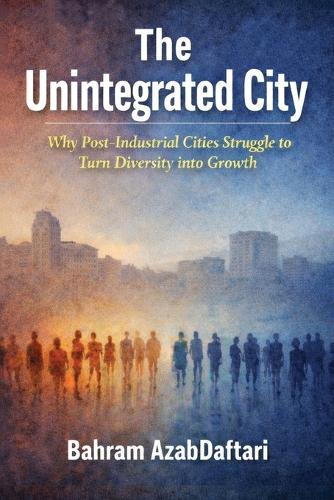
Post-industrial cities are often described as ""comeback cities,"" where investment, renovation, and institutional repair signal a return to stability. Yet in many cases, these visible improvements fail to translate into sustained economic and civic momentum. Why do some cities convert recovery into growth, while others remain structurally stagnant even after repair? This book introduces a framework for understanding that gap through three interconnected concepts: conversion, absorption, and integration. It argues that the central challenge facing post-industrial cities is not only broken infrastructure or weakened institutions, but a more subtle limitation: the inability to absorb and integrate new populations, ideas, and forms of social and economic activity into a coherent civic system. Using Scranton, Pennsylvania as the central case study, alongside comparative examples from cities such as Utica and Erie, the book examines how labor markets, small business ecosystems, institutional structures, and informal social networks either enable or obstruct integration. It shows how cities can experience parallel social and economic worlds, communities existing side by side without meaningful connection, limiting their ability to fully leverage structural repair. At the heart of the analysis is the concept of absorptive capacity: the ability of a city's institutions, markets, and civic life to incorporate difference in ways that generate shared opportunity and long-term stability. When absorption is strong, diversity becomes an engine of renewal. When it is weak, even well-repaired cities struggle to generate lasting growth. Structured in six parts, the book moves from theory to mechanism to comparative case studies, culminating in a diagnostic analysis of Scranton and a policy-oriented framework for strengthening urban absorption capacity. It explores labor market mismatches, small business friction, institutional rigidity, social boundaries, cultural narratives, and the psychological dynamics of small cities, offering a systematic account of why integration succeeds in some contexts but not others. Neither a conventional urban policy handbook nor a purely theoretical work, this book bridges structural analysis and lived urban reality. It argues that sustainable urban recovery depends not only on rebuilding physical systems, but on enabling cities to function as integrated social and economic organisms. For readers interested in urban studies, post-industrial transformation, economic development, and the dynamics of social integration, this book offers a structured framework for understanding how cities evolve and why some fail to fully come back.
Full Product Details
Author: Bahram Azabdaftari
Publisher: Independently Published
Imprint: Independently Published
Dimensions:
Width: 15.20cm
, Height: 0.80cm
, Length: 22.90cm
Weight: 0.200kg
ISBN: 9798257989124
Pages: 142
Publication Date: 11 April 2026
Audience:
General/trade
,
General
Format: Paperback
Publisher's Status: Active
Availability: Available To Order

We have confirmation that this item is in stock with the supplier. It will be ordered in for you and dispatched immediately.