Overview
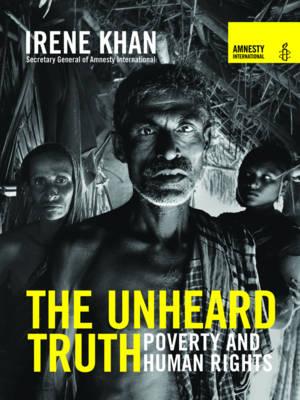
In our rapidly globalizing age with economic growth occurring in almost every corner of the world, it is easy to forget that more than one billion people still live on less than one dollar a day. Poverty is the worst human-rights crisis in the world today, denying billions of people their most basic rights. In a bracing argument enriched by compelling photographs from across the world, Amnesty International Secretary General Irene Khan makes the case that poverty remains a global epidemic because we continue to define it as an economic problem whose only solution is foreign aid and investment. Khan calls for a reevaluation of this longstanding assumption and turns us toward confronting poverty as a human-rights violation. Empowering the poor with basic rights of security is our only chance for eradicating poverty and giving freedom and dignity to those who have never experienced it.
Full Product Details
Author: Irene Khan
Publisher: WW Norton & Co
Imprint: WW Norton & Co
Dimensions:
Width: 17.80cm
, Height: 1.80cm
, Length: 23.10cm
Weight: 0.689kg
ISBN: 9780393337006
ISBN 10: 0393337006
Pages: 272
Publication Date: 15 October 2009
Audience:
Professional and scholarly
,
Professional & Vocational
Format: Paperback
Publisher's Status: Out of Stock Indefinitely
Availability: Awaiting stock

Reviews
Khan's inquiry into poverty and human rights issues is scrupulously sourced with copious endnotes and statistics to back up every assertion, but it truly excels when Khan provides personal stories that hit harder than numbers.... In concise, well-ordered chapters, Khan brings massive social problems down to a manageable size. A significant and unflinching analysis of a terribly (and tragically) important area of study. -- Colleen Mondor
Khan's inquiry into poverty and human rights issues is scrupulously sourced with copious endnotes and statistics to back up every assertion, but it truly excels when Khan provides personal stories that hit harder than numbers... In concise, well-ordered chapters, Khan brings massive social problems down to a manageable size. A significant and unflinching analysis of a terribly (and tragically) important area of study. -- Colleen Mondor - Booklist Kahn writes clearly and concisely, taking time to define what human rights are and why they matter and frequently illustrating her points with moving stories and vivid examples from around the world. She attempts to be impartial in her analysis and is critical not only of institutions like the World Bank but also of Amnesty International's own work in the past... Well written and easily accessible, this is recommended for all human rights advocates, especially those interested in reducing poverty globally. -- Library Journal
Kahn writes clearly and concisely, taking time to define what human rights are and why they matter and frequently illustrating her points with moving stories and vivid examples from around the world. She attempts to be impartial in her analysis and is critical not only of institutions like the World Bank but also of Amnesty International's own work in the past.... Well written and easily accessible, this is recommended for all human rights advocates, especially those interested in reducing poverty globally.
Khan s inquiry into poverty and human rights issues is scrupulously sourced with copious endnotes and statistics to back up every assertion, but it truly excels when Khan provides personal stories that hit harder than numbers.... In concise, well-ordered chapters, Khan brings massive social problems down to a manageable size. A significant and unflinching analysis of a terribly (and tragically) important area of study. --Colleen Mondor
Author Information
Irene Khan, as the first woman and first Asian secretary general of Amnesty International, has brought a strong focus to socioeconomic rights and violence against women around the world. She lives with her husband and daughter in London.