Overview
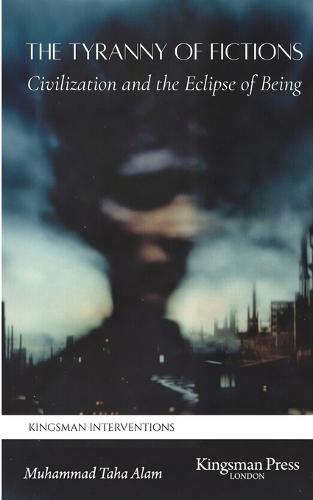
From the author of Pain and Being and The Ontology of Pain returns a work of rare philosophical intensity: The Tyranny of Fictions: Civilization and the Eclipse of Being. This book is not merely a critique of contemporary civilization. It is an ontological excavation. Where most philosophy begins with reason, politics, or culture, Alam begins with pain. In his earlier works, he advanced a radical thesis: that pain is not an accident within existence but its first form of awareness, that Being itself emerges through disturbance, tension, and vulnerability. Pain, in this vision, is not secondary to life; it is its original disclosure. From this insight arose a new philosophical framework, an ontology in which suffering is not a defect to be eliminated but the primordial condition through which consciousness, meaning, and structure come into being. The Tyranny of Fictions carries this inquiry into the architecture of civilization itself. Alam asks a devastating question: what happens when the structures created to contain pain forget why they exist? His answer is both sweeping and precise. Modern domination, he argues, does not originate in cruelty or conspiracy but in forgetting. The symbolic constructions humanity invented to survive vulnerability - order, progress, value, identity, representation - have hardened into autonomous systems. These fictions, once protective, now operate blindly. They reproduce themselves without reflection. They persist without remembrance of their origin in suffering. Civilization, Alam shows, has entered the age of the autonomous structure. Drawing together ontology, critical realism, political economy, and metaphysical analysis, the book traces how imagination becomes institution, how meaning solidifies into mechanism, and how human creations acquire causal power over their creators. The state, the market, bureaucracy, and technological networks emerge not simply as social arrangements but as metaphysical formations, structures that act without consciousness, perpetuating harm through function rather than intent. At the heart of Alam's argument lies his most original contribution: the extension of the ontology of pain into a theory of civilization. Pain, once externalized and organized through symbolic systems, does not disappear. It becomes abstracted, distributed, and hidden. Ethics becomes administration. Meaning becomes data. Life becomes procedure. Humanity finds itself enclosed within its own creations, alienated not only socially but ontologically, separated from Being itself. Yet this is not a book of despair. Against fatalism, Alam introduces the possibility of structural consciousness: the recovery of reflection within function, the remembrance of origin within mechanism. Liberation, he argues, does not require the destruction of civilization but its recollection. To recognize that every structure was once a fiction is to reopen the space of freedom. Written in a distinctive philosophical literary style, precise, lyrical, and uncompromising, The Tyranny of Fictions speaks to readers who sense that something fundamental has gone wrong with the modern world yet refuse shallow explanations. This is not merely a critique of power or technology. It is a meditation on existence itself. A profound meditation on Being. A daring ontology of pain. A necessary reckoning with civilization. This book does not offer comfort. It offers clarity.
Full Product Details
Author: Muhammad Taha Alam
Publisher: Kingsman Press London
Imprint: Kingsman Press London
Dimensions:
Width: 12.70cm
, Height: 2.40cm
, Length: 20.30cm
Weight: 0.331kg
ISBN: 9789356268722
ISBN 10: 935626872
Pages: 372
Publication Date: 27 February 2026
Audience:
General/trade
,
General
Format: Paperback
Publisher's Status: Active
Availability: Available To Order

We have confirmation that this item is in stock with the supplier. It will be ordered in for you and dispatched immediately.