Overview
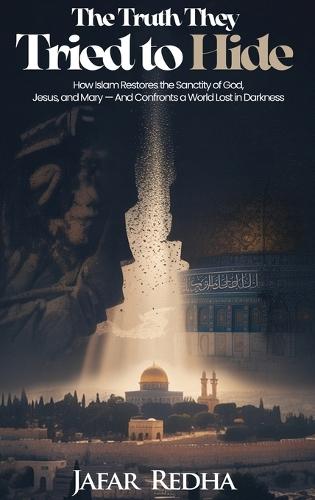
The Truth They Tried to Hide is a bold and illuminating exploration of how divine truth was obscured by power, politics, and art - and how Islam alone preserved its purity. Spanning centuries of revelation and reform, the book journeys from the message of Abraham to the Council of Nicaea, from Renaissance cathedrals to the modern secular age. Each chapter exposes how faith was reshaped by human ambition and contrasts these distortions with the unity and clarity of pure monotheism. But this is more than a historical unveiling it is a spiritual invitation to rediscover humility before the One Creator. In its closing message, the author calls upon seekers of truth to revive the forgotten act of prostration, the truest expression of devotion and closeness to God. His next project, Ink Is Better Than the Martyr's Blood, continues this legacy - an evocative blend of memoir, literary reflection, and the philosophy of writing. It explores the enduring power of the written word to outlive sacrifice, to shape minds, and to preserve truth across generations.
Full Product Details
Author: Jafar Redha
Publisher: British Publishers
Imprint: British Publishers
Dimensions:
Width: 15.20cm
, Height: 1.90cm
, Length: 22.90cm
Weight: 0.594kg
ISBN: 9781918360035
ISBN 10: 1918360030
Pages: 234
Publication Date: 17 February 2026
Audience:
General/trade
,
General
Format: Hardback
Publisher's Status: Active
Availability: Available To Order

We have confirmation that this item is in stock with the supplier. It will be ordered in for you and dispatched immediately.
Author Information
Jafar Redha is an Iraqi author and independent thinker who confronts the spiritual and cultural foundations of the modern world.Born in a land whose civilisation stretches back more than seven thousand years, he writes from the weight of history - not from the approval of institutions. His work does not follow intellectual fashion, nor does it seek ideological shelter. It challenges.Redha questions how sacred symbols were transformed into aesthetic commodities, how prophets became characters, how reverence gave way to spectacle, and how transcendence was lowered to fit modern taste. He examines the quiet but profound shift that turned the holy into the familiar - and the divine into something safe.In a time when both Western and Arab discourse often repeat inherited assumptions without scrutiny, Redha reopens the argument. He addresses truths many prefer to dismiss - not with outrage, but with clarity. Not with slogans, but with analysis.He writes for the general reader who senses that something essential has been diluted, something elevated has been reduced, and something sacred has been normalised beyond recognition.Jafar Redha does not argue for nostalgia. He argues for boundaries. He does not reject beauty. He questions what beauty serves. He does not attack faith. He asks whether faith has been protected. His work stands on one uncompromising premise when a civilisation stops guarding the sacred, it begins to misunderstand itself.