Overview
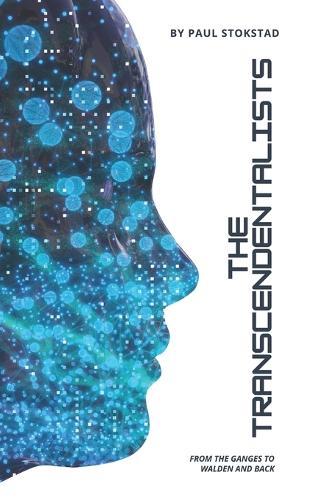
In the 1830s, Ralph Waldo Emerson opened a handful of Sanskrit texts in translation and found, in the ancient Vedic literature of India, descriptions of experiences he himself had known but could not name. Thoreau encountered the same reality at Walden. Margaret Fuller sensed it in the silence between thoughts. They called it the Transcendent. They knew it was real. They could not explain it. The Transcendentalists is the story of what happened next. It traces how a private intuition-glimpsed by New England thinkers in borrowed translations of distant texts-became, over two centuries, one of the most consequential developments in modern philosophy, science, and human self-understanding. The narrative moves from Concord's parlors to the failed utopian experiments of Brook Farm and Fruitlands; from Swami Vivekananda's arrival at the 1893 Parliament of Religions to Paramahansa Yogananda's Self-Realization Fellowship; from Maharishi Mahesh Yogi's global Transcendental Meditation movement to the unlikely entrepreneurial community surrounding the golden domes of Fairfield, Iowa. Across these moments runs a single thread: the sustained inquiry into the nature of consciousness. Along the way, the book introduces the scientists who transformed that inquiry. Robert Keith Wallace demonstrated in 1970 that transcendence is a measurable fourth state of consciousness. David Orme-Johnson helped build the most extensive body of research on any meditation practice. John Hagelin proposed that the unified field of physics and the field of consciousness may be identical. Tony Nader, in Consciousness Is All There Is, extends that trajectory to its logical conclusion. That conclusion is simple, and radical. The Transcendent Emerson sought is not something consciousness discovers. It is what consciousness is. The observer is the observed. The seeker is the sought. Tat tvam asi-Thou art That. What began as an intuition in a New England study has returned, through physiology, physics, and lived experience, to one of the oldest propositions in human thought-now supported by converging evidence and the daily experience of countless practitioners who sit, close their eyes, and transcend. The Transcendentalists is for anyone who has wondered whether moments of stillness, beauty, or heightened awareness point to something real-what that something is, and whether it can be accessed again. The answer offered here is yes. And the path is closer, simpler, and more thoroughly explored than most have been led to believe. From the Book ""The inquiry that began with Emerson's solitary moment of dissolution and a handful of translated texts has arrived at the simplest and most radical proposition: the seeker is the sought. The window is the view."" What Readers Will Discover The Transcendentalists' debt to Vedic philosophy-and where they misunderstood it Why Brook Farm and Fruitlands failed, and why Fairfield's TM community flourished How a 1970 Science paper reshaped the study of consciousness The case for a unified field linking physics and subjective experience Why the claim that consciousness is primary may follow from two centuries of inquiry The literary tradition-from Craig Pearson to Bob Roth-that has carried these ideas to modern readers Categories Philosophy of Mind & Consciousness - American Literary History - Eastern Philosophy & Vedanta - Meditation & Mindfulness - Spirituality - Neuroscience - Intellectual History
Full Product Details
Author: Paul Stokstad
Publisher: Independently Published
Imprint: Independently Published
Dimensions:
Width: 12.70cm
, Height: 1.00cm
, Length: 20.30cm
Weight: 0.191kg
ISBN: 9798253580400
Pages: 186
Publication Date: 25 March 2026
Audience:
General/trade
,
General
Format: Paperback
Publisher's Status: Active
Availability: Available To Order

We have confirmation that this item is in stock with the supplier. It will be ordered in for you and dispatched immediately.