Overview
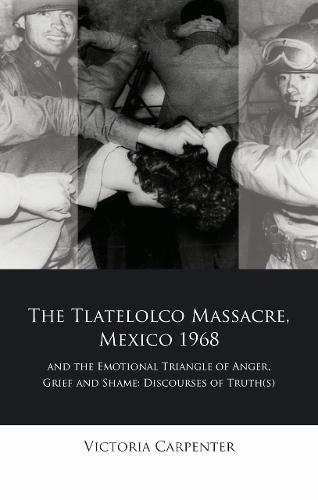
When talking about the Tlatelolco 1968 massacre, neither official sources nor the voice of the people aim to tell the factual truth of what occurred. Instead, they stir up feelings of anger, sadness, or shame. This book shows that the extent to which these emotions are triggered affects how much those reading the story or article will believe it. This is why so many different ‘truths’ have grown up around the event over the past fifty years. If those emotions are not triggered, the reader will not believe the text, even if the information it contains is the same as in the ‘truthful’ piece.
Full Product Details
Author: Victoria Carpenter
Publisher: University of Wales Press
Imprint: University of Wales Press
ISBN: 9781786832801
ISBN 10: 1786832801
Pages: 288
Publication Date: 06 August 2018
Audience:
Professional and scholarly
,
Professional & Vocational
Format: Paperback
Publisher's Status: Active
Availability: Temporarily unavailable

The supplier advises that this item is temporarily unavailable. It will be ordered for you and placed on backorder. Once it does come back in stock, we will ship it out to you.
Reviews
The October 2, 1968 massacre in Tlatelolco (the Plaza de la Tres Culturas) was a loss of innocence for the Mexican national imaginary. The sustained act of state terrorism shattered forever the myth of a benevolent socially and culturally stable society. Mexico has been coming to terms ever since with the aftermath of that event. Cultural and literary histories have generally adhered to versions provided by anti-establishment sources. The enormous value of Carpenter's examination of pertinent textual production is the careful attention paid to the voices of the defenders of the State, with the result that she has provided a far more nuanced account than we are used to studying. --David William Foster, Arizona State University
""The October 2, 1968 massacre in Tlatelolco (the Plaza de la Tres Culturas) was a loss of innocence for the Mexican national imaginary. The sustained act of state terrorism shattered forever the myth of a benevolent socially and culturally stable society. Mexico has been coming to terms ever since with the aftermath of that event. Cultural and literary histories have generally adhered to versions provided by anti-establishment sources. The enormous value of Carpenter's examination of pertinent textual production is the careful attention paid to the voices of the defenders of the State, with the result that she has provided a far more nuanced account than we are used to studying.""--David William Foster, Arizona State University
Author Information
The book is intended for scholars and students of Latin American literary and cultural studies, political theory, and Mexican history, literature and culture worldwide. It is also intended for a more general readership interested in the above subject areas. The book offers a comprehensive reading of the Tlatelolco massacre corpus of texts, both fictional and non-fictional, grounded in a novel combination of the theories of posthegemony and collective memory. It reveals hitherto unexplored link between the state and the public discourse when retelling the story of the massacre.