Overview
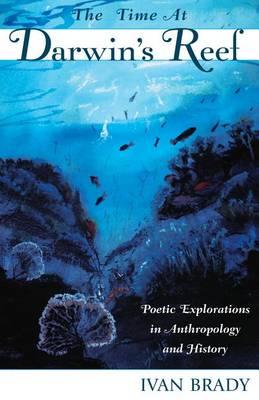
This is primarily a book of storytelling through mixed genres, verse, prose and painting. Brady's work is designed to draw out key dimensions of the poetics of anthropology and history embedded in creative writing, in the mix and on the martins of verse and prose, painting and writing, fiction and fact, to revisit the sometimes academically resistant idea that there is more than one way to say (and therefore to see) things. This is a poetic exploration of themes encountered in the academy's attempts to explain reality, including travel through various cultures, times and circumstances. The goal of this book is both analytic and aesthetic. It is also humanistic: a commentary on the human condition, of being and not being in a cross-cultural world. It should be of interest to poets and writers who wish to explore anthropological poetics to ethnographers and teachers of ethnographic method and to instructors and students in creative and experimental writing.
Full Product Details
Author: Ivan Brady
Publisher: AltaMira Press
Imprint: AltaMira Press
Volume: 12
Dimensions:
Width: 14.00cm
, Height: 1.50cm
, Length: 22.50cm
Weight: 0.318kg
ISBN: 9780759103351
ISBN 10: 0759103356
Pages: 161
Publication Date: 21 March 2003
Audience:
General/trade
,
General
Format: Hardback
Publisher's Status: Out of Print
Availability: Out of stock

Reviews
As good and compelling as many of the individual pieces that make up this collection are, I am most impressed by the way it both unfolds and achieves coherence as a work of anthropology. Here a skillful poetics of text-making builds context as certain and as powerfully as any classic ethnography, while yet being a virtuoso performance of all of those tendencies in the aftermath of the 1980s 'Writing Culture' critique that have come to define the preoccupations of anthropology. -- George Marcus, Rice University This is a sensitive and in many capacities brilliant accounting of what can be perceived in the borderlands between sea and land, in the Pacific and on the islands of life in other places. -- Robert Borofsky, Hawaii Pacific University The Time at Darwin's Reef is a graceful play of history, ethnography, and poetry that shows us the strange in the everyday and the familiar in the exotic, reflecting upon the thickness of the human endeavor without burdening the reader with pronouncements. It remains open even as it seeks coherence, a measure of a mature mind that has made its travels among us but is also poised for the future. The beautiful watercolors join the search in their own poetry of bright and dark, surface and depth. -- Richardson Miles, Louisiana State University With The Time at Darwin's Reef, anthropologist and poet Ivan Brady has joined the lineage of earlier anthropologist-poets who date, at the very least, from Ruth Benedict, Margaret Mead, and Edward Sapir. The finest moments in these pages are gripping poetic narratives that combine the love of language with a story that takes us beyond ourselves. In these works anthropological poetics is not only alive, but given inspired impetus toward the future. -- Dan Rose, University of Pennsylvania What an anthropologist experiences and learns can have many audiences, can take many forms. In The Time at Darwin's Reef, Ivan Brady invites us to share with him ways in which a range of places and kinds of knowledge can feed imagination, and imagination find novel forms in which to be expressed. The ways in which people use language are part of their culture. Here Brady explores ways in which language, as lines, relations among lines, can be used and varied as part of our culture as anthropologists. These uses of words are descriptive, reflective, admonishing, wondering, humorous, inventive, and varied in place and time. In short, an exemplar of poetry as a verbal tool of ethnography, wide-ranging there, as it is in life, and in this work, truly impressive, with something of the same spirit and flair as Pound and Williams. -- Dell Hymes, University of Virginia Lyrical, pensive, reflective, and witty in the right places, The Time at Darwin's Reef is a highly innovative concept in cultural studies and anthropological texts; through poetic explorations in the times and spaces of journeying for research and other purposes, it clears its own scholarly path to knowing the cultures of self and others. Ivan Brady's fieldwork, teaching experience, and thoughtful probings of substance and style make him the perfect author for such a book. Janie Brady's paintings are imaginative, provocative, and resonate with the text-another reminder that there are many yet-to-be-discovered paths that lead to deeper understanding of cultures and peoples, including ourselves. -- Lola Romanucci-Ross, University of California, San Diego The Time At Darwin's Reef is a direct response to the uncertainties attached to evidence, truth, and method in postmodernism. Brady has written in what is probably the only vein one could call 'authorized' by the new criticism and its attention to the misadventures and ruins of classical ethnography: ambiguous writing that 'rings true' rather than being strictly historical or always factually true-the ancient power of fiction, poetry, performance, and storytelling. He wants both to flag and to show us possibilities for transcending the academy's problematics with representing experience by getting at many of the same knowledge objectives in radically different forms of expression and content, not in a war of science vs. art, but as a complement to both. The poetics and the metathesis on writing ethnography and history here are the work of a mature thinker set to words in a smart and pleasurable book. Darwin's Reef is an exemplar of experimental writing and an anti-book of the finest kind. -- Yvonne S. Lincoln, Texas A&M University I have no hesitation to recommend Brady's poems and short prose pieces in The Time at Darwin's Reef. I was seduced by the lyricism of his language and the rhythm of his writing. The Contemporary Pacific
With The Time at Darwin's Reef, anthropologist and poet Ivan Brady has joined the lineage of earlier anthropologist-poets who date, at the very least, from Ruth Benedict, Margaret Mead, and Edward Sapir. The finest moments in these pages are gripping poetic narratives that combine the love of language with a story that takes us beyond ourselves. In these works anthropological poetics is not only alive, but given inspired impetus toward the future.--Rose, Dan
As good and compelling as many of the individual pieces that make up this collection are, I am most impressed by the way it both unfolds and achieves coherence as a work of anthropology. Here a skillful poetics of text-making builds context as certain and as powerfully as any classic ethnography, while yet being a virtuoso performance of all of those tendencies in the aftermath of the 1980s 'Writing Culture' critique that have come to define the preoccupations of anthropology. -- George Marcus, Rice University This is a sensitive and in many capacities brilliant accounting of what can be perceived in the borderlands between sea and land, in the Pacific and on the islands of life in other places. -- Robert Borofsky, Hawaii Pacific University The Time at Darwin's Reef is a graceful play of history, ethnography, and poetry that shows us the strange in the everyday and the familiar in the exotic, reflecting upon the thickness of the human endeavor without burdening the reader with pronouncements. It remains open even as it seeks coherence, a measure of a mature mind that has made its travels among us but is also poised for the future. The beautiful watercolors join the search in their own poetry of bright and dark, surface and depth. -- Richardson Miles, Louisiana State University With The Time at Darwin's Reef, anthropologist and poet Ivan Brady has joined the lineage of earlier anthropologist-poets who date, at the very least, from Ruth Benedict, Margaret Mead, and Edward Sapir. The finest moments in these pages are gripping poetic narratives that combine the love of language with a story that takes us beyond ourselves. In these works anthropological poetics is not only alive, but given inspired impetus toward the future. -- Dan Rose, University of Pennsylvania What an anthropologist experiences and learns can have many audiences, can take many forms. In The Time at Darwin's Reef, Ivan Brady invites us to share with him ways in which a range of places and kinds of knowledge can feed imagination, and imagination find novel forms in which to be expressed. The ways in which people use language are part of their culture. Here Brady explores ways in which language, as lines, relations among lines, can be used and varied as part of our culture as anthropologists. These uses of words are descriptive, reflective, admonishing, wondering, humorous, inventive, and varied in place and time. In short, an exemplar of poetry as a verbal tool of ethnography, wide-ranging there, as it is in life, and in this work, truly impressive, with something of the same spirit and flair as Pound and Williams. -- Dell Hymes, University of Virginia Lyrical, pensive, reflective, and witty in the right places, The Time at Darwin's Reef is a highly innovative concept in cultural studies and anthropological texts; through poetic explorations in the times and spaces of journeying for research and other purposes, it clears its own scholarly path to knowing the cultures of self and others. Ivan Brady's fieldwork, teaching experience, and thoughtful probings of substance and style make him the perfect author for such a book. Janie Brady's paintings are imaginative, provocative, and resonate with the text-another reminder that there are many yet-to-be-discovered paths that lead to deeper understanding of cultures and peoples, including ourselves. -- Lola Romanucci-Ross, University of California, San Diego The Time At Darwin's Reef is a direct response to the uncertainties attached to evidence, truth, and method in postmodernism. Brady has written in what is probably the only vein one could call 'authorized' by the new criticism and its attention to the misadventures and ruins of classical ethnography: ambiguous writing that 'rings true' rather than being strictly historical or always factually true-the ancient power of fiction, poetry, performance, and storytelling. He wants both to flag and to show us possibilities for transcending the academy's problematics with representing experience by getting at many of the same knowledge objectives in radically different forms of expression and content, not in a war of science vs. art, but as a complement to both. The poetics and the metathesis on writing ethnography and history here are the work of a mature thinker set to words in a smart and pleasurable book. Darwin's Reef is an exemplar of experimental writing and an anti-book of the finest kind. -- Yvonna S. Lincoln, Texas A&M University I have no hesitation to recommend Brady's poems and short prose pieces in The Time at Darwin's Reef. I was seduced by the lyricism of his language and the rhythm of his writing. The Contemporary Pacific
Author Information
Ivan Brady is Distinguished Teaching Professor and Chair of Anthropology at the State University of New York at Oswego. A former President of the Society for Humanistic Anthropology, his special interests include Mexican and Pacific Island ethnography, ethnopoetics, semiotics, and the philosophy of science. He is the author of Anthropological Poetics (1991), and his poetry has appeared in numerous books and journals.