Overview
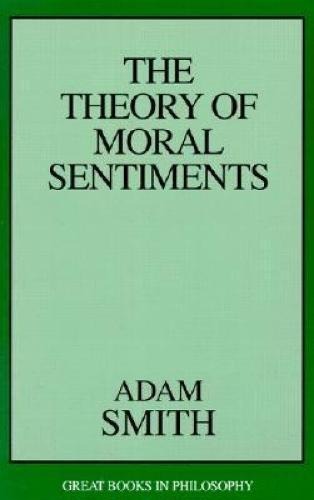
""The Theory of Moral Sentiments"" clearly demonstrates that besides mundane economic pursuits, Smith was just as interested, if not more so, in the capacity of people to bestow and to esteem benevolence, and to strive for virtue even while they are pursuing their own self-interest. The root of our motivation to act benevolently toward others, says Smith, is our natural propensity to sympathize with others. By the same token, our need to have others sympathize with us fuels our desire to be esteemed by others for our benevolence and generally virtuous character. But beyond the need for social approbation, we also have a genuine desire to live according to the dictates of conscience (called by Smith the 'Impartial Spectator'). This is our highest impulse and leads us continually to strive for excellence in all spheres of life quite apart from any recognition or encouragement from others. It may be prudent in our economic life to follow our self-interest to secure the basic necessities, but this is only the first stage of personal development toward the much higher goal of living a morally virtuous life. Although ""The Theory of Moral Sentiments"" is not well known today, it was widely read and highly praised by the leading intellectuals of the day including David Hume and Edmund Burke. The book went through six different editions between 1759 and 1790 and was also translated into French by the widow of Condorcet. To gain a complete picture of Adam Smith and his ideas, every reader of ""The Wealth of Nations"" should also become familiar with his classic treatment of ethics.
Full Product Details
Author: Adam Smith
Publisher: Prometheus Books
Imprint: Prometheus Books
Dimensions:
Width: 14.10cm
, Height: 3.00cm
, Length: 21.30cm
Weight: 0.635kg
ISBN: 9781573928007
ISBN 10: 1573928003
Pages: 546
Publication Date: 01 May 2000
Audience:
General/trade
,
General
Format: Paperback
Publisher's Status: Active
Availability: Out of stock

The supplier is temporarily out of stock of this item. It will be ordered for you on backorder and shipped when it becomes available.
Author Information
Adam Smith (1723-1790) was born in Kirkcaldy, Scotland, and began studies at the University of Glasgow. Three years later he entered Balliol College, Oxford, where he remained as a scholarship student until 1746. After leaving Oxford, Smith returned to the University of Glasgow to lecture on English literature and economics. The publication, in 1759, of his Theory of Moral Sentiments led to Smith's appointment as tutor to the third Duke of Buccleuch. In this capacity he lived for nearly three years in France, where he made the acquaintance of several of that nation's leading intellectuals, including Francois Quesnay, the physician and economist, and the renowned philosopher and critic of religion, Voltaire. Returning to Britain in 1766, Smith lived mainly in Kirkcaldy and London, working on his Wealth of Nations, which was published to great accliam in 1776. Adam Smith died in Edinburgh on July 17, 1790.