Overview
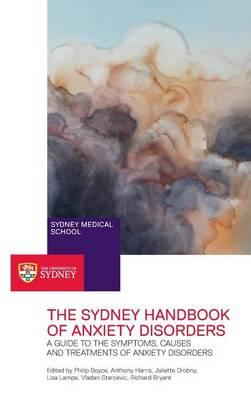
Anxiety disorders are common psychiatric conditions with a devastating effect on quality of life that is often underestimated. Unfortunately, anxiety is as misunderstood among patients and health practitioners as it is common. While more than 14 percent of Australians exhibit symptoms of anxiety disorders, only half seek treatment. Of great concern is the fact that 40 percent of those who do seek treatment receive misguided advice. Despite this alarming news, there is hope. The Australian mental health community, particularly the faculty of the University of Sydney, is rallying around anxiety research and clinical treatment. The Sydney Handbook of Anxiety Disorders presents the latest and most comprehensive information on the diagnosis and treatment of anxiety. This guide clearly lays out a biopsychosocial model for understanding anxiety that involves biological activity of the brain, psychological theories on attachment, conditioning, cognition and recognition of social triggers. New and traditional psychological and pharmacological treatment options are meticulously analysed in simple language, while case studies give real-life examples of diagnosis and treatment plans. The Sydney Handbook of Anxiety Disorders shares the experience and expertise of the best medical doctors and mental health specialists in Australia. The result is a must-read manual for anxiety sufferers and those who treat them. From the Back Cover: When it comes to anxiety disorders, Australians are struggling. More than 14 percent of Australians exhibit symptoms of debilitating anxiety. Anxiety is now more common than depression, but its symptoms, diagnosis, and treatments are less widely understood. The Sydney Handbook of Anxiety Disorders fills a significant knowledge gap with the latest information about anxiety, compiled by top researchers and clinicians at the University of Sydney. Rather than focusing on a single facet of anxiety, this guide presents a comprehensive biopsychosocial model to diagnosis and treatment that includes brain activity, psychological theory and cognitive behavioural therapy, and various pharmacological treatment options. Written in clear language, respectful of Australia's multicultural society, and filled with personal case studies and real-life anecdotes, it's designed to educate both patients and health practitioners. Anxiety disorders aren't going away. It's time to recognise and understand this growing mental health crisis. Table of Contents: Part I: What is Anxiety Part II: Physiology of the Normal Stress Response Part III: Genetics and Gene-Environment Interaction Part IV: Developmental Antecedents of Anxiety Part V: Neurobiology of Anxiety Disorders Part VI: Cognitive Theory Part VII: Assessment of Anxiety Disorders Part VIII: Behaviour Therapy Part IX: Cognitive Therapy Part X: Cognitive Behavioural Therapy Part XI: Pharmacotherapy Part XII: Review and Putting It All Together
Full Product Details
Author: Philip Boyce (Professor, the University of Sydney) ,
Anthony Harris (Professor the University of Sydney) ,
Juliette Drobny (Associate Professor the University of Sydney)
Publisher: University of Sydney
Imprint: University of Sydney
Dimensions:
Width: 15.20cm
, Height: 2.40cm
, Length: 22.90cm
Weight: 0.717kg
ISBN: 9780994214522
ISBN 10: 0994214529
Pages: 410
Publication Date: 29 September 2015
Audience:
General/trade
,
General
Format: Hardback
Publisher's Status: Active
Availability: Available To Order

We have confirmation that this item is in stock with the supplier. It will be ordered in for you and dispatched immediately.
Reviews
This new book from the University of Sydney Medical School, prepared by clinicians and researchers of international repute, provides a valuable and practical guide to anxiety disorders for busy doctors in general practice and community care. It is a commendable publication. It does not pretend to have the encyclopaedic qualities of major texts on cognitive behavioural therapeutics, but in an integrated fashion contains the essence that is of value to a busy practitioner. The book is worthy of consideration by anyone treating patients with these disorders - particularly GPs, who deal with patients with anxiety disorders every day. It would also be of value for undergraduate medical and nursing students and others with an interest in clinical health practice. -- Professor John W.G. Tiller, Medicine Today
Author Information
Phillip Boyce is Professor of Psychiatry and Head of Discipline of Psychiatry at the University of Sydney, and Head of Perinatal Psychiatry Clinical Research Unit at Westmead Hospital. He has published more than 170 articles and frequently contributes to psychiatric textbooks. He currently serves as associate editor of Australian and New Zealand Journal of Psychiatry. He served as president of the Royal Australian and New Zealand College of Psychiatrists (RANZCP) from 2003 to 2005. Anthony Harris is Associate Professor of Psychiatry at the University of Sydney. His clinical and research interests include psychophysiology, neuroimaging, schizophrenia, and major depression. He has conducted research on psychogeriatrics in London and was awarded a psychophysiology research fellowship at the Zentralinstitut fur Seelische Gesundheit in Mannheim, Germany. In addition to his teaching duties at the University of Sydney, he is also the co-chair of the Neuroscience and Mental Health Theme. Outside the university, he is Clinical Director of the Brain Dynamics Centre of Westmead Millennium Institute for Medical Research. Harris is an outspoken mental health advocate. He is President of the Schizophrenia Fellowship of New South Wales, and serves on the board of the Schizophrenia Research Institute, Australia. Juliette Drobny is a senior clinical psychologist and lecturer at the University of Sydney. She served as the head of the Anxiety Treatment and Research Unit at Westmead Hospital. She runs educational workshops on anxiety and mood disorders for health professionals.