Overview
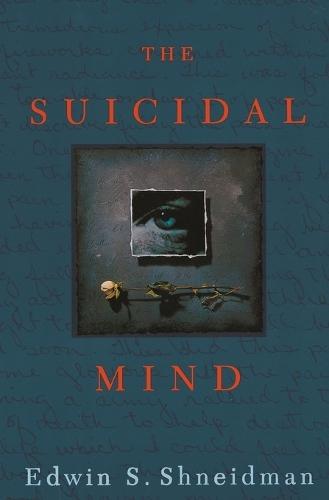
Suicide haunts our literature and our culture, claiming the lives of ordinary people and celebrities alike. It is now the third leading cause of death for fifteen- to twenty-four-year-olds in the United States, raising alarms across the nation about the rising tide of hopelessness seen in our young people. It is a taboo subtext to our successes and our happiness, a dark issue that is often euphemized, avoided, and little understood. In our century, psychology and psychiatry alike have attempted to understand, prevent, and medicalize these phenomena. But they have failed, argues Dr. Edwin Shneidman, because they have lost sight of the plain language, the ordinary everyday words, the pain and frustrated psychological needs of the suicidal individual. In The Suicidal Mind, Dr. Shneidman has written a groundbreaking work for every person who has ever thought about suicide or knows anybody who has contemplated it. The book brims with insight into the suicidal impulse and with helpful suggestions on how to counteract it. Shneidman presents a bold and simple premise: the main cause of suicide is psychological pain or ""psychache."" Thus the key to preventing suicide is not so much the study of the structure of the brain, or the study of social statistics, or the study of mental diseases, as it is the direct study of human emotions. To treat a suicidal individual, we need to identify, address, and reduce the individual's psychache. Shneidman shares with the reader his knowledge, both as a clinician and researcher, of the psychological drama that plays itself out in the suicidal mind through the exploration of three moving case studies. We meet Ariel, who set herself on fire; Beatrice, who cut herself with the intent to die; and Castro, a young man who meant to shoot his brains out but survived, horribly disfigured. These cases are presented in the person's own words to reveal the details of the suicidal drama, to show that the purpose of suicide is to seek a solution, to illustrate the pain at the core of suicide, and to isolate the common stressor in suicide: frustrated psychological needs. Throughout, Shneidman offers practical, explicit maneuvers to assist in treating a suicidal individual--steps that can be taken by concerned friends or family and professionals alike. Suicide is an exclusively human response to extreme psychological pain, a lonely and desperate solution for the sufferer who can no longer see any alternatives. In this landmark and elegantly written book, Shneidman provides the language, not only for understanding the suicidal mind, but for understanding ourselves. Anyone who has ever considered suicide, or knows someone who has, will find here a wealth of insights to help understand and to prevent suicide.
Full Product Details
Author: Shneidman
Publisher: Oxford University Press Inc
Imprint: Oxford University Press Inc
Dimensions:
Width: 13.70cm
, Height: 0.80cm
, Length: 20.10cm
Weight: 0.136kg
ISBN: 9780195118018
ISBN 10: 0195118014
Pages: 208
Publication Date: 02 July 1998
Audience:
Professional and scholarly
,
Professional & Vocational
Format: Paperback
Publisher's Status: Active
Availability: To order

Stock availability from the supplier is unknown. We will order it for you and ship this item to you once it is received by us.
Reviews
Anyone seeking a basic introduction about the motivation of people driven to destroy themselves can confidently turn to Edwin Schneidman's simple, short, and sympathetic book. --New Scientist<br>
<br> Anyone seeking a basic introduction about the motivation of people driven to destroy themselves can confidently turn to Edwin Schneidman's simple, short, and sympathetic book. --New Scientist<p><br>
""Anyone seeking a basic introduction about the motivation of people driven to destroy themselves can confidently turn to Edwin Schneidman's simple, short, and sympathetic book.""--New Scientist ""An uncommonly wise and insightful book, written with the compassion, elegance, and erudition that is so characteristic of Professor Shneidman's work. It is strongly recommended reading for anyone whose work brings them into contact with potentially suicidal people.""--Judd Marmor, M.D., Professor of Psychiatry Emeritus, USC School of Medicine ""This is a book that can save lives. Edwin Shneidman ushers us deeply into the suicidal mind. His books is addressed to all people for whom suicide is a dark fact of life--suicidal persons, their friends and family, the therapists who could treat them, and those who have lost loved ones through suicide.""--Larry Lockridge, Professor of English, New York University, and author of Shade of the Raintree: The Life and Death of Ross Lockridge, Jr. ""This is the most important book on suicide in my lifetime. It is an heretical book and crucial to a field which is in danger of losing its psyche by being medicalized. Dr. Shneidman's insights are essential to keeping the subject of suicide where it belongs--in the psychological pain of the suicidal mind. This is a book for everybody.""--Pamela Cantor, Ph.D., Harvard Medical School ""In a superbly written book, Ed Shneidman develops his theory that persons commit suicide if death is more attractive than life. He gives moving examples of how he could convince some, not others, that they are making the wrong choice.""--Fredrick Redlich, M.D., former Dean of Yale Medical School ""The clear lessons and gripping life stories in this book will let every type of reader, layperson, or professional know instantly what has taken a lifetime of study and clinical experience to know. Shneidman has searched, found, and now shows us his astonishing discovered truths.""--Caroline C. Murray, Ed.D., Lecturer, Harvard Medical School, Emerita ""The Suicidal Mind is an important book written by a master teacher, clinician, and researcher of human behavior. It is a book that merits the serious attention of all thoughtful persons for the many profound insights it provides into human nature in general and suicidal behavior in particular.""--Shirley L. Zimmerman, Ph.D., University of Minnesota ""The dean of suicidologists and preeminent among them, Professor Shneidman has studied the suicidal mind for more than 40 years and has plenty to tell us about it. He leads the reader through these pages like a friendly guide, using the experiences of Ariel Wilson, Beatrice Bessen, and the unforgettable Castro Reyes to explain to us suicide's commonalities. Free of jargon, vividly written, this is a book for those who comprehend little about suicide, and for those who grasp much. Every reader, naive or sophisticated about this subject, will arise from reading The Suicidal Mind understanding much more.""--John T. Maltsberger, M.D., Harvard Medical School ""The Suicidal Mind is a gallery of portraits in an impassioned, impressionistic style....Absolutely compelling. The phenomenal real life examples in this book are amazingly vivid and unique....The material [Shneidman] gathered over the course of a lifetime working with suicidal individuals is incredible, unique, and absolutely captivating....A photograph album of facts [that] Shneidman suffuses...with extraordinary color.""--Death Studies
Three case studies from the files of a UCLA thanatologist demonstrate in chilling detail that killing oneself is no easy matter. Shneidman, who limits his comments to cultures with a Judeo-Christian tradition, proposes the not especially novel idea that psychological pain, or psychache, is the primary cause of suicide. Using a form adapted from Henry A. Murray's Explorations in Personality to rate the psychological needs of individuals, he concludes that most suicides fall into five need clusters. (There is at this point a gratuitous insertion of so-called experts' assessments of the needs of Hitler, Martha Graham, Marilyn Monroe, Captain Ahab, and others.) His case studies demonstrate three of these clusters: the need to be loved, the need to strike first, and the need to belong. The first case study consists mostly of transcribed audiotapes from Ariel (pseudonyms are used throughtout), who chose self-immolation but survived with horrible burns over most of her body. Beatrice, the second case, wrote out her life story while she was Shneidman's patient; her choice was knives and starvation, and it is unclear whether her attempts at suicide have ceased. Castro, the third case, was unable to speak to Shneidman, having blown away most of his face while trying to blow his brains out, but he wrote out for him a long account of the episode, as well as many notes and letters. Shneidman sums up with a list of ten psychological commonalities of suicide - the common emotion is hopelessness/helplessness, the common action is escape, etc. - and a list of 24 psychotherapeutic maneuvers that he deems appropriate in treating potential suicides. Though providing few fresh insights, this succeeds on another level: By revealing the possible ghastly consequences of failed attempts, perhaps it may help deter some from trying to take their own lives. (Kirkus Reviews)
Anyone seeking a basic introduction about the motivation of people driven to destroy themselves can confidently turn to Edwin Schneidman's simple, short, and sympathetic book. --New Scientist
Fascinating New Scientist
Author Information
Edwin S. Shneidman, Ph.D., is Professor of Thanatology Emeritus at the University of California at Los Angeles School of Medicine. He is the founder of the American Association of Suicidology, and the author of Voices of Death, Definition of Suicide, and Deaths of Man, which was nominated for a National Book Award.