Overview
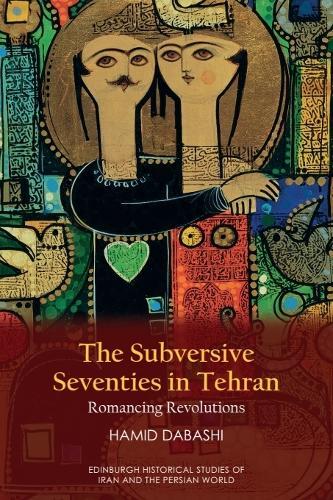
The 1970s are emerging as a pivotal decade in global history, in which enduring and unprecedented revolutionary changes radically altered our conception of society, polity and culture. In this book, Hamid Dabashi gives a potent account of the momentous changes in Iran during this time, mapping the social, political and cultural forces that shaped the decade and led to the downfall of the Pahlavi dynasty. Recollecting his years as a student in the Iranian capital, Dabashi explores the social and cultural scene of 1970s Tehran and offers a thorough account of the political disposition of the country in the years leading up to the 19779 revolution. He places this in the context of revolutionary aspirations around the world, putting Tehran on the map of the global 'subversive seventies'. The story is framed around an analysis of iconic novels and films that both reflected and shaped the time in which they were produced.
Full Product Details
Author: Hamid Dabashi (Hagop Kevorkian Professor of Iranian Studies and Comparative Literature, Columbia University)
Publisher: Edinburgh University Press
Imprint: Edinburgh University Press
ISBN: 9781399542852
ISBN 10: 1399542850
Pages: 232
Publication Date: 31 December 2025
Audience:
Professional and scholarly
,
College/higher education
,
Professional & Vocational
,
Postgraduate, Research & Scholarly
Format: Hardback
Publisher's Status: Forthcoming
Availability: Not yet available

This item is yet to be released. You can pre-order this item and we will dispatch it to you upon its release.
Reviews
The book is a captivating autobiographical account that is serious in its investigation of the cultural and political make-up of the revolutionary decade. Both in its prose and its close reading of the watershed movies and texts from the period, it offers a wealth of new knowledge that is particularly critical for this moment when many Iranians at home and in the diaspora are grossly misunderstanding and misrepresenting the revolutionary consciousness of that decade. -- Atefeh Akbari Shahmirzadi, Barnard College
Author Information
Hamid Dabashi is Hagop Kevorkian Professor of Iranian Studies and Comparative Literature at Columbia University in New York where he is a founding member of its Institute for Comparative Literature and Society. He is the author of over 25 books, including The World of Persian Literary Humanism (2014); Persophilia: Persian Culture on the Global Scene (2015); Iran without Borders: Towards a Critique of the Postcolonial Nation (2016); Iran: Rebirth of a Nation (2017); The Shahnameh: The Persian Epic as World Literature (2019); The Last Muslim Intellectual: The Life and Legacy of Jalal Al-e Ahmad (EUP, 2021). His most recent book is Mashya and Mashyana Unearthed: Myth, Metonymy and the Unknowing Subject (EUP 2024).