Overview
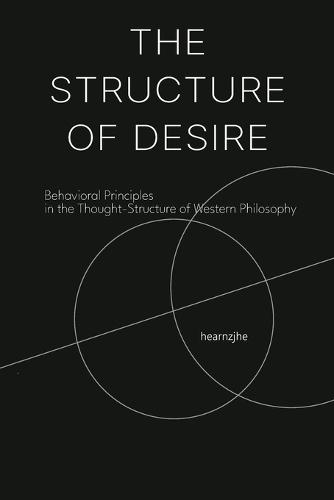
The Structure of Desire presents a structural reinterpretation of human behavior by treating desire, morality, repression, and freedom not as emotional or ethical categories, but as outputs of an information-processing system called the Program. Rather than explaining action through personality or abstract will, the book argues that behavior is produced through a structured algorithm composed of Commands, a Controller, inputs, and processing mechanisms. Its central innovation lies in elevating everyday moral statements-such as ""You must be a good person""-into analyzable philosophical units called Commands. These Commands are not evaluated as right or wrong; they are examined as logical constructions. By applying the analytic methods of Western philosophy-decomposition, structural analysis, and reassembly-the book translates moral language into programmable code. Freedom is redefined not as unlimited choice, but as the capacity to question a Command and expose its internal structure. Desire is reconceived as well. Rather than a lack seeking fulfillment, desire is described as an output function of the Program. It does not simply pursue objects; it produces them. In this framework, the claim that ""the object is a fantasy"" becomes a logical proposition rather than a metaphor. Desire emerges from the interaction of encoded Commands, repression, memory, and inherited predispositions. The book also offers a code-based perspective on the longstanding debate between genetic determinism and free will. Genes function as hardware-level predispositional codes that establish baseline tendencies, while will operates as meta-level editing software capable of analyzing and rewriting Commands. Transformation does not arise from moral exhortation, but from structural understanding. Moving beyond traditional ethics, the work proposes a shift from the metaphysics of morality to the logic of morality. Goodness is not an intrinsic essence but a structural output, and guilt is interpreted not as a flaw of character but as a signal that a Command has been executed. Rather than prescribing new norms, the book exposes how norms are generated and sustained. Integrating insights from philosophy, psychoanalysis, neuroscience, and behavioral economics, The Structure of Desire unifies fragmented disciplines under a single Production Algorithm. It provides readers with a systematic framework for identifying internal Commands, tracing their origin and intensity, and restructuring the architecture that shapes action.
Full Product Details
Author: Hearnzjhe
Publisher: Ann Press
Imprint: Ann Press
Dimensions:
Width: 15.20cm
, Height: 1.10cm
, Length: 22.90cm
Weight: 0.286kg
ISBN: 9791199765245
Pages: 210
Publication Date: 27 February 2026
Audience:
General/trade
,
General
Format: Paperback
Publisher's Status: Active
Availability: In Print

This item will be ordered in for you from one of our suppliers. Upon receipt, we will promptly dispatch it out to you. For in store availability, please contact us.