Overview
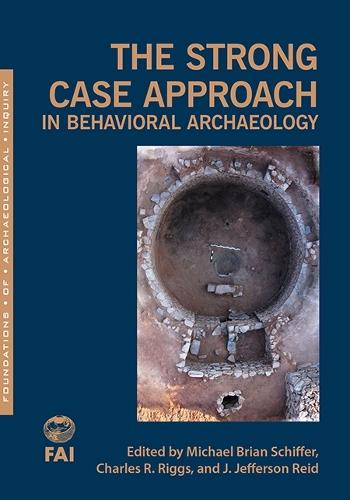
Although all archaeologists subscribe in principle to building strong cases in support of their inferences, behavioural archaeology alone has created methodology for developing strong cases in practice. The behavioural version of the strong case approach rests on two main pillars: (1) nomothetic (generalising) strategies, consisting of research in experimental archaeology, ethnoarchaeology, and long-term processes of behavioural change to produce principles necessary for inference; and (2) the formation processes of supporting evidence when constructing inferences. The chapters employ a wide range of data classes, demonstrating the versatility and productivity of the approach for fashioning rigorous inferences in history, historical archaeology, ethnoarchaeology, and prehistory. By illustrating the strong case approach with convincing case studies from behavioural archaeology, the editors aim to alert the archaeological community about how the process of archaeological inference can be improved.
Full Product Details
Author: Michael Brian Schiffer ,
Charles Riggs ,
J. Jefferson Reid
Publisher: University of Utah Press,U.S.
Imprint: University of Utah Press,U.S.
Dimensions:
Width: 17.80cm
, Height: 2.00cm
, Length: 25.40cm
Weight: 0.465kg
ISBN: 9781607815761
ISBN 10: 1607815761
Pages: 288
Publication Date: 30 November 2017
Audience:
Professional and scholarly
,
Professional & Vocational
Format: Paperback
Publisher's Status: Active
Availability: Out of stock

The supplier is temporarily out of stock of this item. It will be ordered for you on backorder and shipped when it becomes available.
Reviews
Each chapter clearly articulates the author's understanding of the approach and how they oriented their study to best fit both their data set and their research interests. Such examples also demonstrated how this approach is enacted in archaeological practice. This book is welcoming to readers who are unfamiliar with the culture history of the American Southwest, presenting research that is interesting to both knowledgeable and curious archaeologists. --Canadian Journal of Archaeology An excellent overview of the strong case approach, and how it has been used through the decades. For readers unfamiliar with the strong case approach, the book adeptly provides necessary information on the history, development, and use of this paradigm. Anyone interested in archaeological theory and history, behavioral archaeology, and Southwest archaeology should find this volume useful. --Jakob W. Sedig, Consulting Archaeologist, Reich Lab of Medical and Population Genetics, Harvard Medical School These case studies take the ideas of behavioral archaeology and the strong case from the theoretical to the concrete. The volume demonstrates the continued importance of these issues and provides a very accessible medium for their implementation. --Tammy Stone, professor of anthropology and associate dean, University of Colorado Denver
An excellent overview of the strong case approach, and how it has been used through the decades. For readers unfamiliar with the strong case approach, the book adeptly provides necessary information on the history, development, and use of this paradigm. Anyone interested in archaeological theory and history, behavioral archaeology, and Southwest archaeology should find this volume useful. --Jakob W. Sedig, Consulting Archaeologist, Reich Lab of Medical and Population Genetics, Harvard Medical School These case studies take the ideas of behavioral archaeology and? the strong case from the theoretical to the concrete. The volume demonstrates the continued importance of these issues and provides a very accessible medium for their implementation. --Tammy Stone, professor of anthropology and associate dean, University of Colorado Denver
These case studies take the ideas of behavioral archaeology and the strong case from the theoretical to the concrete. The volume demonstrates the continued importance of these issues and provides a very accessible medium for their implementation. --Tammy Stone, professor of anthropology and associate dean, University of Colorado Denver An excellent overview of the strong case approach, and how it has been used through the decades. For readers unfamiliar with the strong case approach, the book adeptly provides necessary information on the history, development, and use of this paradigm. Anyone interested in archaeological theory and history, behavioral archaeology, and Southwest archaeology should find this volume useful. --Jakob W. Sedig, Consulting Archaeologist, Reich Lab of Medical and Population Genetics, Harvard Medical School
An excellent overview of the strong case approach, and how it has been used through the decades. For readers unfamiliar with the strong case approach, the book adeptly provides necessary information on the history, development, and use of this paradigm. Anyone interested in archaeological theory and history, behavioral archaeology, and Southwest archaeology should find this volume useful. --Jakob W. Sedig, Consulting Archaeologist, Reich Lab of Medical and Population Genetics, Harvard Medical School These case studies take the ideas of behavioral archaeology and the strong case from the theoretical to the concrete. The volume demonstrates the continued importance of these issues and provides a very accessible medium for their implementation. --Tammy Stone, professor of anthropology and associate dean, University of Colorado Denver
Author Information
Michael Brian Schiffer is a research associate at the Lemelson Center, National Museum of American History, the Smithsonian Institution. He is retired from the University of Arizona, where he was the Fred A. Riecker Distinguished Professor of Anthropology. Charles R. Riggs is professor of anthropology and curator of Archaeological Collections at Fort Lewis College in Durango, CO, where he also directs the college's archaeological field school. J. Jefferson Reid is University Distinguished Professor Emeritus in the School of Anthropology at the University of Arizona, and was director of that university's archaeological field school at Grasshopper Pueblo from 1979 to 1992.