Overview
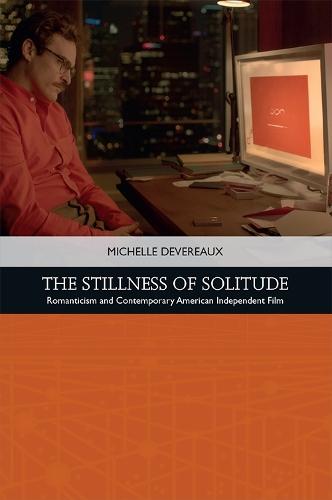
In the first book-length study of Romanticism in relation to American film, Michelle Devereaux takes established theories of contemporary American independent cinema as a point of entry, exploring the underlying philosophical and aesthetic Romantic connections between a selection of seven films from four popular filmmakers: Wes Anderson, Sofia Coppola, Spike Jonze and Charlie Kaufman. Primarily dealing with questions of identity, imagination and the relation between self and world, these films also emphasise the anxieties of our own time: the nostalgia for an imaginary past, and the fear of an uncertain future.
Full Product Details
Author: Michelle Devereaux (Film journalist and scholar, independent)
Publisher: Edinburgh University Press
Imprint: Edinburgh University Press
Dimensions:
Width: 15.60cm
, Height: 1.20cm
, Length: 23.40cm
Weight: 0.276kg
ISBN: 9781474446051
ISBN 10: 1474446051
Pages: 224
Publication Date: 26 May 2021
Audience:
Professional and scholarly
,
Professional & Vocational
Format: Paperback
Publisher's Status: Active
Availability: Manufactured on demand

We will order this item for you from a manufactured on demand supplier.
Reviews
"While other thinkers have gestured towards the complementarity of Romanticism and contemporary art, none have done so in such a thorough and thoughtful manner. Michelle Devereaux's monograph breaks new ground by placing Romantic art and philosophy in conversation with cutting-edge American independent cinema, and in so doing presents both in a new light. Rich in detail and beautifully written, Devereaux's readings of films by the likes of Wes Anderson and Sofia Coppola illuminate the connections between the Romantic era and our present moment. But more than this, in deepening our understanding of mankind's enduring feelings of anxiety and isolation, her book offers a first step in its overcoming.--Dr. Catherine Wheatley, King's College London In this intricately argued and elegantly written book, Michelle Devereaux offers an inventive, original take on American independent film, arguing that works by Wes Anderson, Charlie Kaufman, Sofia Coppola and Spike Jonze exemplify ""neoromanticism"". [...] The Stillness of Solitude: Romanticism and Contemporary American Independent Film will serve as a valuable resource for researchers interested in the filmmakers she highlights, for each chapter offers a stand-alone analysis of one director's film.--Suzanne Ferriss, Nova Southeastern University ""Film-Philosophy Volume 25, Issue 2"""
In this intricately argued and elegantly written book, Michelle Devereaux offers an inventive, original take on American independent film, arguing that works by Wes Anderson, Charlie Kaufman, Sofia Coppola and Spike Jonze exemplify “neoromanticism”. [...] The Stillness of Solitude: Romanticism and Contemporary American Independent Film will serve as a valuable resource for researchers interested in the filmmakers she highlights, for each chapter offers a stand-alone analysis of one director’s film. -- Suzanne Ferriss, Nova Southeastern University * Film-Philosophy Volume 25, Issue 2 * While other thinkers have gestured towards the complementarity of Romanticism and contemporary art, none have done so in such a thorough and thoughtful manner. Michelle Devereaux’s monograph breaks new ground by placing Romantic art and philosophy in conversation with cutting-edge American independent cinema, and in so doing presents both in a new light. Rich in detail and beautifully written, Devereaux’s readings of films by the likes of Wes Anderson and Sofia Coppola illuminate the connections between the Romantic era and our present moment. But more than this, in deepening our understanding of mankind’s enduring feelings of anxiety and isolation, her book offers a first step in their overcoming. -- Dr. Catherine Wheatley, King's College London While other thinkers have gestured towards the complementarity of Romanticism and contemporary art, none have done so in such a thorough and thoughtful manner. Michelle Devereaux’s monograph breaks new ground by placing Romantic art and philosophy in conversation with cutting-edge American independent cinema, and in so doing presents both in a new light. Rich in detail and beautifully written, Devereaux’s readings of films by the likes of Wes Anderson and Sofia Coppola illuminate the connections between the Romantic era and our present moment. But more than this, in deepening our understanding of mankind’s enduring feelings of anxiety and isolation, her book offers a first step in its overcoming. -- Dr. Catherine Wheatley, King's College London
Author Information
Michelle Devereaux is a film journalist and scholar. She received her doctorate in Film Studies from the University of Edinburgh and has taught film theory, history and criticism at the University of Edinburgh and the University of Birmingham. She is a board member of intersectional feminist journal on visual culture MAI and currently lives in British Columbia, Canada.