Overview
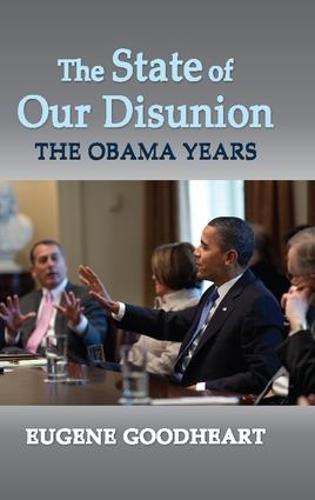
The US Constitution resists centralizing authority by granting equal power to the three branches of government, as well as the individual states. The risk inherent in the separation of powers is that the absence of a spirit of compromise can lead to the disintegration of the union. Eugene Good heart argues that the current union is in peril due to an unwillingness to cooperate on the part of contending parties. He explains how and why it has reached this point, while identifying common ground between thoughtful liberals and conservatives. Ironically, President Barack Obama, who from the outset affirmed the spirit of compromise and union, has governed in a time marked by apparently irreconcilable conflict between and within parties, and the branches of the government. Those on the extremes of the political spectrum view compromise as weakness and a lack of conviction, while those in the middle view it as necessary. Good heart argues that principle and compromise are not antagonists. He also describes the media's role in shaping and distorting public perception of political realities. Many themes that preoccupy our politics and will doubtless continue to do so in the future are addressed in this work, including gross income inequality, governmental regulation of the market, the US's role as superpower, and the relationship between liberty and equality. This book will be of interest to those concerned about contemporary political life.
Full Product Details
Author: Eugene Goodheart
Publisher: Taylor & Francis Inc
Imprint: Routledge
Dimensions:
Width: 13.80cm
, Height: 2.30cm
, Length: 21.60cm
Weight: 0.294kg
ISBN: 9781412857147
ISBN 10: 1412857147
Pages: 196
Publication Date: 30 December 2015
Audience:
Professional and scholarly
,
Professional & Vocational
Format: Hardback
Publisher's Status: Active
Availability: In Print

This item will be ordered in for you from one of our suppliers. Upon receipt, we will promptly dispatch it out to you. For in store availability, please contact us.
Reviews
No problem in contemporary American politics is more vexing, indeed infuriating, than the dysfunction of the US Congress, due largely to the obstructionist tactics of Republican legislators. Eugene Goodheart, a distinguished literary critic turned astute political analyst, offers no solution. But <em>The State of Our Disunion</em> makes an invaluable contribution to our public life by helping us think about the implications of gridlock on Capitol Hill. Goodheart has an aptitude for spotting the weakness of an argument. But by invoking the wisdom of first principles, including the democratic obligation to seek common ground, he also appeals to the best instincts of his fellow citizens. Here's hoping that they become his readers. </p> --Stephen Whitfield, Brandeis University</p>
No problem in contemporary American politics is more vexing, indeed infuriating, than the dysfunction of the US Congress, due largely to the obstructionist tactics of Republican legislators. Eugene Goodheart, a distinguished literary critic turned astute political analyst, offers no solution. But The State of Our Disunion makes an invaluable contribution to our public life by helping us think about the implications of gridlock on Capitol Hill. Goodheart has an aptitude for spotting the weakness of an argument. But by invoking the wisdom of first principles, including the democratic obligation to seek common ground, he also appeals to the best instincts of his fellow citizens. Here's hoping that they become his readers. --Stephen Whitfield, Brandeis University
-No problem in contemporary American politics is more vexing, indeed infuriating, than the dysfunction of the US Congress, due largely to the obstructionist tactics of Republican legislators. Eugene Goodheart, a distinguished literary critic turned astute political analyst, offers no solution. But The State of Our Disunion makes an invaluable contribution to our public life by helping us think about the implications of gridlock on Capitol Hill. Goodheart has an aptitude for spotting the weakness of an argument. But by invoking the wisdom of first principles, including the democratic obligation to seek common ground, he also appeals to the best instincts of his fellow citizens. Here's hoping that they become his readers.- --Stephen Whitfield, Brandeis University No problem in contemporary American politics is more vexing, indeed infuriating, than the dysfunction of the US Congress, due largely to the obstructionist tactics of Republican legislators. Eugene Goodheart, a distinguished literary critic turned astute political analyst, offers no solution. But The State of Our Disunion makes an invaluable contribution to our public life by helping us think about the implications of gridlock on Capitol Hill. Goodheart has an aptitude for spotting the weakness of an argument. But by invoking the wisdom of first principles, including the democratic obligation to seek common ground, he also appeals to the best instincts of his fellow citizens. Here's hoping that they become his readers. --Stephen Whitfield, Brandeis University No problem in contemporary American politics is more vexing, indeed infuriating, than the dysfunction of the US Congress, due largely to the obstructionist tactics of Republican legislators. Eugene Goodheart, a distinguished literary critic turned astute political analyst, offers no solution. But The State of Our Disunion makes an invaluable contribution to our public life by helping us think about the implications of gridlock on Capitol Hill. Goodheart has an aptitude for spotting the weakness of an argument. But by invoking the wisdom of first principles, including the democratic obligation to seek common ground, he also appeals to the best instincts of his fellow citizens. Here's hoping that they become his readers. --Stephen Whitfield, Brandeis University
Author Information
Eugene Goodheart is Edytha Macy Gross Professor of Humanities Emeritus at Brandeis University. His books include Mostly Grave Thoughts and Holding the Center.