Overview
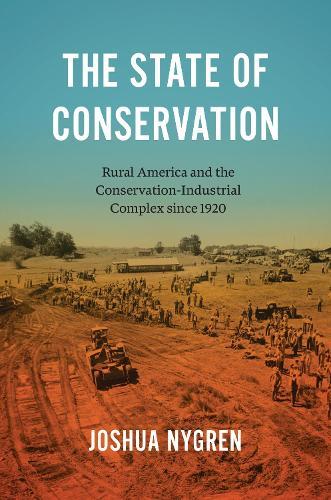
Throughout the twentieth century, natural resource conservation emerged as a vital force in US politics, laying the groundwork for present-day """"sustainability."""" Merging environmental, agricultural, and political history, Joshua Nygren traces the political economy and ecology of agricultural conservation through the lens of the """"conservation-industrial complex."""" This evolving public-private network—which united the US Department of Agriculture, Congress, local and national organizations, and the agricultural industry—guided soil and water conservation for much of the century. Contrary to the classic tales of US environmental politics and the rise and fall of the New Deal Order, Nygren emphasizes continuity. He demonstrates how the conservation policies, programs, and partnerships of the 1930s and 1940s persisted through the age of environmentalism, and their defining traits anticipated those typically associated with late-twentieth century political culture. The conservation-industrial complex promoted a development-oriented brand of conservation that aided the rise of large-scale, capital-intensive agriculture which continues today. It reshaped the physical and political landscapes of the country, leading to impressive victories and spectacular failures by privileging some environments, degrading others, and intensifying farm depopulation. In the name of environmental protection, agricultural conservation made rural America less equal.
Full Product Details
Author: Joshua Nygren
Publisher: The University of North Carolina Press
Imprint: The University of North Carolina Press
ISBN: 9781469680491
ISBN 10: 1469680491
Pages: 320
Publication Date: 31 January 2025
Audience:
Professional and scholarly
,
Professional & Vocational
Format: Paperback
Publisher's Status: Active
Availability: Out of stock

The supplier is temporarily out of stock of this item. It will be ordered for you on backorder and shipped when it becomes available.
Reviews
""Nygren relies on a wide variety of sources, including government reports, industry publications, and oral histories, to make a compelling argument for the rise of a 'conservation-industrial complex' that developed as federal agencies, politicians, local elites, and agricultural corporations redefined conservation to preserve their power and investments. . . . [A]n important addition to the story of environmentalism in the US during the twentieth century . . . [that] illuminates broader patterns in the ways government land management policies intersected with democratic and capitalistic values.""--H-Sci-Med-Tech ""Pastoral myths, long a part of Americana and once the nation's way of life, disappear in this account detailing the manner in which small farms from the 1920s onward have been displaced in the nation's agricultural heartland. . . . In their place, contemporary agribusiness thrived. Nygren . . . offers a startling revelation of how this occurred. Recommended.""--CHOICE ""An astute analysis of the interrelationship of the Soil Conservation Service, the agricultural machinery industry, and Congress. This is a solidly researched, well-written, and clearly argued book that merits consideration by all policy and agricultural historians.""--Western Historical Quarterly
""Nygren relies on a wide variety of sources, including government reports, industry publications, and oral histories, to make a compelling argument for the rise of a 'conservation-industrial complex' that developed as federal agencies, politicians, local elites, and agricultural corporations redefined conservation to preserve their power and investments. . . . [A]n important addition to the story of environmentalism in the US during the twentieth century . . . [that] illuminates broader patterns in the ways government land management policies intersected with democratic and capitalistic values.""--H-Sci-Med-Tech ""Nygren's scholarship and research are impressive . . . [and he] makes important interventions in political, agricultural, and environmental histories. Most significantly, Nygren offers a powerful argument that 'In trying to keep soil from washing to the sea, [the conservation-industrial complex] sold millions of people down the river.'""--S-USIH ""A full, twentieth-century treatment of agricultural conservation is well overdue, and this book stands immediately as definitive.""--Sarah T. Phillips, author of This Land, This Nation ""An astute analysis of the interrelationship of the Soil Conservation Service, the agricultural machinery industry, and Congress. This is a solidly researched, well-written, and clearly argued book that merits consideration by all policy and agricultural historians.""--Western Historical Quarterly ""Brilliant. You will never look at conservation in rural America the same way again after reading this book.""--Bart Elmore, author of Country Capitalism ""Lucidly written and brimming with eye-popping detail, Nygren's history delivers vital context for current debates around the US farm bill. A must-read for anyone interested in the troubled state of US agriculture.""--Tom Philpott, author of Perilous Bounty ""Pastoral myths, long a part of Americana and once the nation's way of life, disappear in this account detailing the manner in which small farms from the 1920s onward have been displaced in the nation's agricultural heartland. . . . In their place, contemporary agribusiness thrived. Nygren . . . offers a startling revelation of how this occurred. Recommended.""--CHOICE
""An astute analysis of the interrelationship of the Soil Conservation Service, the agricultural machinery industry, and Congress. This is a solidly researched, well-written, and clearly argued book that merits consideration by all policy and agricultural historians.""--Western Historical Quarterly
Author Information
Joshua Nygren is associate professor of history at the University of Central Missouri.