Overview
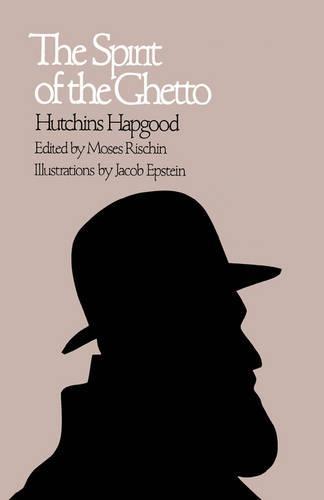
First published in 1902, and illustrated by Jacob Epstein, this evocation of the spiritual and cultural life of Yiddish New York remains fresh and relevant, and an invaluable commentary on one aspect of the formation of modern America. To an extent unequaled by any outsider before him, Hutchins Hapgood, a descendant of generations of New England Yankees, succeeded in penetrating the inner life of an American immigrant community. Hapgood did not set out to reform and cleanse the ghetto. His aim was to understand and interpret it, to find and know its poets, scholars, dramatists, actors, and artists, as well as its merchants and businessmen. He presents real people, individually identified and described, working out their destiny as part of a vital Jewish world. The sensibility and intentions of this book, as the editor points out, ""anticipated a period of unexampled American artistic and intellectual gusto and creativity."" Moses Rischin's discerning and affectionate introduction places Hapgood's neglected classic squarely in the mainstream of American cultural development.
Full Product Details
Author: Hutchins Hapgood ,
Moses Rischin ,
Jacob Epstein
Publisher: Harvard University Press
Imprint: Harvard University Press
Edition: New edition
Dimensions:
Width: 20.00cm
, Height: 2.80cm
, Length: 25.00cm
Weight: 0.454kg
ISBN: 9780674832664
ISBN 10: 0674832663
Pages: 315
Publication Date: 01 January 1967
Audience:
College/higher education
,
Professional and scholarly
,
Undergraduate
,
Postgraduate, Research & Scholarly
Format: Paperback
Publisher's Status: Active
Availability: Out of stock

The supplier is temporarily out of stock of this item. It will be ordered for you on backorder and shipped when it becomes available.
Reviews
The title couldn't be more unfortunate, for this collection of essays by an energetic journalist peddling his wares in 1902 glows with a youthful excitement and the sense of discovery as Mr. Hapgood becomes involved in the ferment and confusion of the Jewish Lower East Side. Although reported before the great migrations before World War I, the divisive influence of American culture on a religious and involuted society was already being felt, in the poverty-ridden but full life on the square mile below New York's E. 14th St. and between the Hudson and East rivers. Fascinated by the intellectual vitality of the community, Hapgood regretfully witnesses the decline of the elderly scholars displaced by youngsters determined not only to establish a secure place for themselves but to become vigorously, jauntily American. The family, religion, children, women, societies, are perhaps discussed too briefly, and it is here that writer Harry Golden supplies his affectionate, anecdotal notes. However, when the essays turn to the Yiddish theatre, writers and artists, Mr. Golden steps aside for Hapgood's crisp, appreciative, critical appraisal. Among Mr. Hapgood's discoveries was the young Jacob Epstein and his exquisite sketches decorate the book. Although for a predictable Jewish market, this has special literary and historical value. Hapgood to Golden to Epstein with every base covered. (Kirkus Reviews)