Overview
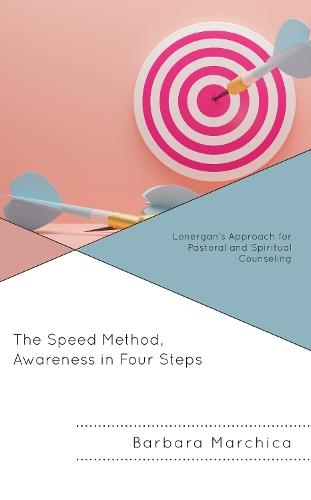
The author presents a theoretical-practical training manual with effective tools for everyone, especially counselors to improve their spiritual growth. The Speed Method, integrating Lonergan’s theory with the practice of counseling, becomes a concrete opportunity in view of a new spiritual springtime for the Church and human care.
Full Product Details
Author: Barbara Marchica
Publisher: Bloomsbury Publishing Plc
Imprint: Lexington Books
Dimensions:
Width: 15.70cm
, Height: 2.20cm
, Length: 23.60cm
Weight: 0.485kg
ISBN: 9781666900378
ISBN 10: 1666900370
Pages: 208
Publication Date: 26 October 2022
Audience:
Professional and scholarly
,
Professional & Vocational
Format: Hardback
Publisher's Status: Active
Availability: Manufactured on demand

We will order this item for you from a manufactured on demand supplier.
Reviews
The book represents the fruit of an original investigation, which made two areas not easy to master, interact: the North American matrix of pastoral counseling and the complex thought of the Canadian theologian B. Lonergan. Lonergan's analysis of consciousness - in the fourfold dimensions of experience, intelligence, judgment, decision - shows its constitutive intentionality, which is expressed through the dialectic between self-appropriation and self-transcendence. This undoubtedly offers a valuable theological contribution to the development of the helping relationship. The author hints at a pastoral springtime , in the evocative final passages, wishing for a renewal of practices and gestures that translate the Gospel message into pastoral care, or rather taking care of every human reality.--Andrea Toniolo, Dean of The Theology Faculty of the Triveneto The importance of spirituality for psychological well-being is now validated in the scientific literature. Indeed, a close relationship between the two dimensions is given. By treating the former well, it is often possible to improve the latter. For this reason, spiritual counseling is now inescapable. In this splendid book such a crucial node is addressed in a systematic, well-founded and comprehensive way.--Ines Testoni, University of Padova, Italy The mail reason of interest of this original work is the original approach to the more ambitious goal of modern history of consciousness: to activate a reflective and dynamic path of openness to the transcendent Sense, holding the link with the singularity and depth of the personal Self. The model developed by the accurate theoretical and practical research presented in this book is an instrument perfectly adherent to the current conditions of existential and religious orientation problems in the contest of the connection between the individual and the community in the secular age. The Speed model exploits the theory of the reciprocal integration between psychological dynamism and spiritual quality of the Self that comes from the anthropology of the Canadian thinker Bernard Lonergan. The verification of this model is not produced only through its practical experimentation within the community of faith, but also in the context of academic training. As a structured and open model of research-action, Speed represents an unprecedented perspective for the correlation between the existential theology of faith and the pastoral mediation of the community.--Pierangelo Sequeri, Theological Faculty of Milan (Italy) The rigorous search for a working method, that corresponds to a coherent Christian anthropology of this proposal, gives great hope. B. Lonergan's lesson proves valuable, both as to the idea of the method itself, and the notion of self-awareness, stretched between self-appropriation and self-transcendence. The work of counseling thus becomes a convincing foundation and it also identifies a space of its own within the sphere of ecclesial action, living up to the new challenges of secularization and postmodern culture. But above all, the successful articulation of theory, practice and experience is most convincing. This circularity allows for the unification of different dimensions of believing experience, community life and theological research.--Alberto Cozzi, Dean of the Higher Institute of Religious Sciences of Milan (Italy)
"The book represents the fruit of an original investigation, which made two areas not easy to master, interact: the North American matrix of pastoral counseling and the complex thought of the Canadian theologian B. Lonergan. Lonergan's analysis of consciousness - in the fourfold dimensions of experience, intelligence, judgment, decision - shows its constitutive intentionality, which is expressed through the dialectic between self-appropriation and self-transcendence. This undoubtedly offers a valuable theological contribution to the development of the helping relationship. The author hints at a ""pastoral springtime"", in the evocative final passages, wishing for a renewal of practices and gestures that translate the Gospel message into pastoral care, or rather ""taking care"" of every human reality. The importance of spirituality for psychological well-being is now validated in the scientific literature. Indeed, a close relationship between the two dimensions is given. By treating the former well, it is often possible to improve the latter. For this reason, spiritual counseling is now inescapable. In this splendid book such a crucial node is addressed in a systematic, well-founded and comprehensive way. The mail reason of interest of this original work is the original approach to the more ambitious goal of modern history of consciousness: to activate a reflective and dynamic path of openness to the transcendent Sense, holding the link with the singularity and depth of the personal Self. The model developed by the accurate theoretical and practical research presented in this book is an instrument perfectly adherent to the current conditions of existential and religious orientation problems in the contest of the connection between the individual and the community in the secular age. The ""Speed"" model exploits the theory of the reciprocal integration between psychological dynamism and spiritual quality of the Self that comes from the anthropology of the Canadian thinker Bernard Lonergan. The verification of this model is not produced only through its practical experimentation within the community of faith, but also in the context of academic training. As a structured and open model of research-action, ""Speed"" represents an unprecedented perspective for the correlation between the existential theology of faith and the pastoral mediation of the community. The rigorous search for a working method, that corresponds to a coherent Christian anthropology of this proposal, gives great hope. B. Lonergan's lesson proves valuable, both as to the idea of the method itself, and the notion of self-awareness, stretched between self-appropriation and self-transcendence. The work of counseling thus becomes a convincing foundation and it also identifies a space of its own within the sphere of ecclesial action, living up to the new challenges of secularization and postmodern culture. But above all, the successful articulation of theory, practice and experience is most convincing. This circularity allows for the unification of different dimensions of believing experience, community life and theological research."
Author Information
Barbara Marchica is theologian, spiritual counselor, and didactic director of the Higher Education School, Milan Insight School (MIS), with the patronage of the Higher Institute of Religious Sciences of Milan (Italy).