Overview
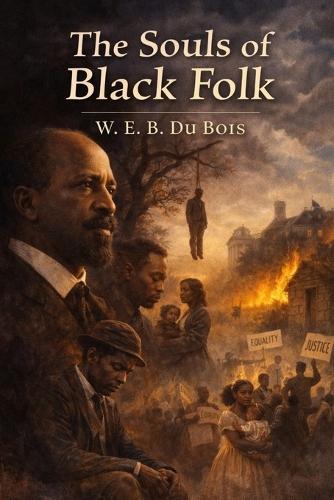
The Souls of Black Folk When it was first published in 1903, W. E. B Du Bois's The Souls of Black Folk represented a seismic shift in the discussion of race in the United States. Earlier African-American authors had broken ground with memoirs and autobiographical novels-narrative works that portrayed the African-American experience through the stories of particular individuals. What Du Bois envisioned was a work that portrayed the experience of African Americans as a people.As a professor of sociology, Du Bois naturally gravitated toward a scientific and scholarly approach. But he was also becoming, to his own surprise, a political activist, and found himself increasingly disenchanted with purely intellectual arguments when his fellow African Americans were being lynched, starved, and driven from their land. What emerged from this tension between scholarly rigor and righteous indignation was a book that became a seminal text for both sociology and for the civil rights movement.The fourteen essays in this book weave together historical research, sociological analysis, first-hand reportage, political argument, and an enduring, aspirational belief in the possibility of America. Many of the ideas that Du Bois introduced in the book have become mainstays of modern discourse, including the ""veil of race"" and the concept of double consciousness. These insights, originally rooted in race, have proven resonant to a wide range of other marginalized groups and have provided a useful framework for understanding the nature of oppression and the path to liberation.The Souls of Black Folk When it was first published in 1903, W. E. B Du Bois's The Souls of Black Folk represented a seismic shift in the discussion of race in the United States. Earlier African-American authors had broken ground with memoirs and autobiographical novels-narrative works that portrayed the African-American experience through the stories of particular individuals. What Du Bois envisioned was a work that portrayed the experience of African Americans as a people.As a professor of sociology, Du Bois naturally gravitated toward a scientific and scholarly approach. But he was also becoming, to his own surprise, a political activist, and found himself increasingly disenchanted with purely intellectual arguments when his fellow African Americans were being lynched, starved, and driven from their land. What emerged from this tension between scholarly rigor and righteous indignation was a book that became a seminal text for both sociology and for the civil rights movement.The fourteen essays in this book weave together historical research, sociological analysis, first-hand reportage, political argument, and an enduring, aspirational belief in the possibility of America. Many of the ideas that Du Bois introduced in the book have become mainstays of modern discourse, including the ""veil of race"" and the concept of double consciousness. These insights, originally rooted in race, have proven resonant to a wide range of other marginalized groups and have provided a useful framework for understanding the nature of oppression and the path to liberation.
Full Product Details
Author: W E B Du Bois, PH.D.
Publisher: Les Prairies Numeriques
Imprint: Les Prairies Numeriques
Dimensions:
Width: 15.20cm
, Height: 1.50cm
, Length: 22.90cm
Weight: 0.345kg
ISBN: 9791043138874
Pages: 254
Publication Date: 01 March 2026
Audience:
General/trade
,
General
Format: Paperback
Publisher's Status: Active
Availability: Available To Order

We have confirmation that this item is in stock with the supplier. It will be ordered in for you and dispatched immediately.
Reviews
When it was first published in 1903, W. E. B Du Bois's The Souls of Black Folk represented a seismic shift in the discussion of race in the United States. Earlier African-American authors had broken ground with memoirs and autobiographical novels-narrative works that portrayed the African-American experience through the stories of particular individuals. What Du Bois envisioned was a work that portrayed the experience of African Americans as a people.As a professor of sociology, Du Bois naturally gravitated toward a scientific and scholarly approach. But he was also becoming, to his own surprise, a political activist, and found himself increasingly disenchanted with purely intellectual arguments when his fellow African Americans were being lynched, starved, and driven from their land. What emerged from this tension between scholarly rigor and righteous indignation was a book that became a seminal text for both sociology and for the civil rights movement.The fourteen essays in this book weave together historical research, sociological analysis, first-hand reportage, political argument, and an enduring, aspirational belief in the possibility of America. Many of the ideas that Du Bois introduced in the book have become mainstays of modern discourse, including the ""veil of race"" and the concept of double consciousness. These insights, originally rooted in race, have proven resonant to a wide range of other marginalized groups and have provided a useful framework for understanding the nature of oppression and the path to liberation.