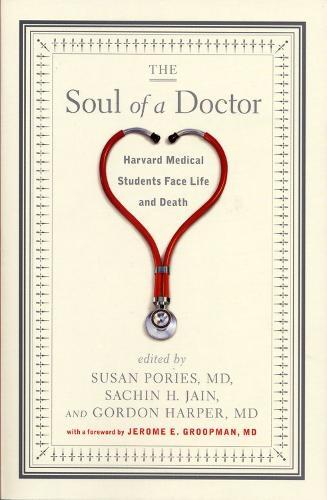
Full Product Details
Author: Gordon Harper ,
Sachin H. Jain ,
Susan Pories ,
Jerome E. Groopman, MD
Publisher: Workman Publishing
Imprint: Algonquin Books
Dimensions:
Width: 13.40cm
, Height: 1.80cm
, Length: 20.20cm
Weight: 0.200kg
ISBN: 9781565125070
ISBN 10: 156512507
Pages: 236
Publication Date: 02 June 2006
Audience:
General/trade
,
General
Format: Paperback
Publisher's Status: Active
Availability: Manufactured on demand

We will order this item for you from a manufactured on demand supplier.
Reviews
Medical schooling's decades-long focus on the science rather than the art of doctoring seems to be shifting. Doctors and their teachers are again recognizing that there is more to patient care than pages of numbers and medical images. The change isn't proceeding rapidly, though; indeed, one of the med-student contributors to this book notes being told, The patient's history is totally worthless. The good news is that medical schools are beginning to adjust. In Harvard's patient-doctor course, students are required not only to work on the wards but also to write essays about their experiences. The results may be as surprising to them as it is sadly predictable to many patients. After viewing himself in a videotaped interview with a patient, one young man estimated that it had taken him only months to go from being Mr. Empathy to being Dr. Jerk. One can almost hear the idea bulbs ignite as these students wrestle with issues of communication, empathy, and easing suffering and loss.-
As Groopman states in his foreword, each interaction between a doctor and a patient is a story. The moving stories of 44 doctors-in-training collected by two M.D.s (Pories and Harper) and one medical student (Jain), all at Harvard, are accounts written by medical students. Their tales convey lessons both emotional and medical, from learning how to communicate and empathize with those afflicted by illness to ways to ease suffering and loss. In one heartrending incident, David Y. Hwang describes a marine's rage followed by tears on hearing that his wife was going to die, while the wife herself remains in calm denial. Rajesh G. Shah explores how he learned from his first patient to overcome his judgmental attitude about those so beset by anxiety they cannot function without medication. In a particularly self-revelatory (and anonymous) piece, a student describes the endless hazing experience at the hands of interns and residents and the student's need to constantly manage a sense of insecurity. These are thoughtful and illuminating accounts of beginning physicians under stress, growing and changing as they progress through their chosen field.--Publishers Weekly
"Medical schooling's decades-long focus on the science rather than the art of doctoring seems to be shifting. Doctors and their teachers are again recognizing that there is more to patient care than pages of numbers and medical images. The change isn't proceeding rapidly, though; indeed, one of the med-student contributors to this book notes being told, ""The patient's history is totally worthless."" The good news is that medical schools are beginning to adjust. In Harvard's patient-doctor course, students are required not only to work on the wards but also to write essays about their experiences. The results may be as surprising to them as it is sadly predictable to many patients. After viewing himself in a videotaped interview with a patient, one young man estimated that it had taken him only months to go from being ""Mr. Empathy"" to being ""Dr. Jerk."" One can almost hear the idea bulbs ignite as these students wrestle with issues of communication, empathy, and easing suffering and loss.--Booklist"
Author Information
GORDON HARPER, M.D., a child and adolescent psychiatrist, is the director of the Patient-Doctor curricula at Harvard Medical School and the recipient of the Award for Teaching Excellence from the Child Psychiatry Fellows at Children s Hospital of Boston.SACHIN H. JAIN is a third-year medical student at Harvard. He is a tutor in medicine and public policy and has been awarded the Paul and Daisy Soros Fellowship, the Albert Schweitzer Fellowship, and the Galbraith Fellowship.SUSAN PORIES, M.D., a breast cancer surgeon and a surgical educator and investigator, has been named one of America s top surgeons and is a scholar in the Academy at Harvard Medical School.