Overview
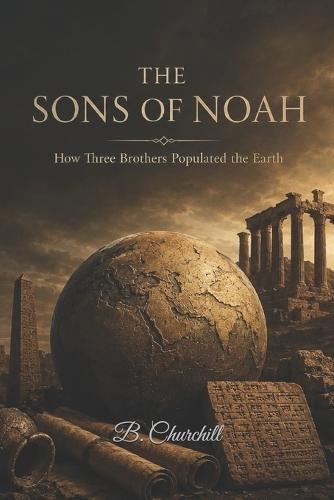
Most people skip the genealogies. They appear in the middle of the Bible like a bureaucratic interruption - long columns of unfamiliar names, strange spellings, and generation after generation of figures who seem to exist only to connect one familiar story to the next. Readers skip them. Teachers gloss over them. And in doing so, nearly everyone misses one of the most remarkable documents in the ancient world. Genesis 10 - the passage scholars call the Table of Nations - contains seventy names organized across three family lines. In those seventy names, it claims to account for the origin of every major people group that populated the ancient Near East, the Mediterranean, and Africa. It names their founding ancestors. It traces their migrations. It identifies the cities they built and the territories they settled. And it does all of this in a document composed roughly three thousand years ago. For generations, critics dismissed it as mythology. The names were too old to verify. The claims were too sweeping to take seriously. Then the archaeologists started digging. The Sons of Noah: How Three Brothers Populated the Earth traces the biblical genealogical record from Noah and the flood through the Table of Nations, the Tower of Babel, and the nine-generation chain from Shem to the doorstep of Abraham - and follows that record into the archaeological and historical evidence to see where it leads. What it leads to is extraordinary. The Hittites - dismissed as biblical fiction throughout the nineteenth century - were confirmed in 1906 when excavations at Hattusa in central Turkey uncovered their capital city, their legal code, and their diplomatic archive. The Greeks appear in the Table of Nations under the name their ancient neighbors used for them centuries before the Greeks called themselves Greeks. The Medes, confirmed in Assyrian royal annals. The Cimmerians, confirmed in the same records. Nimrod's cities - Babel, Erech, Accad, Nineveh - are in the ground in Iraq, and archaeologists have been excavating them for over a century. The name of Abraham's grandfather appears in a Bronze Age Syrian archive dating to the patriarchal period. The city where Abraham's family stopped on their journey to Canaan is still standing in southeastern Turkey, its ancient name unchanged after four thousand years. This book requires no prior biblical knowledge and no faith commitment. It is written for the curious reader - believer or skeptic - who wants to understand what the genealogical record of the Old Testament actually contains and what the ancient world has confirmed about it. The evidence is presented honestly, the uncertainties are acknowledged, and the conclusions are the reader's to draw. The genealogies are not filler. They never were. Book One of The Biblical Bloodlines Series
Full Product Details
Author: B Churchill
Publisher: Independently Published
Imprint: Independently Published
Dimensions:
Width: 15.20cm
, Height: 0.90cm
, Length: 22.90cm
Weight: 0.236kg
ISBN: 9798197015082
Pages: 172
Publication Date: 15 May 2026
Audience:
General/trade
,
General
Format: Paperback
Publisher's Status: Active
Availability: Available To Order

We have confirmation that this item is in stock with the supplier. It will be ordered in for you and dispatched immediately.