Overview
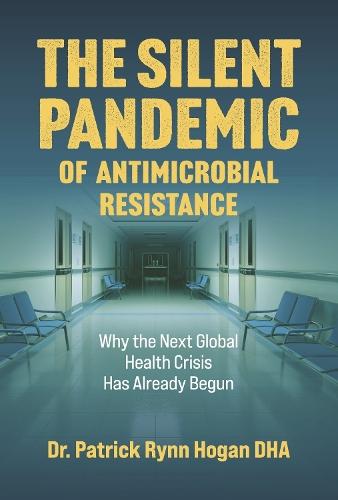
The Silent Pandemic of Antimicrobial Resistance is a comprehensive examination of one of the most profound and underappreciated threats facing global health, economic stability, and modern medicine. While antibiotics have long been treated as a dependable foundation of healthcare-enabling surgery, cancer treatment, intensive care, and routine infection control-their effectiveness is steadily eroding. Antimicrobial resistance (AMR) is advancing quietly, incrementally, and globally, transforming once-manageable infections into complex, costly, and sometimes untreatable conditions. This book situates AMR not as a narrow microbiological problem, but as a systems-level crisis that exposes deep structural weaknesses in healthcare delivery, public health governance, global supply chains, and innovation economics. Drawing on epidemiology, history, health systems analysis, economics, and policy, the book explains how decades of antibiotic overuse, insufficient surveillance, fragmented stewardship, environmental contamination, and chronic underinvestment in new therapeutics have produced a world increasingly vulnerable to resistant pathogens. Through historical case studies-including the Black Death, the 1918 influenza pandemic, and COVID-19-the book demonstrates how pandemics function as stress tests for societies. These events reveal patterns that repeat across centuries: risk is underestimated until consequences are unavoidable; institutional weaknesses are exposed under pressure; and inequality determines who bears the greatest burden. AMR follows this same logic, but with a critical difference-it advances slowly and persistently, without the dramatic ""waves"" that typically trigger emergency response. Its cumulative impact is therefore easier to ignore and harder to reverse. The book explores how AMR reshapes healthcare operations in practical terms: longer hospital stays, ICU saturation, delayed surgeries, rising drug costs, and accelerating workforce burnout. It examines how safety-net hospitals, rural systems, and low-resource regions face disproportionate risk, and how the erosion of antibiotic reliability threatens high-complexity care such as organ transplantation, chemotherapy, trauma surgery, and neonatal medicine. Beyond healthcare, the book analyzes the broader economic and social consequences of AMR, including productivity loss, labor force contraction, increased poverty risk, and strain on national security and global development. A central focus is the failure of the current antibiotic innovation model. Despite rising resistance, the antibiotic development pipeline remains fragile, as financial incentives discourage investment in drugs that must be used sparingly to preserve effectiveness. The book explains why this market failure persists and evaluates emerging policy solutions, including subscription-style reimbursement, market entry rewards, and global coordination mechanisms designed to align stewardship with sustainable innovation. The Silent Pandemic of Antimicrobial Resistance ultimately serves as both a warning and a call to action. It argues that AMR is not a future threat but a present and accelerating reality-and that the decisions made over the next decade will determine whether the world stabilizes resistance as a manageable risk or enters a post-antibiotic era where routine medical care becomes increasingly dangerous. By integrating science, history, economics, and policy, the book provides readers with a clear framework for understanding how complex systems fail-and how coordinated, evidence-based action can still change the outcome. Written for healthcare leaders, policymakers, researchers, and informed readers, this book offers a sober assessment of what is at stake if antimicrobial resistance continues unchecked-and a roadmap for preserving one of the most essential pillars of modern civilization.
Full Product Details
Author: Dr. Patrick Rynn Hogan DHA
Publisher: BookBaby
Imprint: BookBaby
ISBN: 9798218924782
Pages: 240
Publication Date: 21 April 2026
Audience:
General/trade
,
General
Format: Hardback
Publisher's Status: Forthcoming
Availability: Not yet available

This item is yet to be released. You can pre-order this item and we will dispatch it to you upon its release.
Author Information
Patrick Rynn Hogan, DHA is a healthcare executive, scholar, and author whose work focuses on the intersection of public health, health systems resilience, artificial intelligence, and global risk. He holds a Doctor of Health Administration (DHA) and has spent his career working across healthcare delivery, population health analytics, employer-sponsored health strategy, and health technology innovation. Dr. Hogan is the CEO and Co-Founder of Prescient Healthcare, an AI-enabled decision intelligence company designed to function as a ""Chief Medical Officer"" platform for self-insured employers and public-sector organizations. Prescient Healthcare integrates clinical, claims, and workforce data to identify emerging health risks earlier, quantify downstream economic exposure, and guide evidence-based interventions aimed at reducing avoidable utilization and improving workforce health outcomes. His work emphasizes explainable AI, governed analytics, and practical adoption in real-world healthcare environments. He is also the Board Chair of Celbridge Science, an organization focused on advancing non-animal methods (NAMs) and in-silico analytics to reduce reliance on animal testing in biomedical research. Through partnerships with academic institutions and the National Institutes of Health, Celbridge Science works to translate computational and systems-biology approaches into regulatory-relevant research, supporting more ethical, scalable, and predictive models of human disease. Over the course of his career, Dr. Hogan has held leadership and advisory roles across healthcare consulting, digital health, and analytics organizations, contributing to large-scale implementations involving clinical workflows, population health management, and enterprise data platforms. His experience spans both public and private sectors, with a particular focus on how structural weaknesses in health systems-workforce shortages, surveillance gaps, fragile supply chains, and misaligned incentives-amplify risk during crises. The Silent Pandemic of Antimicrobial Resistance reflects Dr. Hogan's long-standing interest in systemic health threats that unfold gradually yet carry civilization-level consequences. Drawing on history, epidemiology, economics, and policy analysis, his writing examines antimicrobial resistance not as a narrow microbiological problem, but as a stressor that exposes deeper vulnerabilities in modern medicine, governance, and global cooperation. Dr. Hogan's work is informed by a belief that many of the greatest health challenges of the 21st century-including antimicrobial resistance, pandemic preparedness, and chronic disease burden-require integrated solutions that bridge science, policy, and operational execution. He writes for healthcare leaders, policymakers, researchers, and informed readers seeking to understand how complex systems fail-and how they can still be strengthened before the next crisis becomes irreversible.