Overview
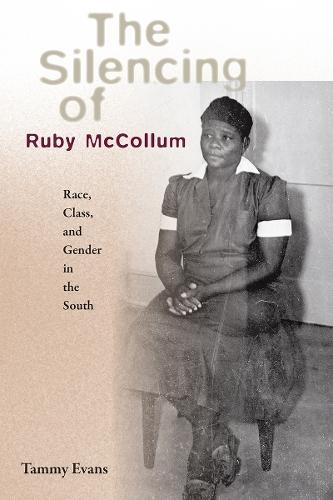
The Silencing of Ruby McCollum refutes the carefully constructed public memory of one of the most famous—and under-examined—biracial murders in American history. On August 3, 1952, African American housewife Ruby McCollum drove to the office of Dr. C. LeRoy Adams, beloved white physician in the segregated small town of Live Oak, Florida. With her two young children in tow, McCollum calmly gunned down the doctor during (according to public sentiment) “an argument over a medical bill.” Soon, a very different motive emerged, with McCollum alleging horrific mental and physical abuse at Adams’s hand. In reaction to these allegations and an increasingly intrusive media presence, the town quickly cobbled together what would become the public facade of Adams’s murder—a more “acceptable” motive for McCollum’s actions. To ensure this would become the official version of events, McCollum’s trial prosecutors voiced multiple objections during her testimony to limit what she was allowed to say. Employing multiple methodologies to achieve her voice—historical research, feminist theory, African American literary criticism, African American history, and investigative journalism—Evans analyzes the texts surrounding the affair to suggest that an imposed code of silence demands not only the construction of an official story but also the transformation of a community’s citizens into agents who will reproduce and perpetuate this version of events, improbable and unlikely though they may be.
Full Product Details
Author: Tammy D. Evans
Publisher: University Press of Florida
Imprint: University Press of Florida
Dimensions:
Width: 15.10cm
, Height: 1.20cm
, Length: 22.90cm
Weight: 0.305kg
ISBN: 9780813062402
ISBN 10: 0813062403
Pages: 208
Publication Date: 20 September 2016
Audience:
Professional and scholarly
,
Professional & Vocational
Format: Paperback
Publisher's Status: Active
Availability: In Print

This item will be ordered in for you from one of our suppliers. Upon receipt, we will promptly dispatch it out to you. For in store availability, please contact us.
Reviews
An account of how the murder in Live Oak, Florida, of a powerful white man, physician, and politician, C. LeRoy Adams, by an African American housewife, Ruby McCollum, and the subsequent trial threatened to reveal the underbelly of southern society, all the dirty little and big secrets of the community and the region. During the trial, McCollum's voice was never allowed to be heard. . . . A superb study. --Journal of Southern History Bigger-than-life (and long-dead) characters . . . inhabit this fascinating story like haunted-house ghosts. --South Florida Sun-Sentinel An intriguing and compelling study of the race, gender, and class dynamics of segregated small-town Florida at mid-century. --Tampa Bay History Highly recommended. --Choice Evans uses the trial, which was covered by novelist Zora Neale Nurston, to examine the institutionalized silence that surrounded black women in the 1950s South. --Ms. Magazine A tour de force that locates the unique forms of control and persuasion enacted by southern culture, and their meaning for the writing of history and historical memory alike. . . . A tremendously successful and engaging book. --Florida Historical Quarterly Effectively shows how patriarchy and white supremacy . . . constructed a story and silenced McCollum and others to protect their community and its history. . . . Until now, the only memory of Ruby McCollum was a deliberately created one. --The Historian Reveals the powerful memory work accomplished by southerners' reticence or refusal to speak. . . . [and] demonstrates the rhetorical value of muteness and the scholarly value of looking at public memory as a product not only of stuff but also of absence. --H-net Reviews
Highly recommended. --Choice Evans uses the trial, which was covered by novelist Zora Neale Nurston, to examine the institutionalized silence that surrounded black women in the 1950s South. --Ms. Magazine An account of how the murder in Live Oak, Florida, of a powerful white man, physician, and politician, C. LeRoy Adams, by an African American housewife, Ruby McCollum, and the subsequent trial threatened to reveal the underbelly of southern society, all the dirty little and big secrets of the community and the region. During the trial, McCollum's voice was never allowed to be heard. . . . A superb study. --Journal of Southern History A tour de force that locates the unique forms of control and persuasion enacted by southern culture, and their meaning for the writing of history and historical memory alike. . . . A tremendously successful and engaging book. --Florida Historical Quarterly Effectively shows how patriarchy and white supremacy . . . constructed a story and silenced McCollum and others to protect their community and its history. . . . Until now, the only memory of Ruby McCollum was a deliberately created one. --The Historian Bigger-than-life (and long-dead) characters . . . inhabit this fascinating story like haunted-house ghosts. --South Florida Sun-Sentinel Reveals the powerful memory work accomplished by southerners' reticence or refusal to speak. . . . [and] demonstrates the rhetorical value of muteness and the scholarly value of looking at public memory as a product not only of stuff but also of absence. --H-net Reviews An intriguing and compelling study of the race, gender, and class dynamics of segregated small-town Florida at mid-century. --Tampa Bay History Effectively shows how patriarchy and white supremacy . . . constructed a story and silenced McCollum and others to protect their community and its history. . . . Until now, the only memory of Ruby McCollum was a deliberately created one. The Historian An intriguing and compelling study of the race, gender, and class dynamics of segregated small-town Florida at mid-century. Tampa Bay History Bigger-than-life (and long-dead) characters . . . inhabit this fascinating story like haunted-house ghosts. South Florida Sun-Sentinel Evans uses the trial, which was covered by novelist Zora Neale Nurston, to examine the institutionalized silence that surrounded black women in the 1950s South. Ms. Magazine Highly recommended. Choice An account of how the murder in Live Oak, Florida, of a powerful white man, physician, and politician, C. LeRoy Adams, by an African American housewife, Ruby McCollum, and the subsequent trial threatened to reveal the underbelly of southern society, all the dirty little and big secrets of the community and the region. During the trial, McCollum s voice was never allowed to be heard. . . . A superb study. Journal of Southern History A tour de force that locates the unique forms of control and persuasion enacted by southern culture, and their meaning for the writing of history and historical memory alike. . . . A tremendously successful and engaging book. Florida Historical Quarterly Reveals the powerful memory work accomplished by southerners reticence or refusal to speak. . . . [and] demonstrates the rhetorical value of muteness and the scholarly value of looking at public memory as a product not only of stuff but also of absence. H-net Reviews Highly recommended. Choice A tour de force that locates the unique forms of control and persuasion enacted by southern culture, and their meaning for the writing of history and historical memory alike. . . . A tremendously successful and engaging book. Florida Historical Quarterly
A tour de force that locates the unique forms of control and persuasion enacted by southern culture, and their meaning for the writing of history and historical memory alike. . . . A tremendously successful and engaging book. --Florida Historical Quarterly An account of how the murder in Live Oak, Florida, of a powerful white man, physician, and politician, C. LeRoy Adams, by an African American housewife, Ruby McCollum, and the subsequent trial threatened to reveal the underbelly of southern society, all the dirty little and big secrets of the community and the region. During the trial, McCollum's voice was never allowed to be heard. . . . A superb study. --Journal of Southern History An intriguing and compelling study of the race, gender, and class dynamics of segregated small-town Florida at mid-century. --Tampa Bay History Bigger-than-life (and long-dead) characters . . . inhabit this fascinating story like haunted-house ghosts. --South Florida Sun-Sentinel Effectively shows how patriarchy and white supremacy . . . constructed a story and silenced McCollum and others to protect their community and its history. . . . Until now, the only memory of Ruby McCollum was a deliberately created one. --The Historian Evans uses the trial, which was covered by novelist Zora Neale Nurston, to examine the institutionalized silence that surrounded black women in the 1950s South. --Ms. Magazine Highly recommended. --Choice Reveals the powerful memory work accomplished by southerners' reticence or refusal to speak. . . . [and] demonstrates the rhetorical value of muteness and the scholarly value of looking at public memory as a product not only of stuff but also of absence. --H-net Reviews
Effectively shows how patriarchy and white supremacy . . . constructed a story and silenced McCollum and others to protect their community and its history. . . . Until now, the only memory of Ruby McCollum was a deliberately created one. The Historian
Effectively shows how patriarchy and white supremacy . . . constructed a story and silenced McCollum and others to protect their community and its history. . . . Until now, the only memory of Ruby McCollum was a deliberately created one. <b><i>The Historian</i></b>
Author Information
Tammy Evans is an adjunct professor of composition at the University of Miami's Bradenton campus, USA.