|
|
|||
|
||||
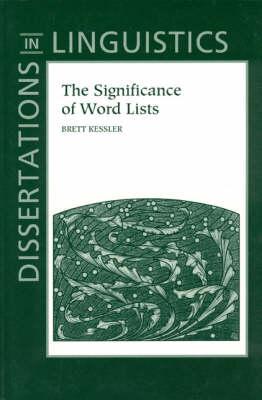
OverviewSimilar words for similar concepts turn up in many widely scattered languages. Some linguists insist that this is simply due to chance while others claim that many if not all of the world's languages descended from a single prehistoric language. Yet neither position in this strident controversy has been analyzed or supported with statistics. New computerized statistical techniques can help determine whether or not words in different languages have an ancestral connection. These flexible techniques are explained, broken into steps, and illustrated in a manner that provides the necessary principles to linguists with no background in statistics. This methodology measures the probabilistic significance of sound correspondences between short word lists. Many rules of thumb invoked by linguists in order to obviate chance resemblance, such as multilateral comparison and emphasizing grammar over vocabulary, are shown to actually decrease the power of quantitative tests. While the procedures presented here are straightforward, the author also details the extensive linguistic work needed to produce word lists that will not yield nonsensical results. Examples analyze the 200 words in 8 languages that are enumerated and detailed in an appendix. Full Product DetailsAuthor: Brett KesslerPublisher: Centre for the Study of Language & Information Imprint: Centre for the Study of Language & Information Edition: New edition Dimensions: Width: 1.70cm , Height: 0.20cm , Length: 2.30cm Weight: 0.397kg ISBN: 9781575863009ISBN 10: 1575863006 Pages: 287 Publication Date: 01 January 2001 Audience: College/higher education , Professional and scholarly , Undergraduate , Postgraduate, Research & Scholarly Format: Paperback Publisher's Status: Out of Stock Indefinitely Availability: Out of stock Table of ContentsReviewsAuthor InformationTab Content 6Author Website:Countries AvailableAll regions |
||||