Overview
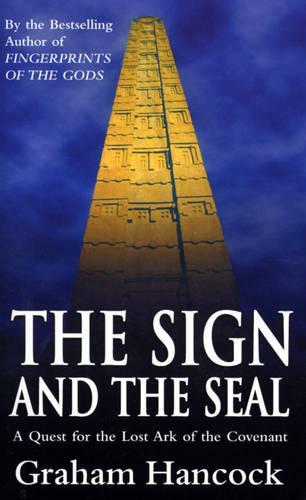
A gripping religious historical conspiracy thriller from the bestselling author of investigative history book Fingerprints of the Gods. This controversial book establishes Hancock as a leading voice in the popular genre of religious theory. Perfect for fans of Raiders of the Lost Ark. After nine years investigating the exact location of the ultimate religious icon, the Ark of the Covenant, British researcher and investigative journalist Graham Hancock reveals his status-quo shattering discoveries. Part mystery thriller, part true adventure and part travel book, this gripping piece of historical research challenges society's principal religious preconceptions and takes the reader on a rollercoaster ride through ancient history. ___________________________________ 'It should cause widespread discussion, and it deserves to' Daily Telegraph 'Eat your heart out, Harrison Ford' Gerald Seymour 'Highly readable' The Times 'Part travelogue, part sensation, part unravelling, a fascinating story.' Catholic Herald
Full Product Details
Author: Graham Hancock
Publisher: Cornerstone
Imprint: Arrow Books Ltd
Edition: New edition
Dimensions:
Width: 11.30cm
, Height: 4.00cm
, Length: 17.90cm
Weight: 0.344kg
ISBN: 9780099416357
ISBN 10: 0099416352
Pages: 640
Publication Date: 14 January 1993
Audience:
General/trade
,
General
Format: Paperback
Publisher's Status: Active
Availability: To order

Stock availability from the supplier is unknown. We will order it for you and ship this item to you once it is received by us.
Reviews
Highly readable * Times * Hancock's book will probably be as popular as the Raider's film. Added to the Holy Grail excitement of his quest, he has invented a new genre: an intellectual whodunnit by a do-it-yourself sleuth * Guardian * It should cause widespread discussion and it deserves to * Daily Telegraph *
English journalist Hancock retells the circumstances and thoughts that led to his discovery that the Lost Ark of the Covenant really exists. (Note that the subtitle is not How Indy and I Raided the Lost Ark.) Hancock was in Ethiopia in 1983, having been hired by the Ethiopian government to write and produce a coffee-table book extolling that country. He was greatly surprised when told that Ethiopia's Falasha Jews did not exist, and that many people could land in jail, or worse, if he went around photographing such nonexistents. Even so, off he went to Axum, deep in the desert, to see the temples and statuary of the Black Jews of Ethiopia. What he found was a sect that claimed to have the original Ark of the Covenant. Refused entrance to the sanctuary of the jealously guarded Ark, Hancock went home - and saw Steven Spielberg's Raiders of the Lost Ark, which inspired him to investigate the history of the Ark. Built at the foot of Mount Sinai, Hancock tells us, it was deposited [around 955 B.C.] by Solomon in the Holy of Holies of the First Temple. Later, Hancock says, it was stolen by Solomon's outcast son and carried south to Ethiopia and kept there for 800 years by a Judaic cult. Then it apparently was seized by the Knights Templar, who thought that it was the Holy Grail. The Knights converted the Jews, who kept the Ark in a great church. And to protect the Ark, all of the churches in the cult have their own replicas of the Ark: The original is never seen, even on the holiest days of the year. In 1991, during the Gulf War, Hancock returned to Axum to see the Ark - and was refused. Not as much fun as might be hoped as Hancock digs through literary and biblical texts while convincing himself that the Ark exists. (Kirkus Reviews)
Graham Hancock has built up a considerable following with his fascinating titles uncovering some of the most arcane secrets in history. His greatest obsession, however, led him to give up nine years of his life in order to find the exact location of the Ark of the Covenant. Unsurprisingly, the reader is often reminded of the pulse-pounding adventure of Raiders of the Lost Ark, and it's a measure of Hancock's skill that a non-fiction title like this has all the compulsive readability of a thriller. The concept of a quest is a recurrent theme in human history, and Hancock's conflation of travelogue, compelling narrative, the disclosure of hidden facts (not to mention the imagination-stretching borders of the possible) are the elements that make his work so popular. He marshals his arguments with real skill, and even those who don't believe a word will find it hard to put down. But his most singular achievement is in the drawing together of the various strands that lead to the resolution of the mystery. Here, as in many high adventure writer from Rider Haggard onwards, Hancock really delivers the goods. (Kirkus UK)
Highly readable Times Hancock's book will probably be as popular as the Raider's film. Added to the Holy Grail excitement of his quest, he has invented a new genre: an intellectual whodunnit by a do-it-yourself sleuth Guardian It should cause widespread discussion and it deserves to Daily Telegraph
Highly readable * Times * Hancock's book will probably be as popular as the Raider's film. Added to the Holy Grail excitement of his quest, he has invented a new genre: an intellectual whodunnit by a do-it-yourself sleuth * Guardian * It should cause widespread discussion and it deserves to * Daily Telegraph *
Author Information
Graham Hancock is the author of the major international bestsellers The Sign and the Seal, Fingerprints of the Gods and Heaven's Mirror. His books have sold more than five million copies worldwide and have been translated into 27 languages. He is an extremely successful investigative journalist, having been Editor of Conde Nast's Traveller magazine and East Africa Correspondent for the Economist. His public lectures and TV appearances, including the three-hour series Quest for the Lost Civilization, have put his religious and historical theories before audiences of tens of millions. He has become recognized as an unconventional thinker who raises legitimate questions about humanity's history, religion and prehistory and offers an increasingly popular challenge to the entrenched views of orthodox scholars.