Overview
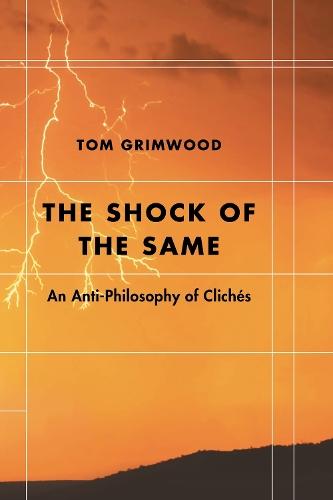
Since the birth of modernity, Western thought has been at war with clichés. The association of philosophical and cultural integrity with originality, and the corresponding need for invention and novelty, has been a distinct concern of a whole spectrum of ideas and movements, from Nietzsche’s polemics against the ‘herd’, the ‘shock of the new’ of the artistic avant-garde, the Frankfurt School’s critique of mass culture, to Orwell’s defence of political dialogue from ‘dying metaphors’. This book is the first examination of the cliché as a philosophical concept. Challenging the idea that clichés are lazy or spurious opposites to genuine thinking, it instead locates them as a dynamic and contestable boundary between ‘thought’ and ‘non-thought’. The book unpacks the constituent phenomena of clichés – repetition, circulation, the readymade, same-ness – through readings of ‘anti-philosophical’ thinkers such as Nietzsche, Kierkegaard, Paulhan, de Certeau, Derrida, Sloterdijk, Badiou and Groys. In doing so, the book critically articulates the techniques and technologies through which the boundary between ‘thought’ and ‘non-thought’ is formed in modern Western philosophy. Rejecting the idea that clichés should be dismissed out of hand on normative frameworks of ‘good’ and ‘bad’ thinking, or ‘new’ and ‘old’ ideas, it instead interrogates the material, cultural and archival ground on which these frameworks are built.
Full Product Details
Author: Tom Grimwood
Publisher: Bloomsbury Publishing PLC
Imprint: Rowman & Littlefield International
Dimensions:
Width: 16.30cm
, Height: 2.40cm
, Length: 22.80cm
Weight: 0.526kg
ISBN: 9781786614001
ISBN 10: 1786614006
Pages: 230
Publication Date: 01 June 2021
Audience:
Professional and scholarly
,
Professional & Vocational
Format: Hardback
Publisher's Status: Active
Availability: Manufactured on demand

We will order this item for you from a manufactured on demand supplier.
Reviews
In this unprecedentedly fine-grained exegesis, Thomas Grimwood establishes a home for cliché in the Western philosophical tradition. His analysis of writers as diverse as Arendt and Nietzsche, Orwell and Kierkegaard, brings the reader what is rarely expected from an examination of cliché originality, depth, and a freshness of perspective.--Orin Hargraves, author of 'It's Been Said Before: A Guide to the Use' and 'Abuse of Cliches' The French philosopher Jean Baudrillard referred to an excess of information as the 'obscenity of language'. To engage meaningfully in this current ecstasy of communication, Tom Grimwood faces the cliché - a kind of monster of language and reflection. His brilliant critique is essential reading for anyone who wishes to filter out the noise and reflect on the value of language operating with precision in our information saturated world.--Simon Morris, professor of art, Leeds Beckett University
""In this unprecedentedly fine-grained exegesis, Thomas Grimwood establishes a home for cliché in the Western philosophical tradition. His analysis of writers as diverse as Arendt and Nietzsche, Orwell and Kierkegaard, brings the reader what is rarely expected from an examination of cliché originality, depth, and a freshness of perspective."" --Orin Hargraves, author of 'It's Been Said Before: A Guide to the Use' and 'Abuse of Cliches' ""The French philosopher Jean Baudrillard referred to an excess of information as the 'obscenity of language'. To engage meaningfully in this current ecstasy of communication, Tom Grimwood faces the cliché - a kind of monster of language and reflection. His brilliant critique is essential reading for anyone who wishes to filter out the noise and reflect on the value of language operating with precision in our information saturated world."" --Simon Morris, professor of art, Leeds Beckett University
The French philosopher Jean Baudrillard referred to an excess of information as the 'obscenity of language'. To engage meaningfully in this current ecstasy of communication, Tom Grimwood faces the cliche - a kind of monster of language and reflection. His brilliant critique is essential reading for anyone who wishes to filter out the noise and reflect on the value of language operating with precision in our information saturated world.--Simon Morris, professor of art, Leeds Beckett University In this unprecedentedly fine-grained exegesis, Thomas Grimwood establishes a home for cliche in the Western philosophical tradition. His analysis of writers as diverse as Arendt and Nietzsche, Orwell and Kierkegaard, brings the reader what is rarely expected from an examination of cliche originality, depth, and a freshness of perspective.--Orin Hargraves, author of 'It's Been Said Before: A Guide to the Use' and 'Abuse of Cliches'
In this unprecedentedly fine-grained exegesis, Thomas Grimwood establishes a home for cliche in the Western philosophical tradition. His analysis of writers as diverse as Arendt and Nietzsche, Orwell and Kierkegaard, brings the reader what is rarely expected from an examination of cliche originality, depth, and a freshness of perspective.--Orin Hargraves, author of 'It's Been Said Before: A Guide to the Use' and 'Abuse of Cliches'
Author Information
Tom Grimwood is senior research fellow at the University of Cumbria. He has published on a broad range of topics within the field of cultural hermeneutics, from Nietzschean misogyny to medieval anorexia, and his research has a particular focus on representations of ambiguity within the act of interpretation. He is the author of two books: Irony, Misogyny and Interpretation, and Key Debates in Social Work and Philosophy.