|
|
|||
|
||||
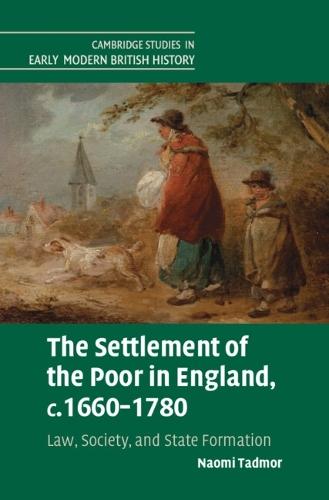
OverviewIn 1662, in the aftermath of the Restoration, parliament passed new legislation for the settlement and removal of the poor. Important provisions were finalised in no more than a few days. But once the settlement of the poor was set in law it became an agent of historical change that affected society, state formation, and the lives of millions in Britain and beyond for centuries to come. Within a few decades, practices of local government were transformed. In towns and villages hierarchies of social status and gender were affected. The rising empire employed the settlement administration to mobilise forces for large-scale international wars and to deal with soldiers' wives and children left behind. The huge number of bureaucratic forms generated following the new policies made a lasting impact on administrative culture. The Settlement of the Poor in England is about social change and about history's unintended consequences. It is also about the struggles and experiences of individuals and communities. It reminds us how the settlement legislation still resonates today. This title is part of the Flip it Open Programme and may also be available Open Access. Check our website Cambridge Core for details. Full Product DetailsAuthor: Naomi Tadmor (Lancaster University)Publisher: Cambridge University Press Imprint: Cambridge University Press ISBN: 9781108499194ISBN 10: 1108499198 Pages: 360 Publication Date: 07 May 2026 Audience: College/higher education , Postgraduate, Research & Scholarly Format: Hardback Publisher's Status: Forthcoming Availability: Not yet available, will be POD This item is yet to be released. You can pre-order this item and we will dispatch it to you upon it's release. This is a print on demand item which is still yet to be released. Table of ContentsList of Figures; List of Plates; List of Abbreviations; Introduction; 1. The Birth of Settlement; 2. The Settlement of the Poor and the Rise of the Form; 3. Kinship, Community, and Settlement; 4. Governance, Gender, Social Status, and Settlement: or, Where Was Mrs Turner?; 5. The Settlement of the Fiscal-Military State; Conclusion; Selected Bibliography.ReviewsAuthor InformationNaomi Tadmor is Professor of History at the University of Lancaster and Chair of the Social History Society. She is co-editor of The Practice and Representation of Reading in England (1996) and author of Family and Friends in Eighteenth-Century England: Household, Kinship, and Patronage (2001), and The Social Universe of the English Bible: Scripture, Society, and Culture in Early Modern England (2010), all published by Cambridge. Tab Content 6Author Website:Countries AvailableAll regions |
||||