|
|
|||
|
||||
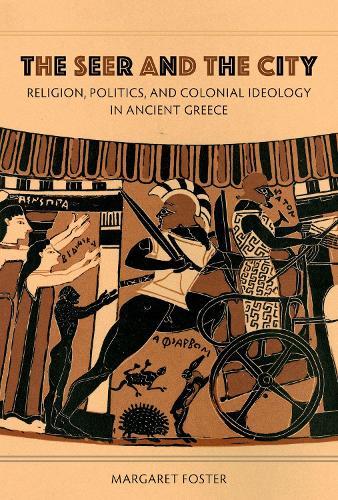
OverviewSeers featured prominently in ancient Greek culture, but they rarely appear in archaic and classical colonial discourse. Margaret Foster exposes the ideological motivations behind this discrepancy and reveals how colonial discourse privileged the city’s founder and his dependence on Delphi, the colonial oracle par excellence, at the expense of the independent seer. Investigating a sequence of literary texts, Foster explores the tactics the Greeks devised both to leverage and suppress the extraordinary cultural capital of seers. The first cultural history of the seer, The Seer and the City illuminates the contests between religious and political powers in archaic and classical Greece. Full Product DetailsAuthor: Margaret FosterPublisher: University of California Press Imprint: University of California Press Dimensions: Width: 15.20cm , Height: 2.30cm , Length: 22.90cm Weight: 0.454kg ISBN: 9780520295001ISBN 10: 0520295005 Pages: 232 Publication Date: 26 January 2018 Audience: General/trade , College/higher education , General , Undergraduate Format: Hardback Publisher's Status: Active Availability: Out of stock The supplier is temporarily out of stock of this item. It will be ordered for you on backorder and shipped when it becomes available. Table of ContentsAcknowledgments Conventions and Abbreviations Introduction 1. Beyond Entrails and Omens: Herodotus's Teisamenos and the Talismanic Seer at War 2. Sailing to Sicily: Theoklymenos and Odysseus in the Odyssey 3. Suppressing the Seer in Colonial Discourse: Delphic Consultations and the Seer in the City 4. Th e Disappearance of Melampous in Bacchylides' Ode 11 5. Hagesias as Sunoikister: Mantic Authority and Colonial Ideology in Pindar's Olympian 6 6. Amphiaraos, Alkmaion, and Delphi's Oracular Monopoly Conclusion Bibliography Index Index LocorumReviewsFoster's central observation about the striking absence of a certain style of religious expert where we might well expect them is new and important for historians of ancient religion and colonialism alike. So too, her writing is clear and the overall argument is well-constructed. * Reading Religion * ""Foster’s central observation about the striking absence of a certain style of religious expert where we might well expect them is new and important for historians of ancient religion and colonialism alike. So too, her writing is clear and the overall argument is well-constructed."" * Reading Religion * ""Foster systematically and clearly identifies and explains a significant anomaly in the Archaic and Classical Greek location of authority among the competing media of divine communication. . . . She has made a substantial contribution to our understanding of the dynamics of power, the push and push-back, between dominant and non-dominant cultic programs in ancient Greece—a description that resonates with ongoing discourse in postcolonial studies."" * Bryn Mawr Classical Review * Author InformationMargaret Foster is Assistant Professor of Classical Studies at Indiana University. Tab Content 6Author Website:Countries AvailableAll regions |
||||