Overview
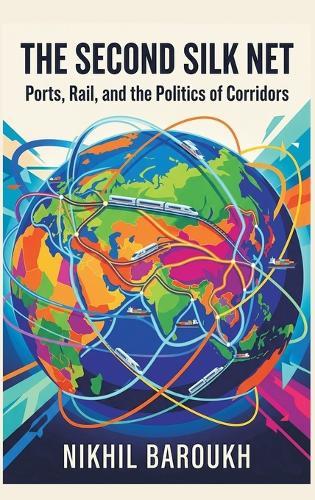
A corridor is supposed to shorten the distance. Yet the most consequential distance is often political: between the promises made at signing and the control that accumulates during operations. Across modern history, ports and railways have been used to bind markets together and to bind governments to terms that are hard to escape. The question is not whether infrastructure can enable growth, but how particular deals decide who sets the rules when conditions change. The Second Silk Net treats corridors as systems built from steel, finance, and governance. Nikhil Baroukh shows how port governance models, rail operating regimes, and the fine print of concessions shape outcomes more than the headline cost or ribbon-cutting symbolism. He follows the levers that endure: contract term leverage through step-in rights and termination payments; standards interoperability as a source of lock-in and switching costs; and throughput forecasting as a political document that can turn optimism into guarantees and guarantees into crisis. With comparative cases and clear typologies, the book explains why some projects become engines of local capability while others become channels for dependency, debt pressure, or strategic leverage. Written for students, general readers, and policy and industry analysts, this is a guide to reading infrastructure power in plain sight. Readers finish with a practical framework for locating control points across a corridor, tracing incentives through cash flows, and distinguishing ownership from operational authority. Instead of treating corridors as either benevolent development or pure geopolitics, The Second Silk Net shows how influence is designed into institutions - and how it is reproduced, contested, and sometimes renegotiated over time.
Full Product Details
Author: Nikhil Baroukh
Publisher: Vij Books
Imprint: Vij Books
Dimensions:
Width: 15.20cm
, Height: 2.50cm
, Length: 22.90cm
Weight: 0.667kg
ISBN: 9789377946753
ISBN 10: 9377946751
Pages: 372
Publication Date: 20 May 2026
Audience:
General/trade
,
General
Format: Hardback
Publisher's Status: Active
Availability: Not yet available

This item is yet to be released. You can pre-order this item and we will dispatch it to you upon its release.
Author Information
Nikhil Baroukh is a nonfiction writer focused on how infrastructure shapes political power over time. His work sits at the intersection of political economy and strategic analysis, with a consistent interest in the institutional details that decide outcomes long after ceremonies and communiques fade: who sets the tariff, who controls dispatch, what triggers a renegotiation, and how technical standards quietly become foreign policy.Baroukh writes in an editorial voice that treats grand geopolitical narratives as hypotheses to be tested against operating reality. He is drawn to the places where sovereignty becomes procedural - port authority offices, rail timetables, customs interfaces, and the clauses that define default and cure. Rather than assuming that connectivity is automatically beneficial, he asks how benefits are distributed, how risk is priced, and how dependency can be created without overt coercion.A recurring cultural and historical thread in his thinking is the Indian Ocean world, where older layers of empire, trade, and migration still appear in today's logistics corridors and security debates. That long view informs his emphasis on durability: the idea that infrastructure is never only concrete and steel, but an argument about the future written into governance systems. The Second Silk Net reflects that approach, offering readers concepts they can carry across regions and eras, and a way to read infrastructure deals with intellectual rigour and political realism.