|
|
|||
|
||||
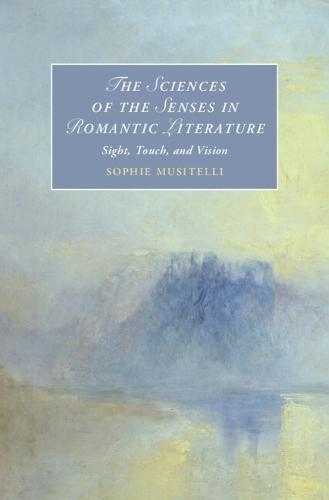
OverviewWhen British Romantic writers came into contact with experimental sciences, they encountered unfamiliar languages, methods and discourses, but they also discovered the experimental practices of modern scientists, their observation devices and their specific ways of sensing the world. The accommodation of the Romantics' senses to these strange sensorialities points to two main tropisms: a tropism towards sight, through prisms or telescopes, and a tropism towards touch, as scientists developed new methods to apprehend their objects through direct contact. The interest these writers showed in the development of the sciences of sensation thus invites a shift in our conception of the interactions between visibility and tactility in the Romantic imagination. What is the status of the 'image' in the Romantic 'imagination'? Is it purely visual? Or is there also something haptic to it? Ultimately, Sophie Musitelli asks, did the Romantics succeed in their attempts at turning touch into a visionary sense? Full Product DetailsAuthor: Sophie Musitelli (Université de Lille)Publisher: Cambridge University Press Imprint: Cambridge University Press Weight: 0.589kg ISBN: 9781009646789ISBN 10: 1009646788 Pages: 288 Publication Date: 28 May 2026 Audience: College/higher education , Postgraduate, Research & Scholarly Format: Hardback Publisher's Status: Active Availability: Manufactured on demand We will order this item for you from a manufactured on demand supplier. Table of ContentsIntroduction: the romantic sensorium; Part I. The Advent of Sensation: 1. The waves: 'the soft vibration of […] touch' in Percy Shelley's last poems; 2. Before our eyes: scientific observation and the origins of the senses from Erasmus Darwin to William Blake; Part II. Senses Out of Sight: 3. Eye contact: sight, touch, and vision in Thomas De quincey's confessions of an English opium-eater and suspiria de profundis; 4. The 'living eyes of heaven': astronomical observation and poetic vision from Anna Letitia Barbauld to William Wordsworth and Percy Shelley; Part III. Outside our Senses: 5. Senses of stone: the mineral and the sensory in poems by Erasmus Darwin, by William Wordsworth and by Percy Shelley; 6. Other senses than ours: non-human visions from Erasmus Darwin to John Clare; 7. After the senses: sensory remanence after death in John Keats's Isabella and Mary Shelley's Frankenstein; Coda: on the 'sunlit limits of the night'; Bibliography.ReviewsAuthor InformationSophie Musitelli is Professor at the University of Lille and Honorary Fellow of the Institut Universitaire de France. Her research focuses on the interactions among literature, the sciences, and philosophy in the Romantic era. She is the current chair of the French Society for the Study of English Romanticism. Tab Content 6Author Website:Countries AvailableAll regions |
||||