|
|
|||
|
||||
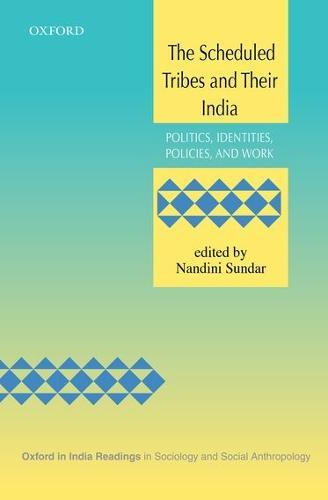
OverviewA people in need of quick modernization and mainstreaming, or a powerful defense against the advancing march of capitalist growth---these are the two most prominent and stereotypical images of Adivasis in contemporary India, and both do grave injustice to the ground realities. The category Scheduled Tribes, which is purely an administrative category, and does not reflect the immense diversity among the 500 different communities of tribals in India, comprising 8.6 per cent of Indias population, has acquired over a period of time, a distinct political and discursive salience. This collection of essays, divided in three parts, brings together a range of predominantly sociological and anthropological but broadly social science writing that reflects on and illuminates the jungle of dilemmas and conflicts that the scheduled tribes face as they navigate their way through everyday life. It highlights the enormity of social, cultural, linguistic, and politico-economic diversity among the so-called Scheduled Tribes in India, and aims to provide an intellectual platform for an engagement between the scheduled tribes and their India, as also to map the state of current sociological/anthropological writing and debate on the scheduled tribes. Full Product DetailsAuthor: Nandini Sundar (, Nandini Sundar is Professor of Sociology, Delhi School of Economics, University of Delhi.) , Madan (, T.N. Madan is Honorary Professor (Sociology) at the Institute of Economic Growth, Delhi, and Distinguished Fellow (Adjunct) of the Centre for Study of Developing Societies, Delhi.)Publisher: OUP India Imprint: OUP India Dimensions: Width: 14.80cm , Height: 4.80cm , Length: 22.20cm Weight: 0.842kg ISBN: 9780199459711ISBN 10: 0199459711 Pages: 650 Publication Date: 12 May 2016 Audience: College/higher education , Postgraduate, Research & Scholarly Format: Hardback Publisher's Status: Active Availability: To order Stock availability from the supplier is unknown. We will order it for you and ship this item to you once it is received by us. Table of ContentsIntroduction; Nandini Sundar; Part 1: IDENTITY and POLITICS; Section Introduction; 1. Environment and Ethnicity in India, 12001991; Sumit Guha; 2. From Caste to Tribe: An Autobiographical Essay; Tanka Subba; 3. Khasi Women And Matriliny: Transformations in Gender Relations; Tiplut Nongbri; 4. Anthropology and The Indigenous Slot: Claims to and Debates About Indigenous Peoples Status in India.; Bengt G. Karlsson; 5. Adivasi Vs. Vanvasi: The Politics Of Conversion in Central India; Nandini Sundar; 6. Loving and Forgetting: Moments of Inarticulacy in Tribal India; Piers Vitebsky; 7. When the Lost Soil Beckoned: Life Sketch Narrated by C. K. Janu; Usha Menon (Translator); 8. A Discourse on Non-Violence, in Fire on The Mountain (poem); K. Satchidanandan; Part 2: POLICIES and POLITICS; Section Introduction; 9. Bauxite Business in Odisha; Felix Padel and Samarendra Das; 10. Women Against Imperialism: Peasants And Workers Movements in Madhya Pradesh; Chittaroopa Palit; 11. Three Songs of Struggle; (Composed and translated by various artists); 12. Indefinitely under Trial: The Case of the Four Pahadiyas; Vasudha Dhagamwar; 13. Drought and TADA in Adilabad; K. Balagopal; 14. Protective Discrimination: Why Scheduled Tribes Lag Behind Scheduled Castes; Virginius Xaxa; 15. Social Inequality, Labour Market Dynamics and Reservation; Mritunjay Mohanty; 16. Pedagogy and Prescription; Bikram Nanda; 17. Indias Forest Tenure Reforms, 19922012; Madhu Sarin; 18. Nationalizing Space: Cosmetic Federalism and the Politics of Development in Northeast India; Sanjib Baruah; Part 3: WORK AND RESOURCES; Section Introduction; 19. The Ethnography of South Asian Foragers; Jana Fortier; 20. From Uchalaya; Laxman Gaikwad; 21. The Tiger and the Honey bee; Savyasaachi; 22. Tribal Livelihood and the Agrarian Crises; Archana Prasad; 23. The Market Wheel: Symbolic Aspects of an Indian Tribal Market; Alfred Gell; 24. On the Margins in the City: Adivasi Seasonal Migration in Western India; David Mosse, Sanjeev Gupta, and Vidya Shah; 25. The Making and Unmaking of an Adivasi Working Class in Western Orissa; Christian Strumpell; 26. Cosmopolitan Tribals: Frontier Migrants in Delhi; Duncan McDuie-Ra; Index; Notes on Editors and ContributorsReviewsAuthor InformationNandini Sundar is Professor of Sociology, Delhi School of Economics, University of Delhi. T.N. Madan is Honorary Professor (Sociology) at the Institute of Economic Growth, Delhi, and Distinguished Fellow (Adjunct) of the Centre for Study of Developing Societies, Delhi. Tab Content 6Author Website:Countries AvailableAll regions |
||||