Overview
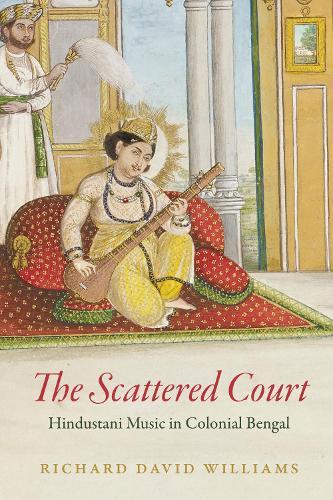
Presents a new history of how Hindustani court music responded to the political transitions of the nineteenth century. How far did colonialism transform north Indian music? In the period between the Mughal empire and the British Raj, how did the political landscape bleed into aesthetics, music, dance, and poetry? Examining musical culture through a diverse and multilingual archive, primarily using sources in Urdu, Bengali, and Hindi that have not been translated or critically examined before, The Scattered Court challenges our assumptions about the period. Richard David Williams presents a long history of interactions between northern India and Bengal, with a core focus on the two courts of Wajid Ali Shah (1822–1887), the last ruler of the kingdom of Awadh. He charts the movement of musicians and dancers between the two courts in Lucknow and Matiyaburj, as well as the transregional circulation of intellectual traditions and musical genres, and demonstrates the importance of the exile period for the rise of Calcutta as a celebrated center of Hindustani classical music. Since Lucknow is associated with late Mughal or Nawabi society and Calcutta with colonial modernity, examining the relationship between the two cities sheds light on forms of continuity and transition over the nineteenth century, as artists and their patrons navigated political ruptures and social transformations. The Scattered Court challenges the existing historiography of Hindustani music and Indian culture under colonialism by arguing that our focus on Anglophone sources and modernizing impulses has directed us away from the aesthetic subtleties, historical continuities, and emotional dimensions of nineteenth-century music.
Full Product Details
Author: Richard David Williams
Publisher: The University of Chicago Press
Imprint: University of Chicago Press
Dimensions:
Width: 15.20cm
, Height: 2.00cm
, Length: 22.90cm
Weight: 0.399kg
ISBN: 9780226825458
ISBN 10: 0226825450
Pages: 272
Publication Date: 25 April 2023
Audience:
Professional and scholarly
,
Professional & Vocational
Format: Paperback
Publisher's Status: Active
Availability: Available To Order

We have confirmation that this item is in stock with the supplier. It will be ordered in for you and dispatched immediately.
Reviews
Using a multiperspectival methodology, Williams crafts a narrative ripe with complexity, ambiguity, and unexpected connection. This pathbreaking book will reshape how historians of South Asia consider issues of music and gender, the impact of nawabi culture beyond courts, emotion and aesthetics, modernity, and the spread of Hindustani music. * Anna Christine Schultz, University of Chicago * Weaving together material from untapped texts in a range of South Asian vernaculars, Williams's work provides an unparalleled study of north Indian art music's transregional flows, its complex social histories, and the textures and politics of its performance. * Davesh Soneji, University of Pennsylvania * This is simply the best book on Hindustani music I know. Magisterial, erudite, and superb are inadequate terms for the profound scholarship, deep knowledge, and vast terrain Williams incorporates, made all the more accessible by his outstanding writing. * Daniel Neuman, University of California, Los Angeles *
Author Information
Richard David Williams is a senior lecturer in music and South Asian studies at SOAS University of London.