Overview
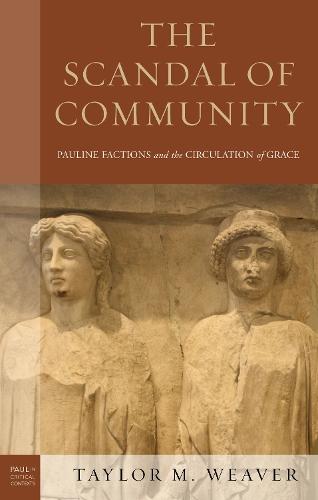
Taylor M. Weaver offers a provocative reading of Pauline community, focusing on social and historical readings of the Pauline collection, body metaphors, and socio-politics of the gift, through models and methods developed by critical theorists. Weaver pays attention to conceptual apparatuses revolving around gifting, community, and immunity found in the writings of Italian philosopher Roberto Esposito, augmenting common readings of the historical Paul, while also enriching philosophical co-optations of Paul. Using critical theories (revolving around munus/gift), Weaver unveils different gifting types, showing how these expand one’s understanding of early Christian community. The study ends with a new exegesis of 2 Corinthians 8:1–15, illuminating the text through effective theoretical avenues. This book expands methodological borders, providing innovative models of Pauline Christianity, and developing new readings of community profitable to both New Testament studies and theory.
Full Product Details
Author: Taylor M. Weaver
Publisher: Bloomsbury Publishing Plc
Imprint: Lexington Books/Fortress Academic
Dimensions:
Width: 16.40cm
, Height: 2.60cm
, Length: 22.70cm
Weight: 0.581kg
ISBN: 9781978711822
ISBN 10: 1978711824
Pages: 266
Publication Date: 07 April 2021
Audience:
Professional and scholarly
,
Professional & Vocational
Format: Hardback
Publisher's Status: Active
Availability: Manufactured on demand

We will order this item for you from a manufactured on demand supplier.
Reviews
The Scandal of Community is an Espositoian reading of Paul through which one learns much about this continental philosopher and his interlocutors and how they are reading Paul. Along the way, Weaver has some great turns of phrase (e.g. playing with Paul's cadaver [3]) and the book holds up well alongside other critical philosophical readings of Paul and should be read by those whose interests and research areas find their focus there.-- Studies in Religion/Sciences Religieuses Taylor M. Weaver's new book marks an important moment in biblical studies. Readings of Paul in critical theory and philosophy have typically come from outside the field but Taylor belongs to an innovative and growing tradition of New Testament scholars who are now able to make serious contributions to these high-profile cross-disciplinary debates. Anyone interested in the philosophical Paul, as well as political readings of biblical texts and Pauline studies generally, will have to engage seriously and carefully with this impressive contribution.--James Crossley, St Mary's University, London In this elegantly written volume Taylor M. Weaver develops a critical engagement with Paul's notion of community, specifically with 2 Corinthians 8 and the Collection, which is as richly philosophical as it is rooted in the field of Pauline studies. Weaver's wider challenge to the field of New Testament studies is to embrace and engage with contemporary philosophical discourse, just as some of the early pioneers of New Testament studies did. Rather than be suspicious of its potentially distorting effects on exegesis, such engagement, Weaver strongly argues, is key to allowing the New Testament to inform critical thinking about community today.--David G. Horrell, University of Exeter, UK
""In this elegantly written volume Taylor M. Weaver develops a critical engagement with Paul's notion of community, specifically with 2 Corinthians 8 and the Collection, which is as richly philosophical as it is rooted in the field of Pauline studies. Weaver's wider challenge to the field of New Testament studies is to embrace and engage with contemporary philosophical discourse, just as some of the early pioneers of New Testament studies did. Rather than be suspicious of its potentially ""distorting"" effects on exegesis, such engagement, Weaver strongly argues, is key to allowing the New Testament to inform critical thinking about community today."" --David G. Horrell, University of Exeter, UK ""Taylor M. Weaver's new book marks an important moment in biblical studies. Readings of Paul in critical theory and philosophy have typically come from outside the field but Taylor belongs to an innovative and growing tradition of New Testament scholars who are now able to make serious contributions to these high-profile cross-disciplinary debates. Anyone interested in the ""philosophical Paul,"" as well as political readings of biblical texts and Pauline studies generally, will have to engage seriously and carefully with this impressive contribution."" --James Crossley, St Mary's University, London ""The Scandal of Community is an Espositoian reading of Paul through which one learns much about this continental philosopher and his interlocutors and how they are reading Paul. Along the way, Weaver has some great turns of phrase (e.g. ""playing with Paul's cadaver"" [3]) and the book holds up well alongside other critical philosophical readings of Paul and should be read by those whose interests and research areas find their focus there."" --Studies in Religion/Sciences Religieuses In this elegantly written volume Taylor M. Weaver develops a critical engagement with Paul's notion of community, specifically with 2 Corinthians 8 and the Collection, which is as richly philosophical as it is rooted in the field of Pauline studies. Weaver's wider challenge to the field of New Testament studies is to embrace and engage with contemporary philosophical discourse, just as some of the early pioneers of New Testament studies did. Rather than be suspicious of its potentially ""distorting"" effects on exegesis, such engagement, Weaver strongly argues, is key to allowing the New Testament to inform critical thinking about community today. It is exciting to see the continuation of the philosophical Paulinist tradition, especially one that begins to take Paul's Judaism into account. Any biblical studies work that seriously engages with the (political) philosophy of its concepts is sorely welcome to the field of biblical studies. Taylor M. Weaver's new book marks an important moment in biblical studies. Readings of Paul in critical theory and philosophy have typically come from outside the field but Taylor belongs to an innovative and growing tradition of New Testament scholars who are now able to make serious contributions to these high-profile cross-disciplinary debates. Anyone interested in the ""philosophical Paul,"" as well as political readings of biblical texts and Pauline studies generally, will have to engage seriously and carefully with this impressive contribution. The Scandal of Community is an Espositoian reading of Paul through which one learns much about this continental philosopher and his interlocutors and how they are reading Paul. Along the way, Weaver has some great turns of phrase (e.g. ""playing with Paul's cadaver"" [3]) and the book holds up well alongside other critical philosophical readings of Paul and should be read by those whose interests and research areas find their focus there.
In this elegantly written volume Taylor M. Weaver develops a critical engagement with Paul's notion of community, specifically with 2 Corinthians 8 and the Collection, which is as richly philosophical as it is rooted in the field of Pauline studies. Weaver's wider challenge to the field of New Testament studies is to embrace and engage with contemporary philosophical discourse, just as some of the early pioneers of New Testament studies did. Rather than be suspicious of its potentially distorting effects on exegesis, such engagement, Weaver strongly argues, is key to allowing the New Testament to inform critical thinking about community today.--David G. Horrell, University of Exeter, UK Taylor M. Weaver's new book marks an important moment in biblical studies. Readings of Paul in critical theory and philosophy have typically come from outside the field but Taylor belongs to an innovative and growing tradition of New Testament scholars who are now able to make serious contributions to these high-profile cross-disciplinary debates. Anyone interested in the philosophical Paul, as well as political readings of biblical texts and Pauline studies generally, will have to engage seriously and carefully with this impressive contribution.--James Crossley, St Mary's University, London
Author Information
Taylor M. Weaver (PhD, University of Kent, UK) is a Pauline scholar who has published in the areas of New Testament, political theology, the reception of Paul, and continental philosophy.