Overview
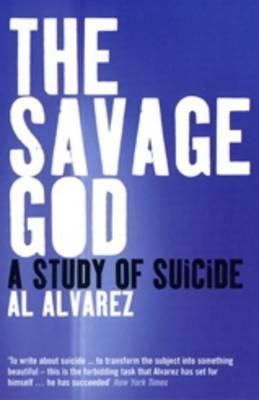
In The Savage God Al Alvarez confronts the controversial and often taboo area of human behaviour: suicide. He embraces both the cultural attitudes and the development of theoretical studies, giving a broad basis for his examination of suicide through the standpoint of literature, and follows the black thread leading from Dante, through Donne and the Romantic Agony, to Dada and the Savage God at the heart of modern literature. As a framework for his study, Alvarez gives his personal accounts of two suicide attempts: that of Sylvia Plath, the gifted young American poet who took her life in 1963, and his own unsuccessful attempt, to form the most important title on this subject yet published.
Full Product Details
Author: Al Alvarez
Publisher: Bloomsbury Publishing PLC
Imprint: Bloomsbury Publishing PLC
Edition: New edition
Dimensions:
Width: 12.90cm
, Height: 2.10cm
, Length: 19.80cm
Weight: 0.259kg
ISBN: 9780747559054
ISBN 10: 0747559058
Pages: 320
Publication Date: 04 November 2002
Audience:
General/trade
,
General
Format: Paperback
Publisher's Status: Active
Availability: Manufactured on demand

We will order this item for you from a manufactured on demand supplier.
Reviews
'To write about suicide... to transform the subject into something beautiful - this is the foreboding task that Alvarez set for himself... he has succeeded' New York Times
In this classic work, first published in 1971, well-known novelist, reviewer and poetry critic Al Alvarez takes a sensitive and perceptive look at the nature of suicide, arguing that there must be a way to get to grips with this 'shabby, confused, agonised crisis' other than by examining statistics. Examining 'literature and suicide', he suggests that the artist is more aware of his or her motivation and better able to provide a clear description of the act than sociologists or psychiatrists. His analysis is sandwiched between two detailed case studies, of the poet Sylvia Plath and of his own attempted suicide. A personal friend of Plath, Alvarez looks at the events leading up to her death and suggests that her poetry left her no way out since she salvaged most of it 'from the edge of some kind of personal abyss'. He is convinced she did not mean to die but had been crying for help in a last heroic attempt to beat her demons. In the same week, there would have been some 99 other suicides in the UK. Why do these deaths happen? How can the waste be explained? Alvarez traces the trajectory of suicide from the early Christians to the present day and then tracks back through the artistic endeavours of each century. John Donne confessed a perennial temptation to commit suicide but his Christian training proved stronger than his despair. William Cowper made several dogged and quite unintentionally humorous suicide attempts in 1763. Walpole thought it was 'very provoking' that people should always be hanging or drowning themselves. Changes in attitude came about slowly, beginning to establish themselves with Durkheim's classic study in 1897. The 20th century brought clinical investigation, statistical analysis and theories as well as a sudden sharp rise in the rates of artists committing suicide, among them Virginia Woolf, Dylan Thomas, Malcolm Lowry, Jackson Pollock and Ernest Hemingway. The better the artist, Alvarez suggests, the more vulnerable he or she seems to be. Thought-provoking and astute, this book leads the reader safely through the dark labyrinth of despair that compels thousands each year to self-destruction. (Kirkus UK)
Author Information
Author Website: http://www.bloomsbury.com/Authors/details.aspx?tpid=439
Al Alvarez, poet, critic, novelist, sportsman, poker player, has for seventy years been hard to categorize. Author of over twenty books including POKER and THE BIGGEST GAME IN TOWN he is one of the great writers of the 20th Century.