Overview
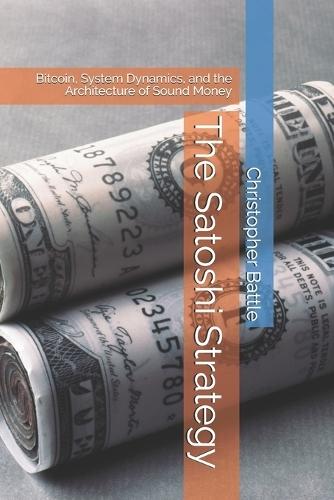
In the spring of 2020, Michael Saylor sat down in his office in Virginia and read a book. He had been reading obsessively for weeks, driven by the same instinct that had governed his thinking since MIT: when something important is changing, find the structure. Don't react to the symptom. Find the architecture. The book was The Bitcoin Standard by Saifedean Ammous. When he put it down, he said later, his mind had been blown. Three months later, MicroStrategy spent two hundred and fifty million dollars on Bitcoin. By December, the company had committed nearly its entire cash reserve. The financial establishment was baffled. The short sellers were confident. They were all watching the wrong variable. The Satoshi Strategy is the story of that decision - where it came from, why it was right, and what it tells us about money, feedback, and the kind of seeing that most institutions choose not to do. At its heart, this is a book about structure. Jay Wright Forrester, the Nebraska ranch boy who grew up to found the discipline of System Dynamics at MIT, spent his career arguing that the behaviour of complex systems - factories, cities, economies - is determined not by the people running them but by their feedback architecture. Change the operators and the behaviour will recur. Change the structure and the behaviour will change. Michael Saylor absorbed this framework as Forrester's student in the 1980s. In 2020, he applied it to the monetary system - and found a control architecture running without a governor for fifty years, producing exactly the consequences that Forrester's framework would have predicted. Drawing on the Austrian monetary tradition of Mises, Rothbard, and Ammous; the systems thinking of Forrester and Sterman; the network economics of Marc Andreessen; and the historical frameworks of Niall Ferguson, The Satoshi Strategy builds the most complete account yet published of why Bitcoin's institutional adoption was structurally inevitable - and why the idea had to travel from Vienna in 1912 to a book published in 2018 to a corporate boardroom in Virginia in 2020 before the world would act on it. Along the way, the book examines why System Dynamics - one of the most powerful analytical frameworks ever developed - remains so conspicuously absent from the institutions most affected by its insights; asks whether figures like Ray Dalio have been quietly applying its principles for decades; and traces the conservative case for Bitcoin as the technological completion of an argument that Hayek, Friedman, Thatcher, and Reagan were making but could never quite finish. It ends with the feedback signal arriving: a former Chancellor whose thirty-eight days in office taught him more about fiat monetary fragility than thirty years of orthodox economics, accumulating Bitcoin in London and warning that the UK is trapped in a fiscal doom loop. The structure was always going to produce this. The only question was the timing. The Satoshi Strategy is essential reading for investors, corporate treasurers, monetary economists, and anyone who wants to understand not just what Saylor did, but why the architecture of the monetary system made it the most logical corporate decision of the decade.
Full Product Details
Author: Christopher Battle
Publisher: Staten House
Imprint: Staten House
Dimensions:
Width: 15.20cm
, Height: 0.80cm
, Length: 22.90cm
Weight: 0.200kg
ISBN: 9798904175450
Pages: 144
Publication Date: 22 April 2026
Audience:
General/trade
,
General
Format: Paperback
Publisher's Status: Active
Availability: Available To Order

We have confirmation that this item is in stock with the supplier. It will be ordered in for you and dispatched immediately.