Overview
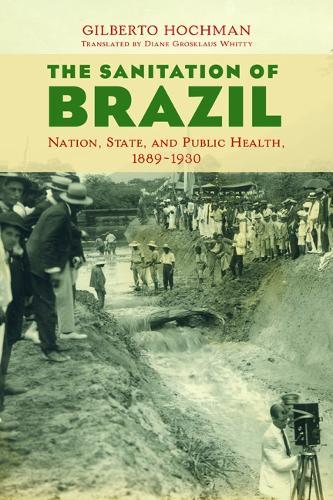
Celebrated as a major work since its original publication, The Sanitation of Brazil traces how rural health and sanitation policies influenced the formation of Brazil's national public health system. Gilberto Hochman's pioneering study examines the ideological, social and political forces that approached questions of health and government action. The era from 1910 to 1930 offered unique opportunities for public health reform, and Hochman examines its successes and failures. He looks at how health became a state concern, tying the emergence of public health policies to a nationalistic movement and to a convergence of the elites' social consciousness with their political and material interests. Politicians weighed the costs and benefits of state-run public health versus the burdens imposed by disease. Physicians and intellectuals, meanwhile, swayed them with warnings that endemic disease and official neglect might affect everyone--rich and poor, rural and urban, interior and coastal--if left unchecked. The book shows how disease and health were and are associated with nation-state building in Brazil.
Full Product Details
Author: Gilberto Hochman ,
Diane Grosklaus Whitty
Publisher: University of Illinois Press
Imprint: University of Illinois Press
Dimensions:
Width: 15.20cm
, Height: 2.00cm
, Length: 22.90cm
Weight: 0.367kg
ISBN: 9780252082115
ISBN 10: 0252082117
Pages: 232
Publication Date: 13 October 2016
Audience:
Professional and scholarly
,
Professional & Vocational
Format: Paperback
Publisher's Status: Active
Availability: Out of stock

The supplier is temporarily out of stock of this item. It will be ordered for you on backorder and shipped when it becomes available.
Reviews
Gilberto Hochman's The Sanitation of Brazil is a pathbreaking contribution to our understanding of the relationship between public health and the process of state formation. It is essential reading for anyone interested in the histories of health and medicine in the Americas.--Jerry Davila, author of Diploma of Whiteness: Race and Social Policy in Brazil, 1917 -1945 We are very fortunate to have this lucid translation of Gilberto Hochman's brilliant study of the expansion of public health in early twentieth century Brazil, a complex process that involved ideological and pragmatic calculations of regional autonomy, centralized authority, and the high human cost of disease across a vast and varied country. This history elucidates the foundations of Brazil's extensive modern health system and offers a model for political analysis of the state and health.--Alexandra Minna Stern, author of Eugenic Nation: Faults and Frontiers of Better Breeding in Modern America Finally, Gilberto Hochman's classic account of public health policy, citizenship, and state-building during Brazil's First Republic is available beyond the Portuguese-reading world. This prize-winning volume offers a crucial historical perspective on the complex politics of constructing collective health, all the more resonant today as Brazil's admired national health system is under assault.--Anne-Emanuelle Birn, co-author of Textbook of Global Health, fourth edition
Finally, Gilberto Hochman's classic account of public health policy, citizenship, and state-building during Brazil's First Republic is available beyond the Portuguese-reading world. This prize-winning volume offers a crucial historical perspective on the complex politics of constructing collective health, all the more resonant today as Brazil's admired national health system is under assault.--Anne-Emanuelle Birn, co-author of Textbook of Global Health, fourth edition
Author Information
Gilberto Hochman is a researcher and professor at the Casa de Oswaldo Cruz, FundaÇÃo Oswaldo Cruz. His other books include Cuidar, Controlar, Curar, PolÍticas PÚblicas no Brasil, and MÉdicos IntÉrpretes do Brasil. Diane Grosklaus Whitty's translations include The Devil and the Land of the Holy Cross: Witchcraft, Slavery, and Popular Religion in Colonial Brazil.