Overview
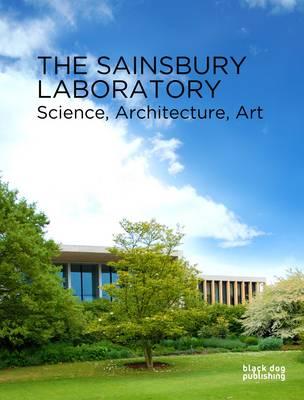
The new Sainsbury Laboratory in Cambridge's Botanic Garden, opening in late 2011, will be the leading international centre for the study of plant science, and enabled by the bequest of the Sainsbury family. The book is divided into three sections; science, architecture and art. The science refers to the scientific practice of the laboratory, the architecture to the cutting-edge building and the art to the profiled artists who are involved in the project. The Sainsbury Laboratory provides a brief history of plant science, with Darwinist theory setting the context for the centre and today's research. The Botanic Garden first opened in Cambridge in 1762. It was shortly after this that Professor John Stevens Henslow first undertook his studies into plants, and planted trees to use as teaching aids; amongst his students was Charles Darwin. Henslow's teachings in Cambridge are thought to be the inspiration by which Darwin set out his own thinking. Both Henslow's and Darwin's plant specimens are housed in the Herbarium at the laboratory, which holds a collection of over one million plant specimens from all over the world and from throughout the history of scientific plant study. The Sainsbury Laboratory discusses the architecture of the Sainsbury Laboratory designed and built by Stanton Williams Architects, with sketches and photographs of the building from conception to completion. The Art section of the book includes interviews with the three artists specially commissioned to provide installations at the Laboratory --Norman Ackroyd, Susanna Heron and William Pye. The book's sections are written by different experts in the field and include a Foreword by Lord David Sainsbury and interviews with American plant scientist Elliott Meyerowitz, laboratory specialists and the architects involved in the project. Beautifully illustrated, The Sainsbury Laboratory provides an in-depth look at the important fields of plant science, public art and architecture.
Full Product Details
Author: Stephen Day ,
John Parker ,
Steven Rose
Publisher: Black Dog Press
Imprint: Black Dog Publishing London UK
Dimensions:
Width: 19.00cm
, Height: 2.50cm
, Length: 25.00cm
Weight: 1.066kg
ISBN: 9781907317453
ISBN 10: 1907317457
Pages: 192
Publication Date: 10 February 2012
Audience:
Adult education
,
Further / Higher Education
Format: Mixed media product
Publisher's Status: Active
Availability: Out of stock

The supplier is temporarily out of stock of this item. It will be ordered for you on backorder and shipped when it becomes available.
Author Information
Stephen Day has written in the past for a number of journals and periodicals, including New Scientist and is co-author of Mechanisms in Plant Development (Blackwell Science, 2002). Professor John Parker is Director of the Botanic Garden at Cambridge University. He was been directly involved in the planning and development of the new Sainsbury Laboratory. Steve Rose was appointed Professor of Biology and Director of the Brain and Behaviour Research Group at the Open University, where he is now Emeritus Professor. He has held visiting appointments at Harvard, the University of Minnesota, the San Francisco Exploratorium and most recently at University College, London.