Overview
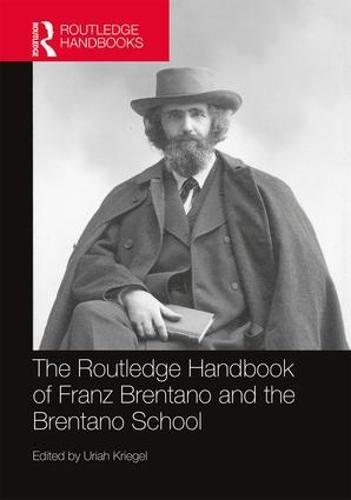
Both through his own work and that of his students, Franz Clemens Brentano (1838–1917) had an often underappreciated influence on the course of twentieth- and twenty-first-century philosophy. The Routledge Handbook of Franz Brentano and the Brentano School offers full coverage of Brentano’s philosophy and his influence. It contains 38 brand-new essays from an international team of experts that offer a comprehensive view of Brentano’s central research areas—philosophy of mind, metaphysics, and value theory—as well as of the principal figures shaped by Brentano’s school of thought. A general introduction serves as an overview of Brentano and the contents of the volume, and three separate bibliographies point students and researchers on to further avenues of inquiry. Systematic and detailed, The Routledge Handbook of Franz Brentano and the Brentano School provides readers with a valuable reference to Brentano’s work and to his lasting importance in the history of philosophy and in contemporary debates.
Full Product Details
Author: Uriah Kriegel
Publisher: Taylor & Francis Ltd
Imprint: Routledge
Weight: 0.840kg
ISBN: 9781138023444
ISBN 10: 1138023442
Pages: 400
Publication Date: 24 March 2017
Audience:
General/trade
,
College/higher education
,
General
,
Tertiary & Higher Education
Format: Hardback
Publisher's Status: Active
Availability: In Print

This item will be ordered in for you from one of our suppliers. Upon receipt, we will promptly dispatch it out to you. For in store availability, please contact us.
Reviews
A well-conceived and timely introduction to the work of an influential but much under-appreciated philosopher whose writings repay study and deserve a much wider audience. For anyone curious about Brentano and the significance of his philosophical contributions, this is the place to start. --John Heil, Washington University in St. Louis It is uncontroversial that Franz Brentano was one of the most important philosophers of the 19th century, and one of the most prolifically successful teachers in the subject's history. Because of the tortuous path of his career however, most of his work remained unpublished at his death and a distorted picture was propagated by his adherents thereafter, so that a secure account of the breadth of his work and the path of his development has been hard to achieve. This collection by the foremost Brentano scholars of today is far from a mere summary of standard views. It brings new light into all corners of Brentano's philosophy. It illuminates his profound influence on generations of his brilliant students and grandstudents. Above all, it incorporates the latest thinking and textual evidence to provide a wealth of new insights into the many facets of this fascinating, challenging and many-sided philosopher. --Peter Simons, Trinity College Dublin The Routledge Handbook of Brentano and the Brentano School is among the most significant contribution to the history of contemporary philosophy of the last decades. It offers the first comprehensive survey of Brentanian contributions to early analytical philosophy and philosophical psychology, documenting the sophistication, breadth and historical significance of their theories. Through conscientious editorial choices, Uriah Kriegel aptly shows that the issues that were central to Brentano and his students go far beyond intentionality and continue to drive philosophical research. As such, the Handbook affords a superb occasion to reexamine the philosophical canon. It is an indispensable resource for teachers and researchers, and one that does not come one day too soon. --Sandra Lapointe, McMaster University
Author Information
Uriah Kriegel is a Research Director at the Jean Nicod Institute in Paris. He has published more than 80 research articles, including many on Brentano. His monographs include Subjective Consciousness: A Self-Representational Theory (2009), The Sources of Intentionality (2011), The Varieties of Consciousness (2015), and Mind and Reality in Brentano's Philosophical System (2017).