Overview
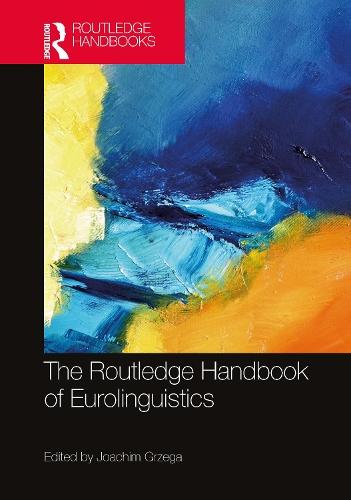
The Routledge Handbook of Eurolinguistics provides a comprehensive survey of the typical features among European languages in cultural, geographical, or political definitions. Bringing together the latest research in the field, the handbook showcases European traditions of linguistic research on European languages. Featuring 30 chapters written by leading experts of European languages and linguistics, this book: illustrates the major theoretical and methodological developments and institutionalizations of the field presents typical features for the various linguistic levels of European languages (standard and non-standard)—formally and semantically analyzes aspects of writing, phonological aspects, grammatical aspects, lexical aspects, language use, and multimodal aspects, including contributions on body language and sign languages; and investigates typical commonalities with respect to various historical and current social issues with chapters on traditions of translation, multilingual settings in Europe, teaching foreign languages, and language policies The Routledge Handbook of Eurolinguistics is essential reading for those with an interest in European languages and linguistics, language contact and change, and language typology.
Full Product Details
Author: Joachim Grzega
Publisher: Taylor & Francis Ltd
Imprint: Routledge
Weight: 1.100kg
ISBN: 9781032647654
ISBN 10: 1032647655
Pages: 490
Publication Date: 31 March 2025
Audience:
College/higher education
,
Professional and scholarly
,
Tertiary & Higher Education
,
Professional & Vocational
Format: Hardback
Publisher's Status: Active
Availability: In Print

This item will be ordered in for you from one of our suppliers. Upon receipt, we will promptly dispatch it out to you. For in store availability, please contact us.
Reviews
""The Routledge Handbook of Eurolinguistics is a must-read for anyone who wants to engage with the languages and the linguistic landscape(s) of Europe from a decidedly Eurocentric perspective. It identifies a stunning range of Europeanisms and European commonalities. The volume will define the field for many years to come.” Bernd Kortmann, University of Freiburg, Germany “The Routledge Handbook of Eurolinguistics spans a wide range of commonalities of the linguistic landscape of Europe: lexical, phonological and grammatical features, translation and multilingualism, planned languages and conscious influence on language, policies and institutions, historical and present. Typically for Europe, the authors draw on research published in many different languages.” Klaus Schubert, University of Hildesheim, Germany
""The Routledge Handbook of Eurolinguistics is a must-read for anyone who wants to engage with the languages and the linguistic landscape(s) of Europe from a decidedly Eurocentric perspective. It identifies a stunning range of Europeanisms and European commonalities. The volume will define the field for many years to come.” Bernd Kortmann, University of Freiburg, Germany
""The Routledge Handbook of Eurolinguistics is a must-read for anyone who wants to engage with the languages and the linguistic landscape(s) of Europe from a decidedly Eurocentric perspective. It identifies a stunning range of Europeanisms and European commonalities. The volume will define the field for many years to come.” Prof. Dr. Dr. h.c. Bernd Kortmann, University of Freiburg, Germany “The Routledge Handbook of Eurolinguistics spans a wide range of commonalities of the linguistic landscape of Europe: lexical, phonological and grammatical features, translation and multilingualism, planned languages and conscious influence on language, policies and institutions, historical and present. Typically for Europe, the authors draw on research published in many different languages.” Prof. Dr. Klaus Schubert, University of Hildesheim, Germany ""This is a truly important volume which discusses old and innovative concepts of “Europe” and “language planning” and “language politics”. The basic and fundamental question for sociolinguists remains: what is Europe? A territory? A multilingual space? Which are the borders and what kind of impact do they have? There are many different detailed answers to be found in this handbook which enlarge our understanding and lead to new answers. To be recommended for everybody who is interested in the past and future of Europe in our globalized world."" Prof. Dr. Dr. h.c. Ruth Wodak, Lancaster & Vienna
Author Information
Joachim Grzega is Associate Professor for Linguistics at the University of Eichstätt-Ingolstadt (Germany) and head of the project unit Innovative European Sprachlehre (InES) at Volkshochschule Donauwörth (Germany). He was also Director of Europäisches Haus Pappenheim (Germany), the first institution to combine Eurolinguistic research with offers for a broad public. He has authored over 200 publications, has organized several international Eurolinguistics conferences, and is the editor of the Journal for EuroLinguistiX.